MAN: Why supplier choices matter for a workforce platform
ManpowerGroup operates as a global workforce solutions company that monetizes through staffing fees, talent management services, and technology-enabled recruitment products. Its commercial model scales by combining locally sourced staffing operations with centralized technology and vendor relationships that accelerate product deployment and reduce fixed R&D investment. Supplier relationships that deliver recruiting technology, back-office platforms, and data-hosting services therefore directly influence margins, operating leverage, and execution risk. For a focused supplier review of MAN, read on — or visit https://nullexposure.com/ for a broader supplier intelligence briefing.
What investors need to know in one line
ManpowerGroup is moving from pure staffing to a services-and-technology hybrid, buying capabilities from third parties (notably AI interviewing tools) to speed product rollouts and preserve recruiter-led differentiation — a deliberate contracting posture that trades internal development cost for vendor dependence.
The Hubert partnership: a concise read for investors
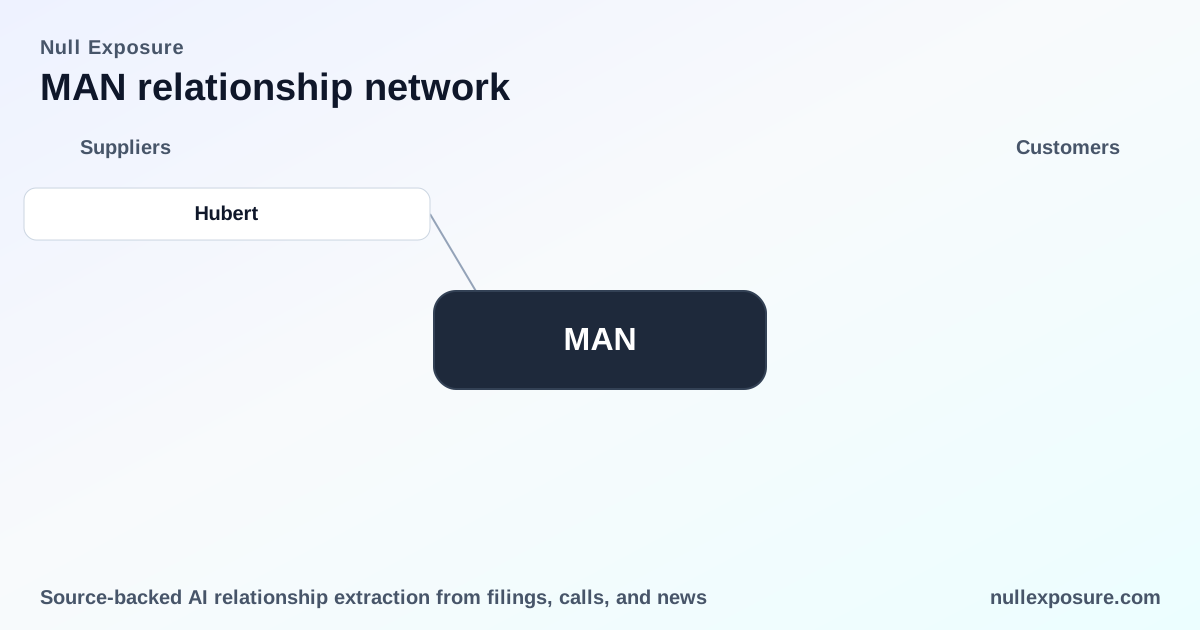
ManpowerGroup announced a global partnership with AI interviewing firm Hubert in FY2026 to embed explainable, responsible AI into its recruitment processes while keeping human recruiters central to hiring decisions. According to Simply Wall St (March 10, 2026), the deal highlights ManpowerGroup’s strategy to pair human judgment with machine-driven screening to improve fairness and transparency in hiring. Intellectia reported the same initiative being showcased in ManpowerGroup’s 2026 global talent trends presentation at Davos, describing the partnership as aimed at enhancing candidate experience and recruiter focus on interpersonal assessment (March 2026).
Why this relationship is relevant to valuation
- Revenue leverage: Technology that speeds matching and reduces time-to-hire can increase fill rates and utilization across staffing lines, improving revenue per recruiter.
- Cost structure: Outsourcing AI development to Hubert avoids upfront R&D, shifting costs to a vendor contract and turning fixed investment into variable expense.
- Operational risk: Vendor dependence creates service, integration, and reputational risk if AI outputs degrade or regulatory scrutiny intensifies.
For a deeper supplier map and risk scoring framework, see the intelligence hub at https://nullexposure.com/.
A closer read of the public filings and company-level constraints
ManpowerGroup’s public disclosures explicitly note increasing reliance on third-party vendors for hosting, technology development, and back-office support: "We have increasingly outsourced, and may further outsource, important processes of our business to third party vendors, which exposes us to other risks, including increased costs, supply chain interruptions, potential disruptions to our business operations, and reputational risk." This language is a direct company-level signal about contracting posture and exposure.
From an investor-risk profile perspective, that disclosure implies:
- Contracting posture: A deliberate vendor-managed model for non-core and adjacent capabilities rather than captive build — this speeds time-to-market but increases vendor governance needs.
- Concentration risk: If multiple product lines rely on a small set of vendors (for example, a single AI interviewer or a single cloud host), outages or commercial disputes have outsized operational impact.
- Criticality: The outsourced services include recruitment technology and back-office systems — functions that are core to ManpowerGroup’s value delivery and client SLA performance.
- Maturity and replaceability: The language suggests long-standing outsourcing across IT and back-office functions, indicating both entrenched contracts and potential switching friction if a vendor relationship deteriorates.
All supplier relationships surfaced in the coverage
- Hubert — ManpowerGroup formed a global partnership with AI interviewing pioneer Hubert to embed explainable AI in large-scale recruitment while preserving human recruiter oversight; coverage appeared in Simply Wall St and at Davos through Intellectia in March 2026. (Simply Wall St, March 10, 2026; Intellectia, March 2026)
These references reflect the full set of supplier relationships surfaced in the current review. The Hubert relationship is presented in multiple news outlets during FY2026, underscoring it as a visible, strategic vendor engagement.
What management’s outsourcing stance signals about execution
ManpowerGroup’s public text on outsourcing should be read as a governance and supplier-management challenge as much as a strategic choice. Outsourcing improves speed and capital efficiency but raises counterparty and integration risk — from contractual renewal exposure to brand sensitivity around algorithmic decisioning. Investors should expect:
- Tighter vendor SLAs and audit rights in future contract negotiations.
- Incremental operating expense variability as more capabilities run under third-party commercial terms.
- Elevated board oversight and compliance investment where AI-driven hiring intersects with discrimination and transparency regulation.
Mid-analysis action: if you manage supplier risk in your portfolio, review ManpowerGroup’s vendor-risk disclosures and third-party audit cadence at https://nullexposure.com/.
Investment implications and recommended next steps
- Monitor vendor concentration. Track which products or regions depend on a single provider, especially for AI screening and core hosting.
- Assess contractual terms. Favor transparency around termination rights, IP ownership, and auditability for AI systems.
- Watch regulatory signals. Algorithmic hiring is increasingly regulated; changes to transparency or fairness rules alter operating costs and reputational exposure.
Bottom line: ManpowerGroup’s supplier strategy is intentional — it buys capability to convert staff-based delivery into technology-augmented services — but that choice transfers discrete operational and regulatory risks to its vendor relationships. Investors should price in vendor governance costs and potential service disruption exposure while valuing the near-term revenue and margin benefits of faster product deployment.
For a full supplier-risk scorecard and ongoing alerts on MAN, visit https://nullexposure.com/ for detailed briefings and actionable monitoring tools.
Close: what to watch next
Track (1) announcements of expanded commercial terms with Hubert or other AI partners, (2) contract renewal language for hosting/back-office vendors, and (3) any regulatory guidance on explainable AI in hiring — each will shift the risk premium embedded in ManpowerGroup’s multiple. For ongoing supplier intelligence and portfolio-level comparisons, see https://nullexposure.com/.