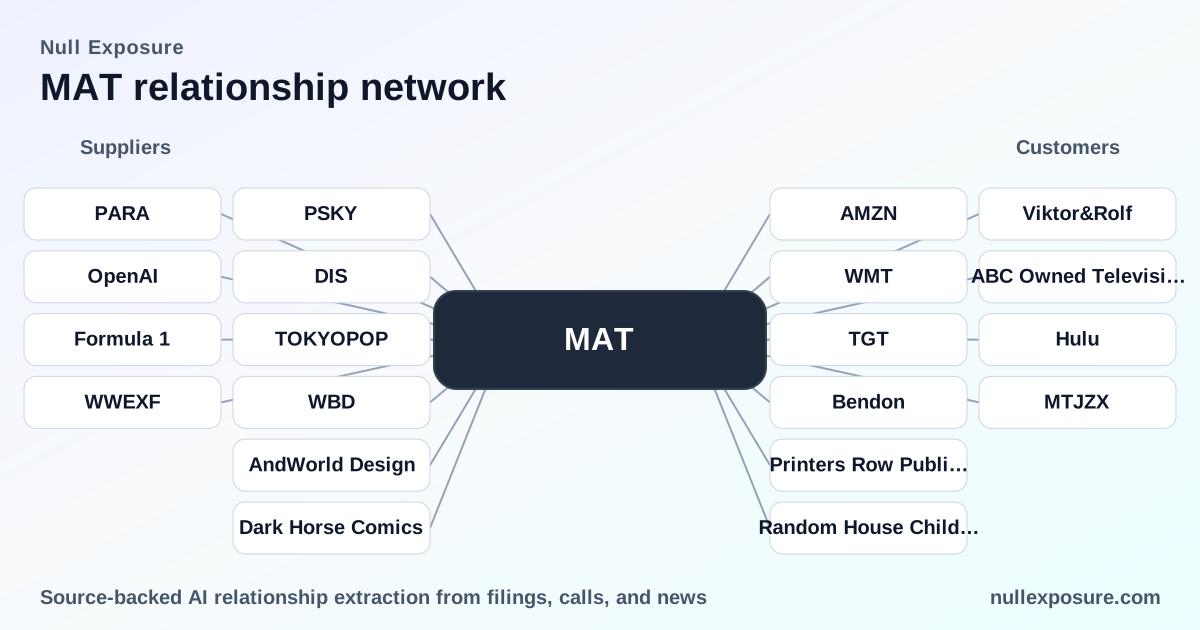
Mattel Inc (MAT): Supplier and partner map that drives IP monetization and product flow
Mattel operates as a global toy and family entertainment company that monetizes through owned brands (Barbie, Hot Wheels, American Girl), third-party licensing, and consumer products tied to entertainment IP. Revenue accrues from direct product sales, licensed manufacturing partnerships, and recurring merchandising deals; the company also manages working capital through supplier finance programs to smooth cash conversion. Investors should view Mattel’s supplier stance as a hybrid buyer/manufacturer with high spend concentration in APAC manufacturing and active supplier-finance arrangements that affect counterparties’ payment timing. For a structured supplier risk assessment and partner intelligence, visit https://nullexposure.com/.
Why supplier relationships are material to the investment case
Mattel’s business model is IP-first but manufacturing-dependent. The company owns and licenses valuable franchises, which drive product programs and content tie‑ins, while the physical manufacturing footprint—largely in Asia—controls cost, lead times, and quality. Mattel’s operations combine three critical characteristics:
- Contracting posture: Mattel functions both as a buyer (large-volume inventory purchases) and as a manufacturer (company-owned plants plus third-party manufacturers), which creates a two-way dependency with suppliers and contract manufacturers.
- Spend concentration and scale: Public disclosures show purchases on the order of hundreds of millions, signaling large counterparty exposure and bargaining leverage but also systemic supply risk if a major supplier or region is disrupted.
- Program maturity and financial mechanics: Mattel runs a supplier finance program with outstanding obligations reported (obligations outstanding $69,203 at year‑end), indicating active working-capital management and an operational approach that shifts payment timing for suppliers.
These characteristics mean supplier performance directly shapes gross margins, product cadence for seasonal launches, and the effective monetization of licensing agreements. For deeper supplier and counterparty analysis, explore https://nullexposure.com/.
Supply-chain geography and operational constraints
Mattel’s manufacturing base is concentrated in China, Indonesia, Malaysia, Mexico, and Thailand, which embeds exposure to APAC regulatory, logistics, and labor dynamics; this is a company-level signal of geographic concentration that affects lead times and cost volatility. Mattel’s disclosed purchasing profile (reported purchases of inventory, services, and other of $489.5 million in the cited excerpt) confirms material procurement scale. Mattel’s dual role as buyer and manufacturer requires a blend of supplier qualification, in-house production controls, and contingent sourcing strategies to manage continuity and brand quality.
Partner map: the commercial relationships investors should track
Below I summarize every partner relationship surfaced in the reporting set; each entry is one to two sentences with the primary source noted.
-
Paramount (ComicsBeat, March 2026) — ComicsBeat reported that Paramount announced a multi‑year global licensing partnership with Mattel to develop TMNT consumer products, positioning Mattel as the global toy licensee for Teenage Mutant Ninja Turtles. (ComicsBeat, March 10, 2026: https://www.comicsbeat.com/mattel-tmnt-toy-license-announced/)
-
Disney (MarketBeat filing summary, FY2026) — MarketBeat notes Mattel holds licenses with Disney as part of a broader strategy to create character-driven play experiences across multiple franchises. (MarketBeat filing summary, February 2026: https://www.marketbeat.com/)
-
TOKYOPOP (WebWire press release, 2026) — A press release indicates Mattel is collaborating with TokyoPop on comics and graphic storytelling components tied to product programs, expanding storytelling channels for toy properties. (WebWire press release, March 2026: https://www.webwire.com/ViewPressRel.asp?aId=350859)
-
AndWorld Design (WebWire press release, 2026) — WebWire highlighted that AndWorld Design will handle lettering/production roles for publishing tied to Mattel IP, reflecting a multi‑vendor creative supply chain for transmedia products. (WebWire press release, March 2026: https://www.webwire.com/ViewPressRel.asp?aId=350859)
-
Dark Horse Comics (WebWire press release, 2026) — Dark Horse is named as a publishing partner in Mattel’s comics strategy, showing Mattel’s use of established content partners to extend toy franchise narratives. (WebWire press release, March 2026: https://www.webwire.com/ViewPressRel.asp?aId=350859)
-
OpenAI (FinancialContent deep dive, January 2026) — FinancialContent reported Mattel is pilot‑testing AI‑enabled play experiences with OpenAI to add natural‑language storytelling capabilities to toys, signaling a strategic push into interactive product features. (FinancialContent deep dive, January 23, 2026: https://markets.financialcontent.com/)
-
The Walt Disney Company (FinancialContent coverage, FY2026) — Coverage reiterates that Disney licenses (including Disney Princess) anchor parts of Mattel’s dolls portfolio, reinforcing the revenue importance of high-value IP alliances. (FinancialContent, January 2026: https://markets.financialcontent.com/)
-
Disney Consumer Products (Mattel press release, 2026) — Mattel announced a renewal of multi‑year licensing agreements with Disney Consumer Products for Disney Princess and Frozen franchises through American Girl, underscoring long-term co‑development of product lines. (Mattel corporate press release, March 2026: https://corporate.mattel.com/news/mattels-american-girl-and-disney-consumer-products-renew-multi-year-licensing-agreement-for-disney-princess-and-disney-frozen-franchises)
-
Warner Bros. (MarketBeat filing summary, FY2026) — MarketBeat notes Warner Bros. is among the studio partners Mattel leverages for character-driven products, highlighting continued ties to major studio IP. (MarketBeat filing summary, February 2026: https://www.marketbeat.com/)
-
Paramount (MarketBeat/TradingView, FY2026) — Additional reporting by MarketBeat and TradingView confirms the Paramount agreement to develop a broad TMNT consumer products program with Mattel as licensee, reinforcing the commercial impact across multiple coverage outlets. (TradingView/Zacks coverage, March 2026: https://www.tradingview.com/news/)
-
DC Comics (ComicsBeat, March 2026) — ComicsBeat noted Mattel recently regained the DC Comics toy license, a strategic win that supplements its portfolio of action‑figure IP. (ComicsBeat, March 10, 2026: https://www.comicsbeat.com/mattel-tmnt-toy-license-announced/)
-
Formula 1 (SimplyWallSt coverage, February 2026) — Simply Wall St reported an expanded Hot Wheels–Formula 1 collaboration tied to New York Toy Fair rollouts, linking motorsport content to product innovation and narrative content. (Simply Wall St coverage, February 2026: https://simplywall.st/)
-
WWE (MarketBeat filing summary, FY2026) — MarketBeat lists WWE as a licensing partner that supports Mattel’s character‑driven play experiences across action toy segments. (MarketBeat filing summary, February 2026: https://www.marketbeat.com/)
Investment implications and risk checklist
- Catalyst driver: Renewed and new licensing deals (Disney, Paramount, DC) are revenue levers that convert entertainment content into retail product cycles and merchandising revenue.
- Margin pressure: APAC manufacturing concentration and large procurement spend create exposure to commodity and logistics cost swings that will influence gross margins.
- Counterparty finance dynamic: The active supplier finance program changes cash flow timing and can impose operational complexity; investors should monitor outstanding obligations and program participation.
- Innovation premium: Partnerships with OpenAI and content publishers indicate Mattel is investing to differentiate products through storytelling and interactivity, which supports higher ASPs if executed.
For a full supplier-risk report and operational counterparty scoring, see how Null Exposure maps counterparties at scale: https://nullexposure.com/.
Conclusion: what to watch next
Mattel’s combination of IP monetization, large procurement scale, and active supplier finance creates both opportunity and concentration risk. Track quarterly disclosures for supplier‑finance balances, licensing royalty schedules disclosed in filings, and any changes to the APAC manufacturing footprint that could alter cost structure. For ongoing coverage and supplier relationship analytics tailored to investors and operators, visit https://nullexposure.com/ — the quickest way to translate partner news into portfolio actions.