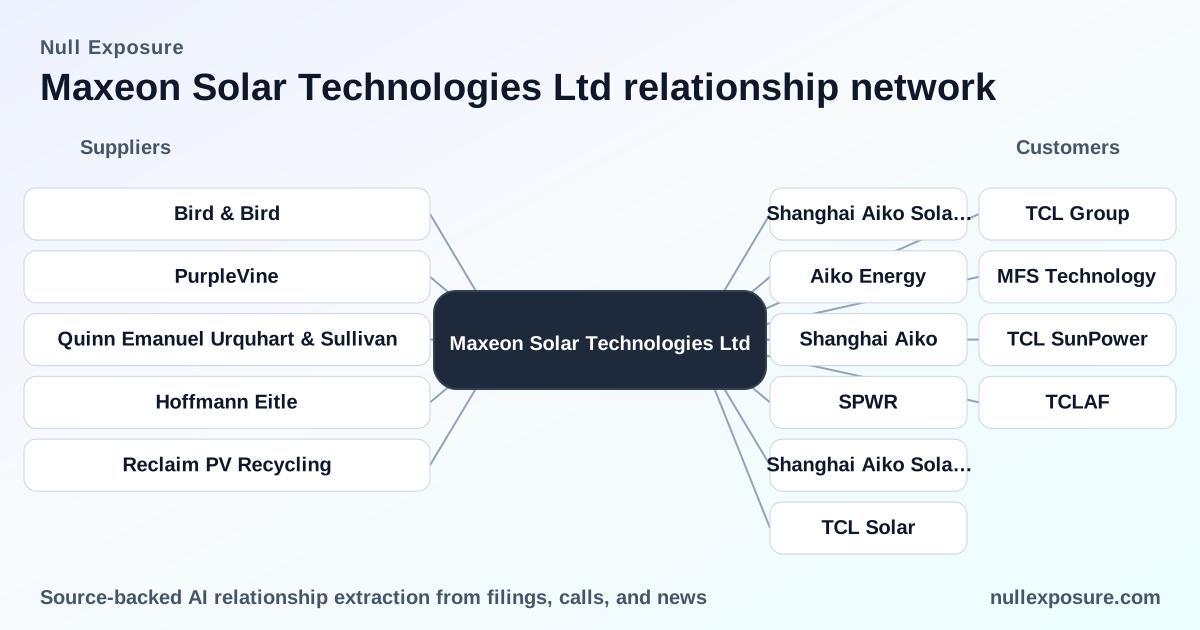
Maxeon Solar (MAXN): Supplier relationships, litigation posture, and commercial implications for investors
Maxeon Solar Technologies designs and manufactures solar panels and related system components and monetizes through direct panel sales, licensing of intellectual property and strategic partnerships for system lifecycle services such as recycling. The company combines product revenue with episodic, high-value licensing outcomes that can materially alter cash flows relative to its modest market capitalization and negative operating margins. For a concise gateway to deeper supplier and counterparty profiles, visit https://nullexposure.com/.
How Maxeon makes money and what that implies for supplier relationships
Maxeon’s revenue comes primarily from the sale of solar panels and related components, supplemented by licensing income tied to its intellectual property. The firm’s trailing twelve-month revenue of about $176 million contrasts with negative gross profit and EBITDA losses, highlighting an operating model where one-off licensing settlements and IP outcomes can override operational shortfalls. Market capitalization is roughly $41 million, which makes any multi‑hundred‑million‑RMB licensing payment a material event for investors.
Company-level signals on operating model characteristics:
- Contracting posture: Maxeon pursues active legal protection and licensing of IP, reflected in multiple retained international law firms and a reported licensing agreement with Aiko. This is an assertive, revenue‑oriented contracting posture rather than passive licensing.
- Concentration: Revenue is concentrated in solar panel sales and related branding (notably SunPower‑branded panels), increasing the sensitivity of top-line performance to production, channel access and brand agreements.
- Criticality: Third-party legal and recycling partners are operationally critical — IP litigation affects licensing cash, and recycling partners close the product lifecycle in jurisdictions where end‑of‑life regulation is evolving.
- Maturity: Engagement of top-tier international counsel and an established recycling partner signals a mature external vendor footprint for managing both legal and environmental obligations.
What the recent supplier / advisor relationships tell investors
Below I document each relationship found in the supplier records and the practical takeaway for investors and operators.
Bird & Bird
A German team from Bird & Bird represented Maxeon in infringement proceedings at Mannheim Regional Court and at the Unified Patent Court according to a Juve‑Patent report published March 10, 2026. This indicates Maxeon retained European counsel to prosecute IP claims aggressively in key German fora.
PurpleVine
PurpleVine is cited as the IP firm coordinating global litigation and licensing negotiations for Maxeon and reported that the total licence fee with Aiko is RMB 1.65 billion, with RMB 250 million payable in 2026; this figure was reported via industry coverage in March 2026. The PurpleVine note highlights the material scale of licensing proceeds relative to Maxeon’s balance sheet and cash flows.
Quinn Emanuel Urquhart & Sullivan
A Quinn Emanuel team represented Maxeon in the dispute over EP 789 at Munich Regional Court, per the same Juve‑Patent coverage (March 10, 2026). Retaining Quinn Emanuel signals the company’s preference for high‑capacity litigators in cross‑border patent disputes.
Hoffmann Eitle
Patent attorneys from Hoffmann Eitle defended EP 788 in a nullity suit at the German Federal Patent Court, as reported on March 10, 2026. Engagement of specialized patent litigators demonstrates a layered IP defense strategy spanning infringement and nullity proceedings.
Reclaim PV Recycling
Maxeon entered a partnership with Reclaim PV Recycling to recover and recycle SunPower‑branded panels in Australia, announced in 2022 and reported by industry press. This operational partnership addresses end‑of‑life obligations and customer expectations for environmental compliance in key markets.
Why these relationships matter for investors
- Legal partners and licensing outcomes are revenue drivers. The reported RMB 1.65 billion license fee is large relative to Maxeon’s market cap and reported results; this transforms litigation outcomes into core financial events rather than peripheral legal noise.
- Operational continuity and ESG compliance are outsourced but essential. The recycling tie‑up with Reclaim PV Recycling converts panels into a managed lifecycle service, reducing regulatory and reputational exposure in Australia.
- Supplier maturity reduces execution risk but concentrates vendor dependency. Using established international firms for IP work indicates low execution risk on legal strategy but concentrates outcomes with a small set of specialist advisers.
For deeper supplier mapping and to track changes in counterparty exposure, see https://nullexposure.com/.
Key risk considerations rooted in supplier relationships
- License concentration risk: Dependence on intermittent, high‑value licensing receipts creates lumpiness in cash flow and valuation sensitivity to IP outcomes. The reported licensing payment schedule should be reconciled against working capital needs and covenant timing.
- Legal outcome dependency: Successful enforcement or defense of patents materially affects future revenues and licensing leverage; losing critical proceedings would compress upside significantly.
- Counterparty and geographic concentration: Heavy legal activity in Germany and licensing negotiations with major Chinese counterparties expose Maxeon to jurisdictional and geopolitical legal complexity.
- Financial fragility: Negative gross profit and large EBITDA losses increase the company’s vulnerability if anticipated licensing receipts are delayed or reduced; balance sheet and liquidity reviews must incorporate counterparty payment risk.
Practical next steps for investors and commercial partners
- Obtain confirmation of the licence payment schedule and escrow arrangements for the RMB 1.65 billion agreement and validate timing of the RMB 250 million tranche due in 2026.
- Request copies of core IP rulings, settlement documentation and fee allocation to understand residual indemnities and ongoing obligations tied to these legal engagements.
- Verify recycling partner contracts and geographic coverage to confirm compliance across primary markets and to estimate lifecycle cost offsets.
- Reassess valuation and downside scenarios with explicit modeling of licensing receipt timings and legal outcome permutations.
For tailored supplier diligence and ongoing monitoring of Maxeon’s counterparty exposures, visit https://nullexposure.com/ and request the supplier profile pack.
Bottom line
Maxeon operates a mixed commercial model where manufacturing revenue is supplemented by strategically executed IP monetization and lifecycle partnerships. The company’s reliance on elite IP counsel and the scale of the reported licence payment make legal outcomes a primary driver of near‑term valuation. Investors must treat IP litigation and licensing proceeds as executable cash‑flow events and verify counterparties, payment mechanics and legal finality before concluding on value. For a centralized view of Maxeon’s supplier relationships and ongoing alerts, go to https://nullexposure.com/.