Check‑Cap (MBAI): Small clinical‑stage supplier pivoting through a capital and merger play
Check‑Cap Ltd. operates as a clinical‑stage medical diagnostics company focused on capsule‑based colorectal screening technology; it currently records no product revenue and monetizes through equity financing, strategic transactions and anticipated commercial partnerships tied to future regulatory and clinical milestones. The near‑term value drivers for investors and counterparties are capital execution (equity line / merger financing) and regulatory/commercial progress on the capsule screening product. If you are evaluating MBAI as a supplier relationship, consider how financing and a pending merger will alter counterparty risk and delivery timelines. For portfolio diligence and supplier intelligence, visit https://nullexposure.com/.
The executive snapshot investors need
Check‑Cap is a clinical‑stage developer headquartered in Israel with a NASDAQ listing under MBAI and a market capitalization in the low tens of millions (latest public snapshot: ~$12.97M). The company reports zero revenue TTM, negative EPS (TTM diluted EPS -2.33) and a small public float, with insiders holding roughly 20% and institutional ownership below 1%. Those fundamentals imply high financing dependency, concentrated ownership, and limited public liquidity. Public filings show the latest quarter ending 2024‑12‑31. Key catalyst path: merger close / listing stability and successful capital draws under the announced equity facilities.
How Check‑Cap’s supplier relationships are shaping the near term
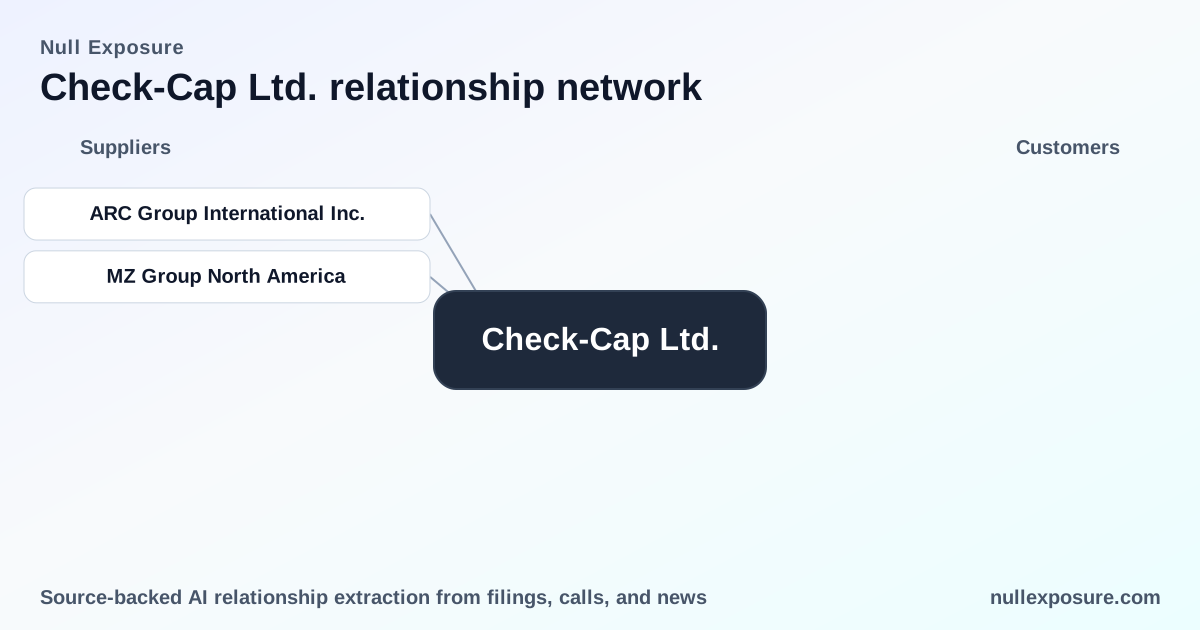
Check‑Cap’s external relationships in public reporting are concentrated on financing and investor relations services associated with a proposed transaction and listing actions. Below I cover every relationship surfaced in recent public results and what each means for counterparties and investors.
ARC Group International Inc. — equity line and merger financing partner
Check‑Cap filed a Form F‑1 Registration Statement associated with an equity line of credit facility involving ARC Group International Inc., and the company furnished audited financials for MBody AI as part of merger closing requirements; these actions were filed to accelerate closing of the MBody AI–Check‑Cap transaction and to re‑establish Nasdaq listing compliance. According to a GlobeNewswire press release dated February 24, 2026, those filings plus the furnishing of audited statements for MBody AI contributed to moving the deal toward close. A Yahoo Finance report (March 10, 2026) also notes the Form F‑1 filing in connection with the equity line facility. These filings indicate direct dependence on transactional equity capacity tied to ARC Group’s facility to fund the combined entity’s near‑term runway.
Sources: GlobeNewswire press release (Feb 24, 2026); Yahoo Finance coverage (Mar 10, 2026).
MZ Group North America — investor relations provider
Investor relations contact information for Check‑Cap in recent press materials lists MZ Group North America as the IR firm handling outreach and investor communications, with specific contacts provided in the February 2026 release. The presence of a retained IR agency signals a concerted effort to manage market perception ahead of the merger close and listing actions, and it centralizes external communications for counterparties and investors assessing supplier continuity.
Source: GlobeNewswire press release (Feb 24, 2026).
What the relationship map reveals about MBAI’s operating model and business constraints
No discrete constraint excerpts were supplied with the relationship data set; nevertheless, company filings and public financials provide clear, company‑level signals about operating posture:
- Contracting posture — financing‑first: Check‑Cap operates in a financing‑driven mode; recent Form F‑1 activity and equity‑line arrangements indicate the company secures capital through equity facilities and transactional mergers rather than operating cash flow. That contracting posture increases counterparties’ exposure to financing execution risk and potential covenant or contractual adjustments tied to deal terms.
- Concentration and liquidity risk: With a market cap near $13M, a small float, insiders at ~20% and institutions below 1%, counterparty concentration risk is material — supplier terms, pricing power and credit allowances should reflect thin liquidity and the likelihood of dilution events.
- Criticality and maturity: As a clinical‑stage developer with zero revenue TTM, Check‑Cap is not yet a revenue‑producing supplier. Its criticality to buyers or partners will depend on successful regulatory/clinical outcomes; today it functions primarily as a technology developer and balance‑sheet counterparty.
- Maturity of commercial operations: The firm’s balance sheet posture and negative operating metrics (TTM EBITDA and EPS negative) mark it as precommercial; contractual engagements should be structured with milestone protections and payment contingent provisions.
These signals translate into practical vendor‑management constraints: require financing contingency clauses, closely monitor merger and registration filings, expect marketing/IR‑driven volatility around announcements, and price counterparty exposure to reflect dilution and liquidity risk.
Investment and counterparty implications — what to watch next
- Merger close and Nasdaq status. The submission of a Nasdaq listing application connected to the MBody AI merger and the Form F‑1 for the equity line are the most immediate binary events. Successful close and ongoing listing compliance will materially reduce execution risk for counterparties. GlobeNewswire (Feb 24, 2026) confirmed those filings were submitted to accelerate the close.
- Equity funding execution. The equity line tied to ARC Group is the primary near‑term liquidity mechanism; counterparties should model scenarios where draws occur at discount pricing and generate dilution. Yahoo Finance (Mar 10, 2026) reported the F‑1 filing tied to that facility.
- Communications cadence. With MZ Group North America engaged for investor relations, expect scheduled market communications and targeted outreach that will shape short‑term share volatility and perception among institutional buyers and suppliers.
For diligence teams assessing supplier exposure, require: contractual protections tied to financing milestones, accelerated remedies for missed closings, and escrow or holdbacks until key regulatory/clinical steps are verified. For investors and operational managers tracking this exposure, subscribe to formal filing updates and PR cadence at https://nullexposure.com/ to receive continuous monitoring.
Bottom line: risk profile and opportunity
Check‑Cap (MBAI) functions today as a precommercial supplier with high financing dependency and concentrated ownership; its primary external relationships disclosed in recent filings relate to transactional equity financing and investor relations for a planned merger. That configuration makes the company a high‑volatility counterparty where operational delivery depends on successful capital execution and merger closing. Investors evaluating supplier relationships should treat MBAI as a financing‑sensitive counterparty and negotiate contractual protections accordingly.
For active monitoring, transaction diligence, or to integrate this supplier profile into a broader exposure dashboard, visit https://nullexposure.com/ for ongoing updates and filing summaries. Re‑assess supplier risk at each material filing or PR release and condition commercial commitments on confirmed financing draws and meeting regulatory milestones.