MBAV: What investors should know about supplier relationships before a deal
M3‑Brigade Acquisition V Corp. (MBAV) operates as a classic SPAC: it raises capital into a trust, covers transaction costs and sponsor economics up front, and monetizes by completing a business combination that converts the blank‑check vehicle into an operating company with growth potential. Value will be realized through a successful merger that leverages sponsor expertise and any target’s operational scale; before that event, MBAV’s economics are driven by trust account capital, underwriting and transaction fees, and the cost of essential service providers. For investors evaluating supplier and sponsor relationships, the focus is on who supplies critical services, the tenor of those contracts, and the size and concentration of spend. Visit https://nullexposure.com/ for a deeper supplier-risk view.
How MBAV contracts and spends — the operating model in plain English
MBAV is an early‑stage, pre‑combination SPAC with a clear short‑term contracting posture. The company relies on short-duration, transactional arrangements for accounting, legal, office support and underwriting services rather than long-term operating contracts. Evidence in the company filings shows a non‑interest bearing promissory note to the sponsor (payable on IPO completion or a short fixed date), small audit fees in the low six‑figures, and very large trust and transaction balances tied to the public offering.
- Short‑term contracting: Prior to the IPO MBAV issued a promissory note allowing borrowing up to $300,000 that is payable upon IPO or a fixed date, signaling an emphasis on short-term financing arrangements rather than multi-year service agreements. According to MBAV’s annual report covering the period ending December 31, 2024, the promissory note was non‑interest bearing and time-limited.
- Concentration of critical capital: The trust account held roughly $288.9 million of IPO proceeds invested in U.S. Treasury mutual funds as of December 31, 2024, reflecting that the company’s capital for an acquisition is highly concentrated and therefore critical to deal execution.
- Spend profile mix: MBAV reports modest operating spend with audit fees of about $114,000 for services covering inception through year-end, alongside very large transaction costs totaling roughly $19.4 million (including $5.0 million cash underwriting fee and $13.4 million of deferred underwriting fees) — a profile consistent with a sponsor-driven SPAC where near-term transaction economics dominate.
These features combine into a straightforward operating posture: low operating maturity, high capital concentration in the trust, and reliance on a small set of professional services and sponsor relationships. MBAV’s public filings also flag the possibility of a global target, which increases legal and regulatory complexity if the combination reaches across jurisdictions (MBAV notes it may pursue targets with operations outside the United States).
Who MBAV works with — the current supplier and sponsor relationships
Below I cover every relationship surfaced in the public results and what each implies for investors.
M3 Inc — strategic operational partner in health tech contexts
MBAV benefits from the operational expertise of M3’s digital health platform and real‑world data capabilities, a combination positioned to support post‑combination value creation if a healthcare or digital health target is chosen. This linkage was highlighted in market commentary relating to MBAV’s sponsor architecture. (MarketBeat instant alert, February 28, 2026).
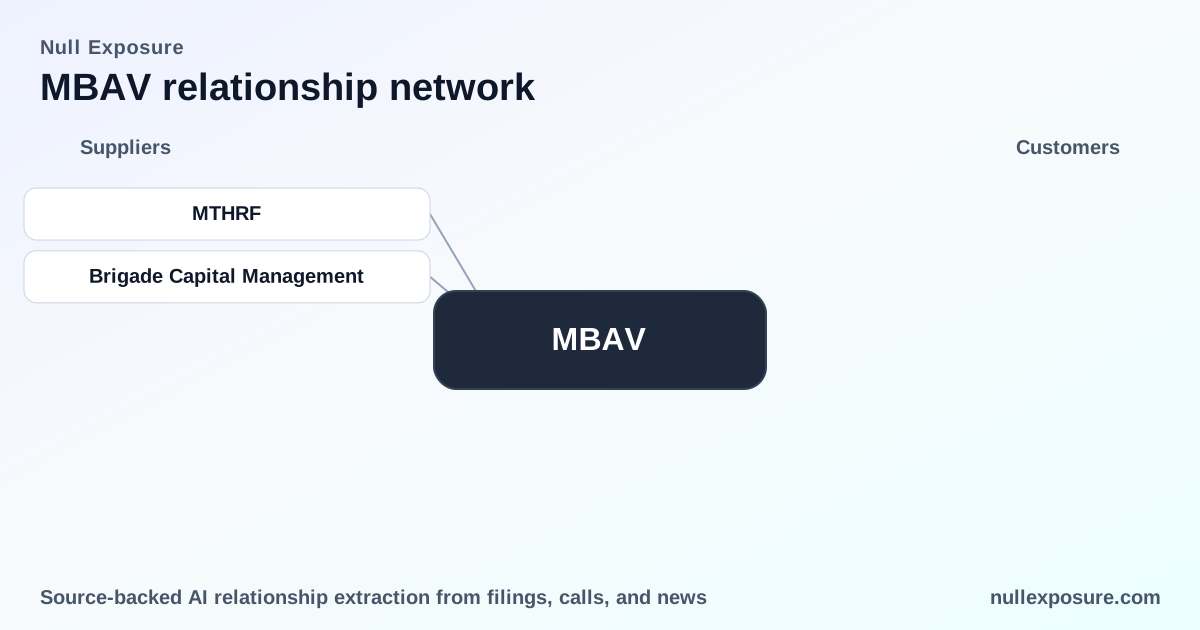
Brigade Capital Management — sponsor and credit/asset management expertise
Brigade contributes deep experience in credit and asset management that complements the M3 operational capabilities and shapes MBAV’s deal selection and financing options; the sponsor’s background changes the risk profile from a purely equity‑oriented SPAC to one with credit and asset management influences. (MarketBeat instant alert, February 28, 2026).
Both relationships are reported in market coverage of MBAV’s short interest and sponsor composition and help explain the SPAC’s sector focus on technology, media and telecommunications companies with potential healthcare adjacencies.
What these relationships mean for investors: concentration, criticality and timing
The combination of sponsor expertise and limited operating infrastructure produces a distinct set of investment considerations:
- Concentration risk is real and immediate. The bulk of MBAV’s economic leverage sits in the trust account and in sponsor influence over target selection and deal structure; if sponsor priorities diverge from minority public holders, outcomes will be determined at the combination vote.
- Service providers are necessary but low‑maturity vendors. Audit and office support are transactional and low-cost today (audit fees ~ $114k; office space provided under sponsor arrangements), yet they are still operationally critical to completing a combination and satisfying regulatory obligations.
- Transaction economics dominate near-term financials. Reported underwriting and offering costs (about $19.4 million) show heavy upfront spend and a business model that only converts to recurring revenue after a successful acquisition and integration.
- Global targets increase execution complexity. MBAV’s stated ability to pursue businesses outside the U.S. widens the opportunity set but adds regulatory and cross‑jurisdictional execution risk.
For investors who prioritize clarity on counterparties and contractual duration, these features point to a strategy that is event‑driven rather than operational; the investor emphasis should be on sponsor credibility, the quality of target diligence, and the structure of any post‑transaction operating arrangements.
Visit https://nullexposure.com/ for supplier-specific scoring and consolidated vendor exposure analysis tailored to SPACs like MBAV.
Practical risk checklist for MBAV counterparties
- Confirm sponsor economics and alignment: cash/warrant economics and any promissory support terms.
- Monitor the trust account allocations and restrictions: these funds are the primary source of deal capital.
- Track underwriting and deferred fees: they materially reduce post‑transaction available capital.
- Evaluate the sponsor’s vertical expertise: Brigade’s credit experience and M3’s digital health assets shape likely target profiles and integration playbooks.
Bottom line and recommended next steps
MBAV is a classic sponsor‑led SPAC with concentrated trust capital, short-term vendor relationships, and transaction-heavy economics. The two named relationships — M3 and Brigade — bring complementary operational and credit expertise that will influence target selection and post‑deal plans. For investors focused on counterparty risk and supplier continuity, the decision hinges on sponsor alignment and the structure of the post‑combination operating model.
If you want a supplier-centric risk briefing tied to MBAV’s filings and market coverage, start with a consolidated supplier risk report at https://nullexposure.com/. Review sponsor agreements, underwriting cost schedules, and any reported office/service concessions before committing capital.