MBBA: What investors need to know about the supplier landscape
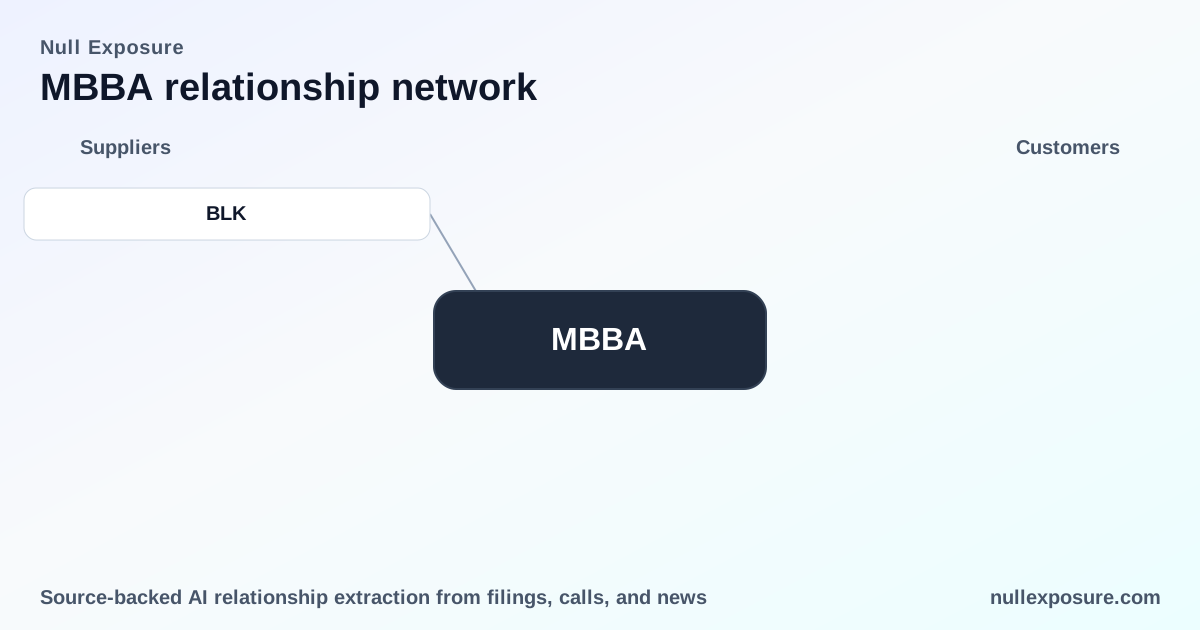
MBBA is an actively managed mortgage‑backed securities ETF operating under the iShares brand; it monetizes through asset management fees and the operational ecosystem that supports NAV administration, custody and market making around fund shares. For investors and operators assessing supplier exposure, the single supplier relationship reported to date centers on iShares/BlackRock, which defines where operational control and counterparty risk concentrate. Understanding that relationship and the company-level operating constraints is essential for underwriting liquidity, operational continuity, and counterparty concentration risk.
Explore supplier coverage and relationship intelligence at https://nullexposure.com/ to deepen diligence on MBBA and comparable funds.
Quick snapshot: how MBBA’s supplier profile drives value and risk
MBBA’s economics flow from investor assets under management and trading in mortgage‑backed securities; the fund’s sponsor and related service providers capture management fees and spread benefits. Sponsor and supplier choices determine custody, index/portfolio construction governance, market‑making relationships, and intermediary credit exposure, which means a single prominent supplier can both simplify operations and concentrate systemic risk.
The single supplier relationship you must track
iShares (BlackRock)
- iShares is listed as the fund brand for "iShares Mortgage-Backed Securities Active ETF MBBA." This identifies BlackRock’s iShares franchise as the primary market identity behind MBBA, which implies the fund’s operational infrastructure and commercial relationships route through a major asset manager. According to a QuiverQuant news sentiment entry captured on March 10, 2026, the fund is referenced explicitly under the iShares name. (QuiverQuant, March 10, 2026)
That is the entire relationship set reported for MBBA in the current supplier results. No other supplier relationships were surfaced in the available feed. The implication for investors is that operational and commercial exposure is concentrated at the sponsor/brand level unless further third‑party vendors are disclosed elsewhere.
What this concentrated supplier picture implies for contracting and resiliency
-
Contracting posture: Funds operated under a large sponsor brand typically centralize contracting with custodians, transfer agents, and authorized participants under sponsor‑approved master agreements. That means counterparties executing on MBBA’s behalf are likely governed by standard industry agreements rather than bespoke bilateral contracts with the fund itself—this simplifies negotiation but can limit the fund’s leverage in service disputes.
-
Concentration: The single reported relationship is a clear concentration signal at the company level. Concentration creates operational leverage for the sponsor but also single‑point dependency for critical functions such as trade execution, NAV calculation, and shareholder servicing. Concentration increases counterparty risk and the potential for outsized operational impact if the sponsor or sponsor‑managed vendors encounter stress.
-
Criticality: Supplier functions for an ETF—custody, NAV/administration, and authorized participant market‑making—are mission‑critical. Even if not all are visible from the supplier feed, the presence of a major sponsor brand elevates the expectation that those functions are centralized and therefore highly critical to MBBA’s continuity.
-
Maturity: Association with an established asset manager typically signals mature processes and regulatory experience, which reduces some operational execution risk. Maturity does not eliminate concentration or counterparty credit risk, but it does influence the quality of controls and the likelihood of established contingency plans.
These characteristics are company‑level signals derived from the supplier footprint; they are not tied to any single vendor beyond what the supplier results explicitly report.
How to prioritize diligence given this profile
- Assess whether custody, transfer agency, fund accounting, and authorized participant arrangements are controlled by the sponsor or outsourced to third parties—contract language, SLAs, and termination triggers matter materially for continuity.
- Test concentration limits in stress scenarios: what substitutes exist if sponsor‑managed systems are impaired and what timelines govern access to assets and redemptions.
- Validate market‑making depth for MBS instruments under stressed conditions; ETF pricing and liquidity depend on authorized participant activity and secondary market depth.
- Monitor public filings and press for additional supplier disclosures; the current feed reports one relationship, but operational complexity often extends beyond the sponsor brand listed.
If you want deeper supplier mapping and counterparty risk visuals for MBBA, start here: https://nullexposure.com/.
Practical takeaways for investors and operators
- Primary takeaway: MBBA is reported as an iShares‑branded mortgage‑backed securities ETF, which concentrates operational exposure at the sponsor level. (QuiverQuant news sentiment, March 10, 2026)
- The sponsor concentration increases the importance of public disclosures and contractual review to understand custody and servicing arrangements not visible in the supplier feed.
- Maturity of the sponsor is a partial mitigant—large asset managers bring robust controls and regulatory experience—but that maturity does not reduce the need to evaluate counterparty credit lines, failover procedures, and AP capacity under stress.
Closing action items
For institutional investors underwriting MBBA exposures, prioritize obtaining formal schedule-level vendor lists and key contract terms for custody, transfer agency, and authorized participant agreements. For operators, validate contingency planning and reconciliation procedures with the sponsor. Strengthen your diligence pipeline by accessing indexed supplier intelligence and comparative supplier risk metrics at https://nullexposure.com/.
Bottom line: MBBA’s supplier footprint is currently concentrated and sponsor‑centric; that simplifies the governance model but intensifies counterparty concentration risk—diligence should shift from discovery to contractual and contingency validation.