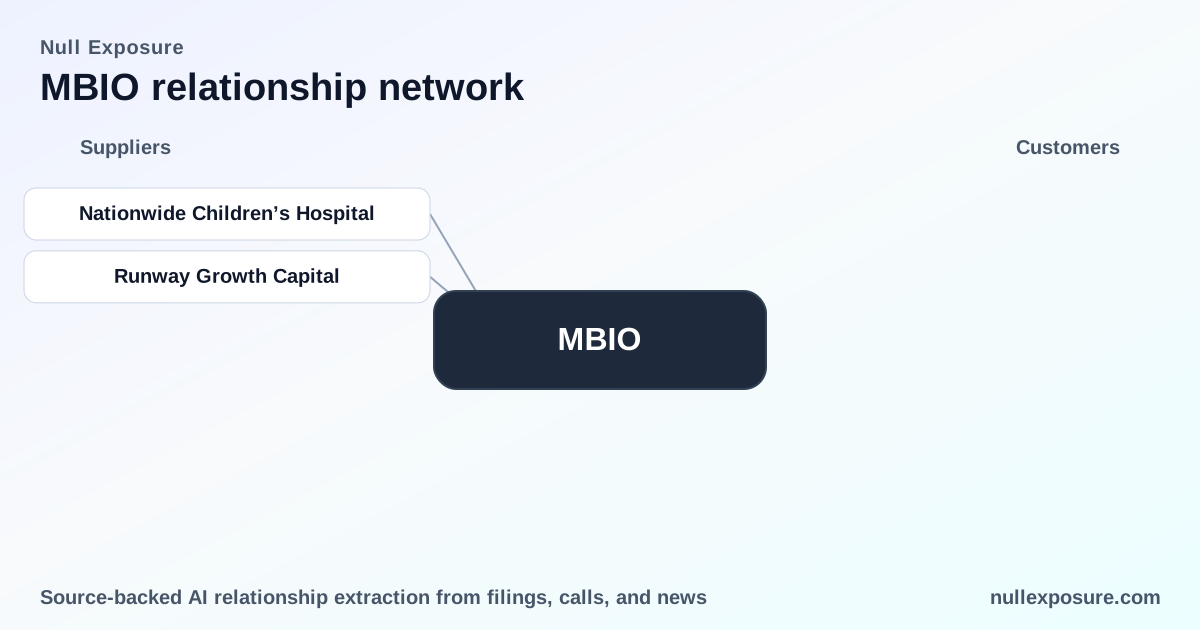
Mustang Bio (MBIO) — supplier profile and relationship map for investors
Mustang Bio is a small-cap clinical-stage biopharma that monetizes through licensing, clinical-stage product development, and capital markets access. The company operates by licensing assets from academic institutions, outsourcing manufacturing and clinical services to third parties, and funding development through a mix of debt and equity arrangements; revenue depends on future approvals, licensing milestones and potential commercialization partnerships rather than product sales today. For a compact, cross-checked view of supplier and funding counterparties visit https://nullexposure.com/.
How Mustang runs its R&D and where value (and risk) comes from
Mustang Bio functions as an asset-centric development sponsor: it licenses biologic and cell‑therapy assets from academic licensors, orchestrates trials through CROs and clinical centers, and outsources manufacturing to CMOs or institutional partners. That model keeps Mustang asset-light—reducing fixed manufacturing overhead—but it also concentrates operational risk in external providers who control critical manufacturing and regulatory execution. Financing (debt and equity) underpins the company’s short-run runway; development value is realized only if licensed assets clear clinical and regulatory hurdles.
Visit https://nullexposure.com/ for the detailed relationship intelligence supporting this assessment.
Supplier and funding relationships you should track
Below are the counterparties identified in the public results for MBIO, each with a plain-English summary and source.
Nationwide Children’s Hospital
Mustang Bio holds a license to MB-108 that originates with Nationwide Children’s Hospital; the academic institution is the licensor of that oncolytic virus program. According to Pharmaceutical-Technology (March 10, 2026), MB-108 is licensed from Nationwide Children’s Hospital and is part of Mustang’s clinical-stage asset set. Source: Pharmaceutical-Technology article (2026-03-10) — https://www.pharmaceutical-technology.com/news/mustang-mb-108-fda/
Runway Growth Capital
Runway Growth Capital provided a material financing relationship to Mustang in the form of a sizeable debt facility; Mustang sourced a large portion of its funding through a $75 million debt financing with Runway. A report from 2MinuteMedicine (March 10, 2026) notes that Mustang derived a large portion of funding from the $75 million debt financing with Runway Growth Capital. Source: 2MinuteMedicine (2026-03-10) — https://www.2minutemedicine.com/mustang-bio-city-of-hope-car-t-cell-therapy-extends-treatment-refractory-glioblastoma-survival/
Operating-model constraints and what they imply for suppliers and investors
The public excerpts and filings paint a consistent company-level profile: high external dependency, short-term contracting posture, and selective capex-light spend.
-
Mustang’s filings repeatedly state reliance on licensors, CROs, CMOs and clinical sites to conduct preclinical work, clinical trials and manufacturing. This is a structural feature: Mustang outsources core development and manufacturing activities to third parties rather than internalizing them, which increases operational leverage but also makes counterparty performance critical. According to Mustang Bio’s FY2024 filings, the company contracts with third parties for manufacturing and clinical trials and expects to continue relying on those providers (FY2024 company disclosures).
-
Manufacturing is frequently performed by institutional partners and government bodies (the NIH is referenced as a producer for oncolytic virus used in MB-108 trials), indicating critical single-sourced technical suppliers for certain programs rather than multiple redundant manufacturers. The company’s FY2024 disclosure cites NIH production for oncolytic virus used in investigator-led trials.
-
Contracting posture skews short-term and flexible: the company’s sales and offering arrangements include termination provisions and at‑the‑market offering mechanics that enable quick changes in capital access and counterparty arrangements. Mustang’s May 31, 2024 At-the-Market Offering Agreement demonstrates an ability to engage and terminate capital-provider relationships quickly (FY2024 filing).
-
Relationship lifecycle is active but volatile: the record shows both active agreements (e.g., offering arrangements) and several terminated licenses in 2024, including mutual terminations with St. Jude and Leiden University Medical Centre and termination of the Mayo Clinic license (with forgiveness of outstanding amounts), highlighting a pattern of restructuring and vendor churn in the prior fiscal year (FY2024 filings).
-
Spend signals show modest per‑supplier transaction size: disclosed cash movements (for example, $4.0 million from warrant exercises netting ~$0.4 million in fees) and spend-band indicators suggest many supplier relationships sit in the low hundred-thousands to low millions per annum range rather than at large-scale commercial spend levels. This implies suppliers face limited per-relationship revenue but potentially valuable long-term upside if assets progress.
Collectively, these constraints imply a supplier ecosystem that is strategically critical but operationally fragile: Mustang depends on a small number of technically-specialized licensors and manufacturers, uses short-term contracts to retain flexibility, and limits per-supplier exposure through modest spend levels.
Investment implications — what to watch and why it matters
-
Licensor dependence is a top risk. MB-108’s license from Nationwide Children’s Hospital makes that relationship strategically important for the program’s future; any licensing dispute, termination or transfer complication would be material to program continuity. (See Pharmaceutical-Technology, Mar 2026.)
-
Manufacturing concentration constrains scalability. Reliance on institutional producers and CMOs (and on entities like the NIH for certain materials) creates a bottleneck risk if partners reprioritize capacity or face quality/regulatory challenges. Company filings in FY2024 document these manufacturing dependencies.
-
Financing mix drives near-term viability. The $75 million Runway debt facility injects runway but increases leverage and repayment obligations; financing relationships therefore shift counterparty risk from R&D to capital providers and may influence strategic choices such as licensing sales or program prioritization. (2MinuteMedicine, Mar 2026.)
-
Contracting posture is defensive and transient. The pattern of license terminations and active ATMs indicates management will reconfigure supplier footprints to preserve cash or refocus programs, raising the probability of future partner churn in pursuit of liquidity or strategic realignment.
Investors should prioritize due diligence on licensor terms (reversion rights, milestone obligations, sublicensing), manufacturing contingency plans (second-source options), and covenants in financing documents that could force asset sales or program deprioritization.
For a detailed relationship map and ongoing monitoring of Mustang Bio counterparties, explore our platform at https://nullexposure.com/.
Bottom line and next steps
Mustang Bio is an early-stage, asset-driven sponsor whose value is concentrated in licensed programs and whose operational continuity depends on a network of licensors, CROs and specialized manufacturers. Key investment signals are: licensor concentration (MB‑108), manufacturing single‑points-of-failure, and reliance on external financing such as the Runway debt facility. Monitor licensing stability, manufacturing capacity commitments, and financing covenants as the primary drivers of upside or downside.
If you need a structured supplier risk brief or an ongoing counterparty monitor for Mustang Bio, get tailored coverage and alerts at https://nullexposure.com/.