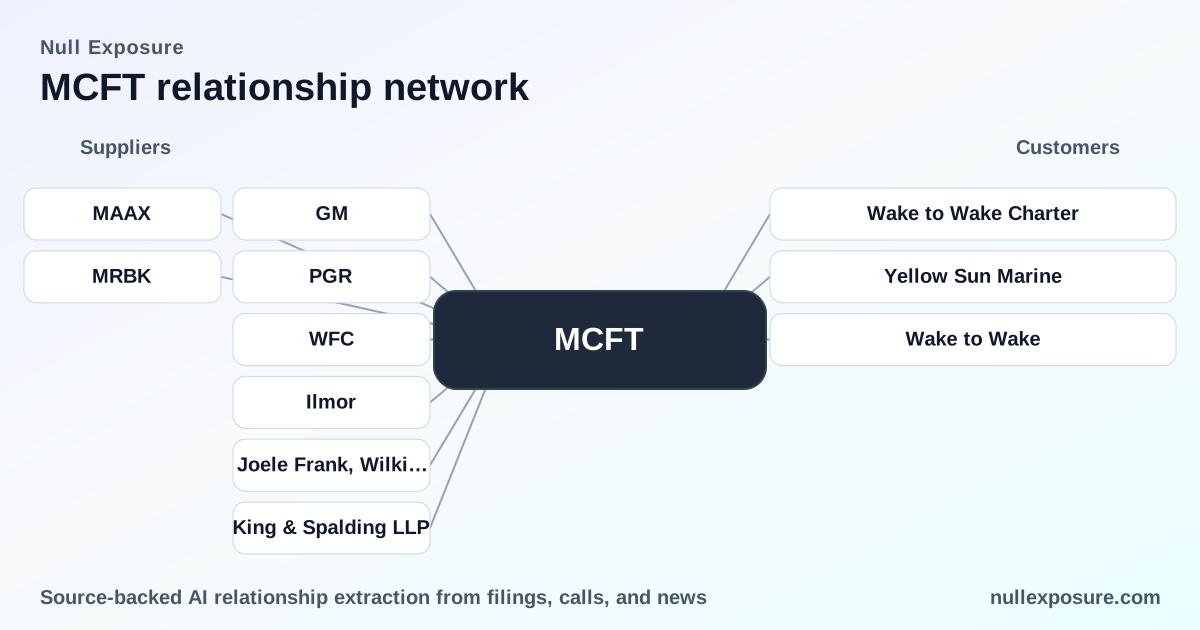
MasterCraft (MCFT) — Supplier Map, Strategic Stakes, and What Operators Should Price In
MasterCraft Boat Holdings builds and sells premium towboats and monetizes through direct boat sales, optional equipment and accessory packages, brand partnerships, and strategic acquisitions that expand its portfolio and distribution. The company sources critical subsystems—most notably engine packages and integrated audio and control systems—through a mix of long-term supplier agreements and commercial partnerships, then amplifies product appeal via co-marketing with automotive and insurance brands. For investors and operators, the immediate focus is supply concentration on powertrains, the commercial value of marquee co-branding, and the procurement commitments that drive working capital and margin volatility. For deeper supplier intelligence, visit https://nullexposure.com/.
Why suppliers matter to the MCFT story
MasterCraft’s product economics are engineered around a few high-value components (engines, hull systems, audio/electronics), and the company’s vendor posture is a mix of long-term strategic contracts for core parts and more flexible arrangements for accessory partners. The consequence: supply disruptions or contract pricing shifts in a narrow set of vendors flow disproportionately to gross margin and delivery cadence.
- Long-term contracting is embedded in procurement. Public filings and press disclosures indicate MasterCraft maintains long-term arrangements with strategic suppliers and is contractually obligated to minimum purchases in some cases, with explicit contract end dates cited in disclosures.
- Engines are a critical cost center. Management identifies engine packages as the most significant components by cost, supporting the conclusion that powertrain suppliers are both strategically critical and material to financial outcomes.
- Spend concentration is non-trivial. Documented purchase bands show multi‑million-dollar annual spend with single vendors in recent fiscal years, creating counterparty and cash-flow concentration that investors must model into working capital and supplier risk scenarios.
Explore supplier exposures and sourcing intelligence at https://nullexposure.com/.
The partner roll call — who does what (and where it shows up)
Below are the counterparties surfaced in MCFT public announcements and news coverage in early 2026, with plain‑English role summaries and source notes.
-
Chevrolet (General Motors, GM)
MasterCraft’s “Let Her Rip” consumer program is powered by Chevrolet Silverado 2500HD trucks, positioning Chevrolet as a marquee tow‑vehicle sponsor that supports marketing and on‑site demonstrations. Source: MasterCraft press release and related coverage in early March 2026 via GlobeNewswire and The Globe and Mail. -
Progressive / Progressive Insurance (PGR)
Progressive is a campaign supporter and insurance partner for MasterCraft’s consumer outreach program, reinforcing product-to-insurance touchpoints and consumer trust during events. Source: MasterCraft “Let Her Rip” press materials published March 2026 via GlobeNewswire and The Globe and Mail. -
Wells Fargo (WFC)
Wells Fargo is acting as exclusive financial advisor to MasterCraft in connection with the announced combination with Marine Products Corporation, providing deal execution and financing advice. Source: MasterCraft/Marine Products combination announcement, February 5, 2026 via GlobeNewswire and coverage in March 2026. -
Ilmor
Ilmor supplies high‑performance inboard engines used in MasterCraft’s new X22 model, including optional supercharged variants that materially affect performance specs and product positioning. This demonstrates a supplier relationship for core powertrain components. Source: X22 launch press release dated January 8, 2026 via GlobeNewswire and subsequent press coverage. -
Joele Frank, Wilkinson Brimmer Katcher
Joele Frank is serving as strategic communications advisor to MasterCraft, supporting investor and media relations around corporate transactions and product launches. Source: MasterCraft/Marine Products combination announcement, February 5, 2026 via GlobeNewswire. -
King & Spalding LLP
King & Spalding is serving as legal counsel to MasterCraft for the announced combination with Marine Products Corporation, reflecting external legal support for M&A and corporate governance matters. Source: February 5, 2026 transaction announcement via GlobeNewswire. -
Meridian
Meridian provides the SoundStage Audio system for MasterCraft’s X22, positioning the company as the premium audio partner for in‑boat sound and experiential differentiation. Source: X22 product coverage and launch articles published January–March 2026 (autos.yahoo and GlobeNewswire). -
MAAX
MAAX supplies an optional transom audio system that creates a dedicated rear-of-boat audio experience for riders, a product-level option that supports up‑sell and accessory margin. Source: X22 launch materials and event coverage in early 2026 (QuiverQuant and GlobeNewswire).
Contract posture, concentration and spend — practical implications
The public evidence generates clear operational signals that should shape investment and supplier‑risk analysis:
- Long-term supply commitments exist. Management statements reference long-term contracts and purchase minimums that extend supplier relationships and obligate future cash outflows through explicit contract end dates. This reduces short‑term re‑sourcing flexibility but secures price/availability in key years.
- High concentration on engine packages. Filings identify engines as the most significant components by cost and show that a single‑vendor supply arrangement historically covered all engines for MasterCraft performance boats in recent fiscal years — a concentration risk that requires active mitigation.
- Material spend bands are significant to P&L. Disclosed purchase figures show vendor spend in the multi‑million dollar range across recent fiscal years, with some vendors falling in the $10M–$100M band and others in the $1M–$10M band, creating supplier counterparty exposure that is important for covenant and cash‑flow modeling.
- Buyer role with manufacturing elements. MasterCraft acts as buyer for raw materials and parts and also engages manufacturers for integrated subsystems; the company is therefore simultaneously contractually committed and operationally dependent on supplier execution.
Risks, opportunities, and what operators should prioritize
- Risk — supply concentration: A narrow set of engine suppliers creates a single point of failure for production and margin. Model scenarios should include price shocks, minimum‑purchase obligations, and temporary delivery shortfalls.
- Opportunity — premium co‑branding: Partnerships with Chevrolet and Progressive give MasterCraft marketing leverage and potential channel access to tow‑vehicle buyers and insured owners; these relationships increase the value of product upgrades and event activation.
- Operational priority — supplier diversification vs. contract enforcement: Operators should weigh near‑term costs of diversifying critical suppliers against the contractual obligations and volume economics embedded in existing long‑term agreements.
For a tactical review of supplier exposures and to benchmark MCFT’s counterparty concentration against peers, visit https://nullexposure.com/.
Bottom line for investors and operators
MasterCraft’s commercial model is product-led but supplier-dependent: engines and integrated subsystems drive both cost structure and customer differentiation, while marketing partners amplify brand value at limited direct cost. Investors should price in the operating leverage tied to core supplier contracts and the potential for concentrated counterparty risk; operators should prioritize supply‑chain redundancy and contract management as levers to protect gross margins and fulfillment. For ongoing monitoring, supplier mapping, and deal advisory intelligence, return to https://nullexposure.com/.