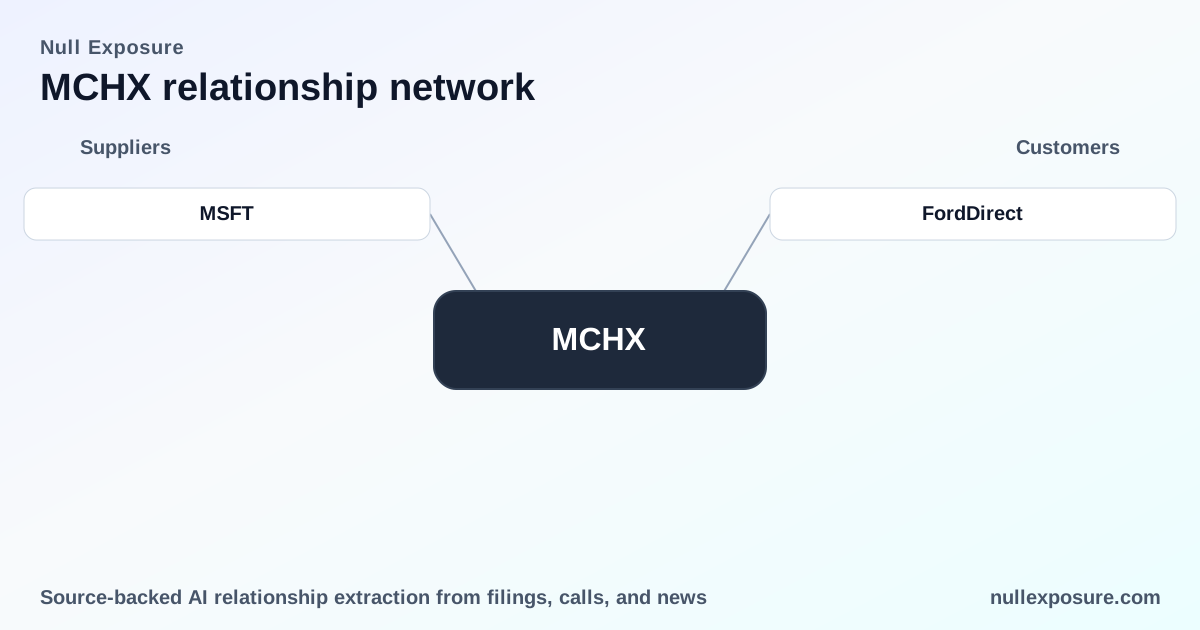
Marchex (MCHX) — supplier relationships and what they mean for operators and investors
Marchex is a call-analytics and conversational intelligence business that monetizes by converting inbound phone traffic into measurable customer leads and recurring revenue via software and services sold to advertisers and enterprises. The company distributes technology both directly and through commercial channels, and it generates revenue primarily from analytics subscriptions, lead conversions and platform usage fees. Investors should evaluate Marchex on two fronts: platform monetization (conversion economics) and its dependence on third-party infrastructure and distribution partners.
For a structured supplier map and deeper counterparty analytics, visit the Null Exposure homepage: https://nullexposure.com/
Why the supplier picture matters for a call-analytics operator
Marchex’s product is inseparable from the infrastructure and commercial channels that deliver phone calls, host analytics and expose those services to enterprise buyers. A modern call-analytics vendor is simultaneously a software company, a data processor and a channel-led merchant—meaning suppliers can be critical to uptime, distribution, compliance and margins. Marchex’s latest public metrics (Revenue TTM ~$46.5M; negative operating margins; market cap ~ $61.5M) show a small, volatile company with high operating leverage and sensitivity to outages or channel disruptions.
Key business-model realities for investors:
- Platform dependence: The product requires cloud hosting, telephony integrations and marketplace distribution to reach customers.
- Channel-driven scale: Listing in major marketplaces can materially accelerate enterprise adoption without proportionally higher salesforce costs.
- Sourcing concentration: Marchex’s own filings disclose reliance on third-party cloud providers and a small number of financial institutions for cash management—this increases single-point risk.
If you want a rapid supplier risk snapshot for investment diligence, Null Exposure centralizes these signals: https://nullexposure.com/
The Microsoft Azure relationship — distribution and marketplace access
Marchex has launched an initial product on the Microsoft Azure Marketplace and AppSource, giving the company a global commercial channel and potential route to enterprise customers who transact through Azure. According to the company release reported via BizWire/Whittier Daily News in August 2025, Marchex announced its product listing on Microsoft’s marketplaces. (See the press report: https://markets.financialcontent.com/whittierdailynews/article/bizwire-2025-8-12-marchex-announces-second-quarter-2025-results)
This relationship is primarily a distribution and integration touchpoint: Marketplace listings improve discoverability and ease procurement for Azure customers, and can reduce friction in enterprise deals by leveraging Microsoft’s commercial and billing flows. The listing does not, in public commentary, replace Marchex’s other cloud or telephony suppliers.
What this single supplier relationship implies for risk and opportunity
Microsoft Marketplace access is a clear commercial positive—it lowers GTM friction and signals product maturity sufficient to meet Azure listing requirements. For investors and operators, the important trade-offs are:
- Opportunity: Faster path to enterprise buyers and potential co-sell motions with Azure sales teams that can reduce customer acquisition cost.
- Risk: Marketplace distribution can create dependency on channel economics and terms; pricing, revenue recognition and renewal dynamics can shift when a third-party platform intermediates sales.
- Operational: A listing does not eliminate the need for resilient hosting and telephony integrations; Marchex still relies on third-party cloud and network services for uptime and data processing.
For a comparative supplier map and to monitor channel partner changes over time, see Null Exposure: https://nullexposure.com/
Full list of supplier relationships we found (concise, sourced)
- Microsoft Azure (Microsoft) — Marchex has launched its initial product into the Microsoft Azure Marketplace and AppSource, giving the company a distribution channel to Azure customers and a route for enterprise procurement. Source: company press release reported by BizWire/Whittier Daily News (Aug 12, 2025): https://markets.financialcontent.com/whittierdailynews/article/bizwire-2025-8-12-marchex-announces-second-quarter-2025-results
(That is the complete supplier relationship captured in the supplier-scope results for MCHX.)
Company-level constraints and operating-model signals
The supplier constraints surfaced in Marchex’s filings produce the clearest operating-model signals:
- Global hosting reliance: Marchex states it “primarily rely[s] upon third parties to provide hosting services, including hardware support and service, and network monitoring at various domestic and international locations.” This is a company-level signal that infrastructure risk is global—outages or geopolitical controls in any key hosting region could affect service delivery.
- Service-provider dependency and concentration: The filings note dependence on third‑party cloud providers and that the company “maintains substantially all of its cash and cash equivalents with two financial institutions.” These are material operational constraints: service-provider dependency elevates criticality and vendor-management requirements, while concentrated banking relationships increase treasury risk.
Translating those constraints into business-model characteristics:
- Contracting posture: Reactive and dependent—Marchex must operate within the commercial terms and SLAs of large cloud and marketplace platforms rather than imposing terms.
- Concentration: Moderate to high—few infrastructure and financial counterparties create single-point exposure.
- Criticality: High—infrastructure availability and marketplace relationships directly affect revenue realization and retention.
- Maturity: The marketplace listing signals product maturity and commercial readiness; however, negative profitability, small market capitalization and high beta indicate corporate-stage fragility—operational disruptions have outsized financial consequences.
These constraint excerpts are drawn from Marchex’s public filings and risk disclosures filed through FY2025.
Bottom line — what investors and operators should watch
- Monitor marketplace traction: Azure listing is a distribution win; watch for measurable impacts in new enterprise contracts and ARR growth.
- Track supplier concentration and backup plans: Given global hosting reliance, confirm multi-region redundancy and contractual SLAs with cloud providers in diligence.
- Watch cash and counterparty concentration: Banking concentration and small market cap amplify exposure to operational shocks.
For ongoing supplier monitoring, counterparty scoring and relationship maps that update when partners or constraints change, explore Null Exposure’s platform: https://nullexposure.com/
In summary, Marchex has taken a pragmatic channel step by placing product in the Microsoft Azure Marketplace—a commercial accelerator that does not eliminate the core infrastructure risks identified in its filings. Investors should treat the Azure relationship as a distribution and procurement improvement while continuing to scrutinize hosting dependencies, contractual terms and concentration in financial counterparties.