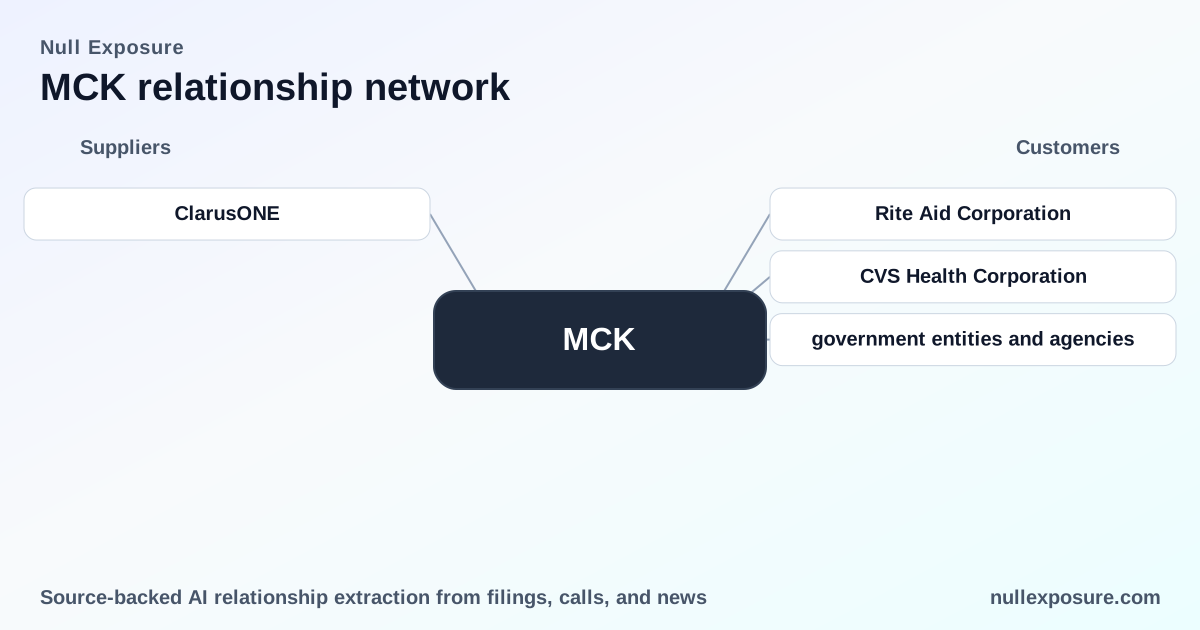
McKesson’s supplier posture: scale, concentration, and a key joint-venture risk
McKesson operates as a high-volume pharmaceutical and medical-supply distributor while monetizing through distribution margins, service fees, health‑IT licenses, and care‑management solutions. The company converts scale into predictable cash flow by capturing logistics and channel economics—buying large blocks of inventory from manufacturers, extracting purchase discounts and supplier incentives, and reselling into pharmacies, hospitals and retail partners while layering software and services revenue.
For investors and operators evaluating supplier relationships, the critical lens is this: McKesson’s margins and execution are driven by supplier concentration and contractor posture—large suppliers supply most volume, McKesson acts as the buyer with contractual levers, and joint ventures such as ClarusONE create discrete sourcing risks that can affect margins. Learn more at https://nullexposure.com/.
What the supplier signals say about McKesson’s operating model
McKesson’s 10‑K and related disclosures frame the supplier picture in three practical signals that matter for investment analysis:
-
High supplier concentration. The ten largest suppliers accounted for approximately 69% of total purchases in fiscal 2025, a level that makes vendor disruptions or price moves rapidly material to gross margin and working capital. This is a company‑level disclosure that signals concentrated counterparty exposure and elevated operational dependence on a small set of counterparties (McKesson FY2025 10‑K).
-
Buyer posture with contractual offsets. McKesson treats fees and incentives from suppliers as reductions to cost of sales, reflecting a negotiating model that monetizes supplier rebates and service fees through an accounting offset rather than separate revenue lines; this gives McKesson structural control over margin presentation but also ties earnings sensitivity to supplier contract terms (McKesson FY2025 10‑K).
-
Direct manufacturer sourcing and single large supplier exposure. The company obtains products from manufacturers, and its largest supplier accounted for roughly 11% of purchases in FY2025, indicating meaningful single‑counterparty risk even within a diversified supplier list (McKesson FY2025 10‑K).
Taken together, these signals describe an operating model with high volume, concentrated supplier exposure, and negotiated commercial offsets—a profile that delivers scale benefits but concentrates downside in supply shocks or adverse renegotiations.
ClarusONE (joint venture with Walmart): sourcing risk, margin exposure
ClarusONE is a joint venture between McKesson and Walmart intended to serve retail pharmacy channels at scale. According to McKesson’s FY2025 10‑K, input cost increases, product discontinuations, and market shortages could result in ClarusONE being unsuccessful in sourcing product to meet customer needs or could negatively impact margin. This disclosure makes the JV a concrete vector for supply‑chain pressure that flows to McKesson’s consolidated economics (McKesson FY2025 10‑K).
How these supplier relationships change the risk / return profile
McKesson’s supplier disclosures reframe typical distribution economics into a few investment‑relevant conclusions:
-
Upside is scale-driven but hinged to supplier terms. The business monetizes rebates and service incentives directly; therefore, changes to supplier contracts or rebate structures can compress reported cost of sales and materially affect operating margins.
-
Concentration amplifies shocks. With the top ten suppliers constituting two‑thirds of purchases and the largest supplier at ~11%, a single disruption—whether a manufacturer recall, capacity constraint, or pricing dispute—translates into meaningful operational stress. Investors should treat supplier risk as a first‑order risk factor, not a peripheral item (McKesson FY2025 10‑K).
-
Joint ventures are distinct operational exposures. ClarusONE is not simply another customer channel; it is a partnered sourcing and distribution vehicle with Walmart that introduces sourcing complexity and margin sensitivity that sits outside McKesson’s core wholesale flows.
What to watch next (for investors and operators)
Active monitoring priorities that change capital allocation and operational focus:
- Supplier concentration metrics: track any change in the share of purchases accounted for by the top suppliers, and whether the largest supplier’s share rises above historical levels.
- ClarusONE sourcing updates: vendor substitutions, product availability notices, or public comments from Walmart/McKesson on inventory constraints.
- Contract and rebate disclosures: any revision in how supplier incentives are booked or renegotiated terms that reduce rebates will feed directly into cost of sales.
- Margin and working‑capital trends: gross margin, DSO, and inventory turns will reflect supplier negotiation outcomes and sourcing stress.
For deeper supplier intelligence and continuous monitoring, see https://nullexposure.com/.
Relationship catalog — every supplier connection disclosed
- ClarusONE (joint venture with Walmart Inc.): McKesson discloses that input cost increases, product discontinuations, and market shortages could cause ClarusONE to be unsuccessful in sourcing product or could negatively impact margins, identifying the JV as a specific operational vulnerability tied to sourcing and price volatility (McKesson FY2025 10‑K).
That single relationship is accompanied by company‑level supplier constraints that affect the entire procurement book: top‑ten supplier concentration (≈69%) and a largest‑supplier share (~11%) make the ClarusONE risk additive to already concentrated procurement exposure (McKesson FY2025 10‑K).
Conclusion — actionable investor takeaways
McKesson’s business model converts scale into predictable distribution cash flow, but supplier concentration and joint‑venture sourcing risks are decisive margin levers. Investors should treat supplier dynamics as an active governance and strategic variable: small changes in rebate structures, contract renewals, or manufacturer availability can propagate quickly across a distribution network that sources the bulk of its inventory from a compact supplier base.
To assess how those supplier factors will affect valuation, focus on real‑time signals: supplier purchase concentration, ClarusONE sourcing performance, and changes to supplier incentive accounting. For continuing diligence and supplier‑level insight, visit https://nullexposure.com/.
Bottom line: McKesson is structurally advantaged by scale, but concentrated supplier exposure and JV sourcing threaten margin stability—monitor supplier contracts and ClarusONE disclosures as leading indicators of earnings risk.