Mister Car Wash (MCW): What the advisor and supplier map tells investors
Mister Car Wash operates and monetizes through a national network of wash and oil-change locations combined with a subscription membership model that generates predictable, recurring revenue and drives customer retention; corporate economics are supported by scale in procurement, technology-enabled membership tracking, and steady ancillary service margins. The company’s outsized exposure to a small set of equipment and systems suppliers, combined with a high-profile take‑private process, places counterparty relationships squarely in the investment spotlight. For a concise vendor and advisor view, see our homepage: https://nullexposure.com/.
Why the current advisor roster matters to investors
The recent announcement of a take‑private transaction by Leonard Green Partners has triggered an array of legal and financial advisers on both sides, which is relevant because the transaction will determine future capital allocation, vendor negotiations, and operational priorities. A concentrated supplier base and a long‑term service relationship for core hardware/software systems mean changes at the ownership level will transmit quickly to operating outcomes. According to a Latham & Watkins press release (Feb 2026), Latham is advising Mister Car Wash in the acquisition; independent reporting noted the full advisor roster for the special committee and for the buyer (Feb 22, 2026).
The deal and supplier relationships: a plain-English map
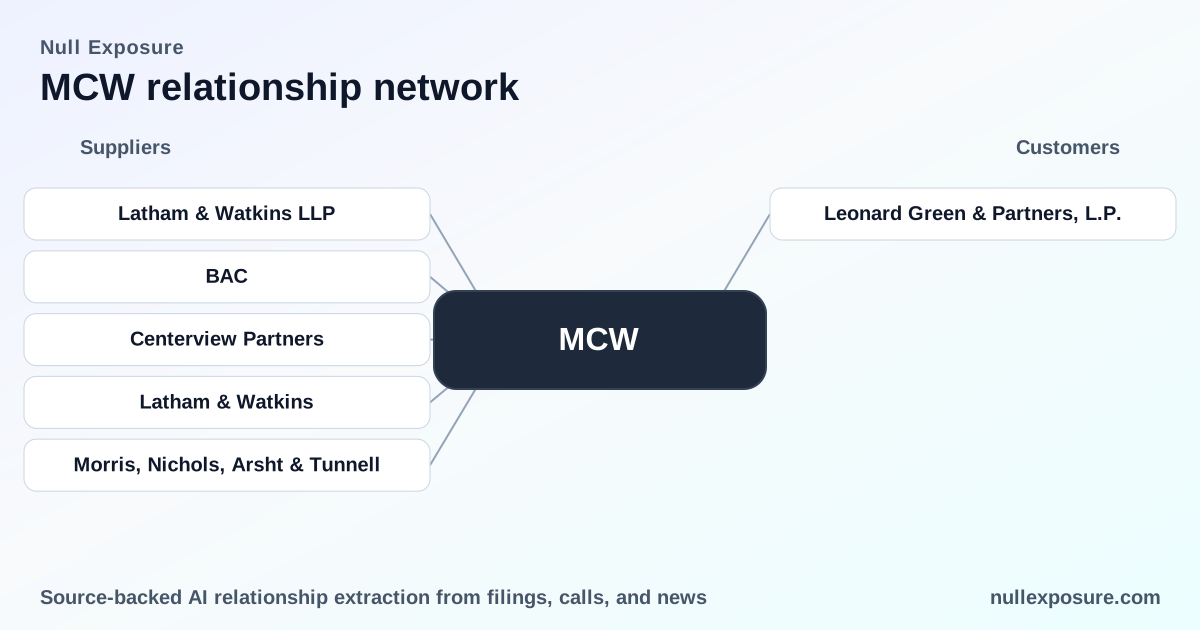
Below are every firm named in the public relationship feed and a 1–2 sentence description of their role.
-
Latham & Watkins LLP — Latham & Watkins is representing Mister Car Wash in the Leonard Green take‑private transaction, with a New York corporate deal team leading the engagement. This representation is documented on Latham’s website in February 2026 and confirms Latham’s role as lead legal counsel to the company during the sale process (Latham & Watkins news release, Feb 2026).
-
BofA Securities — BofA Securities is serving as a financial advisor to the special committee charged with evaluating the transaction, positioning BofA as the committee’s lead banker for fairness and valuation work. This engagement was reported by market coverage of the deal on Feb 22, 2026 (AlternativesWatch, Feb 22, 2026).
-
Centerview Partners — Centerview Partners is acting alongside BofA as a financial advisor to the special committee, providing independent advisory work and valuation analysis in the go‑private process. The dual‑advisor arrangement is described in the same market report covering the transaction (AlternativesWatch, Feb 22, 2026).
-
Morris, Nichols, Arsht & Tunnell — Morris Nichols is serving as legal counsel to the special committee, providing Delaware corporate and special‑committee counsel during the transaction review. The report listing counsel to the special committee appears in Feb 2026 media coverage of the deal (AlternativesWatch, Feb 22, 2026).
-
Latham & Watkins (alternate listing) — Multiple entries reference Latham in both firm and abbreviated forms; Latham’s separate public notice confirms the firm’s internal deal team and its role representing Mister Car Wash in the acquisition talks (Latham & Watkins news release, Feb 2026).
Each of the above relationships is documented in press and market reports tied to the FY2026 transaction cycle and should be treated as contemporaneous to the announced acquisition activity. For a direct view of related corporate signals and supplier exposure, visit our home page: https://nullexposure.com/.
What the relationship signals reveal about Mister Car Wash’s operating model
Several company‑level constraints stand out in filings and public excerpts, and they have direct operational and investment implications:
-
Long‑term contracting posture. The company states it maintains long‑term relationships with key vendors, which signals multi‑year commitments for equipment and core systems rather than spot purchasing. Long terms increase switching costs but concentrate counterparty risk (company disclosure, FY end).
-
Material supplier dependence. Mister Car Wash discloses reliance on a limited number of suppliers for car wash equipment and certain supplies; any interruption could materially reduce sales and margins. This is a material operational risk that magnifies the importance of vendor continuity through ownership transitions (company filing language on supplier risk).
-
Service provider relationship for critical systems. A 2018 agreement established access to a comprehensive suite of hardware, software, and management systems that underpin membership tracking and loyalty programs; that vendor functions as a service provider integral to recurring revenue recognition and operations. Operational resilience depends on that vendor’s continuity and contractual terms.
These constraints are company signals rather than attachments to any one advisor; they describe the maturity, criticality, and concentration of MCW’s supplier ecosystem.
Implications for investors and operators: risk, leverage and optionality
The combination of concentrated supplier relationships and a private‑equity driven ownership change creates a few clear, actionable implications:
-
Risk of renegotiation or integration disruption. Private equity ownership commonly re‑assesses vendor contracts and technology roadmaps; any renegotiation of the 2018 systems agreement or equipment supply contracts could quickly impact membership tracking and service delivery. Investors should prioritize review of vendor contract renewal terms and termination provisions.
-
Opportunity to rationalize supplier economics. LGP could leverage scale to drive procurement savings, consolidate suppliers, or invest in proprietary systems — an upside if executed without operational disruption.
-
Governance and oversight become material. The presence of independent financial advisors and special‑committee counsel (BofA, Centerview, Morris Nichols) suggests a formal review process that preserves minority protections — useful signal for investors focused on deal fairness and transitional governance (deal reporting, Feb 2026).
At this stage, the most important investor questions relate to contract length, termination triggers, and migration risk for the membership system — those are the knobs that determine how supplier changes will affect revenue stability.
For a succinct vendor risk assessment and deal‑impact briefing, check our resources: https://nullexposure.com/.
Tactical next steps for diligence
For investors and operational leaders evaluating MCW exposure, prioritize the following:
- Obtain the term sheets and master service agreements for the 2018 systems provider and the principal equipment suppliers to confirm renewal dates, price escalation clauses, and termination rights.
- Require counterparty continuity covenants or transition plans as part of any definitive financing or purchase agreement if vendor continuity materially underpins revenue.
- Stress‑test membership and loyalty data continuity scenarios to quantify revenue at risk under a systems migration or prolonged vendor outage.
Bottom line
Mister Car Wash’s business is driven by recurring membership revenue and supported by a small set of critical vendor relationships that are contractually long‑term and materially important. The current take‑private transaction has placed legal and financial advisers in central roles, but the real value lever for investors is control of supplier terms and system continuity. Review vendor contracts now, prioritize data continuity and termination exposure, and factor supplier concentration into any valuation or integration plan.
For ongoing monitoring and an investor‑grade vendor map, visit: https://nullexposure.com/.