MDCXW (Medicus Pharma Ltd. Warrant) — supplier relationships and commercial posture investors need to know
Medicus Pharma operates as a small, R&D-driven pharmaceutical developer that monetizes primarily through equity instruments, licensing of core intellectual property and milestone/service arrangements rather than product revenue. The company’s commercial model relies on an exclusive worldwide license for its core technology, strategic service providers for development and clinical execution, and occasional capital-market transactions (including a recent warrant inducement) that are supported by advisory relationships. For a quick overview of supplier exposures and how they affect valuation and execution risk, see https://nullexposure.com/.
How Medicus makes value (the investor thesis)
Medicus derives future value from progressing its pipeline toward clinical milestones and commercial readiness while protecting upside via exclusive licensing arrangements. With no reported revenue through the latest quarter, the balance of value sits in intellectual property, R&D progress enabled by third-party service providers, and the company’s ability to secure capital (including warrant-based financings) to extend the runway. The company’s operating model is therefore capital and partner-dependent, so supplier and advisor relationships directly influence dilution risk, program timelines and the survival of the business.
Who Medicus is working with and what it means for partners
Below I cover every supplier/advisor relationship surfaced in public notices and filings. Each relationship is summarized in plain English with a concise source.
-
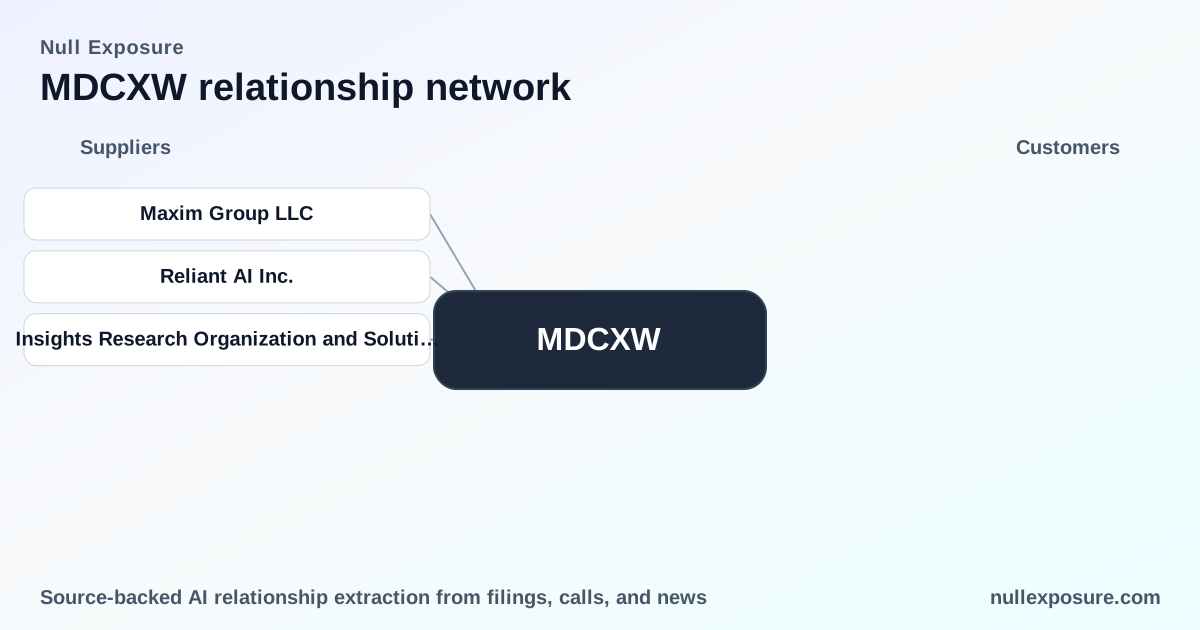
Maxim Group LLC — Maxim is acting as Medicus’s exclusive financial advisor on a warrant inducement transaction that was publicly announced in a series of syndicated press releases in March 2026. This places Maxim at the center of any near-term capital-market activity and dilution mechanics tied to the inducement. Source: syndicated press release to MyCentralJersey and other outlets (March 2026), e.g. https://www.mycentraljersey.com/press-release/story/342278/medicus-pharma-ltd-enters-into-51-million-warrant-inducement/
-
Reliant AI Inc. — Medicus announced an intended one‑year, milestone‑based services engagement with Reliant AI to develop an AI-driven clinical data analytics platform, capped at a $200,000 aggregate commitment tied to delivery milestones. This contract signals a measured investment in digital analytics rather than a large multi-year platform spend. Source: press release syndicated to FloridaToday (March 2026), https://www.floridatoday.com/press-release/story/60652/medicus-pharma-ltd-announces-engagement-with-reliant-ai-to-develop-artificial-intelligence-ai-driven-clinical-data-analytics-platform/
-
Insights Research Organization and Solutions (IROS) — IROS, a UAE-based contract research organization, is coordinating Medicus’s clinical study as part of the Reliant AI collaboration announcement, indicating overseas CRO coordination for clinical execution. Source: same FloridaToday syndicated release (March 2026), https://www.floridatoday.com/press-release/story/60652/medicus-pharma-ltd-announces-engagement-with-reliant-ai-to-develop-artificial-intelligence-ai-driven-clinical-data-analytics-platform/
Operating constraints and what they reveal about the business model
Medicus’s supplier and contracting posture creates a small-company profile that investors should model directly into risk and scenario analyses.
-
Licensing is the core asset. Company disclosures describe an exclusive license to technology co‑developed with academic institutions and characterize the license agreement as the company’s main asset and the basis for product development. The license carries termination provisions that would be material to the company’s ability to continue operations. This elevates counterparty and contract-duration risk as primary valuation drivers.
-
Counterparty concentration and non‑profit counterparty exposure. The license relationship is with an academic/non‑profit originator (University of Pittsburgh referenced in filings), introducing a counterparty that has specific termination rights and typical academic‑licensor oversight. This is a company‑level constraint: the license is critical and concentrated.
-
Global rights with exclusive scope. The license grants exclusive, worldwide rights to the licensed technology — a positive for addressable market, but it concentrates platform risk on a single contractual relationship for global commercialization.
-
Service‑provider dependency and spend profile. Filings show multiple service providers supporting operations (clinical CROs, QA/QC testing partners, managerial support firms). Annual payments to RBx exceeded $1.6 million in 2024, and previous managerial services from Velocity Fund Management were terminated in 2023. These vendor relationships are active and materially impact operating cash burn. Evidence in filings demonstrates both active engagements and at least one terminated provider agreement (VFM), which signals evolving vendor strategy and potential re‑procurement risk.
-
Manufacturing and distribution linkages. The company references third‑party manufacturers and distributors used in the production and release cycle (named contractors for APIs and QA release sign‑offs). These manufacturing chains implicate product quality, release timing, and clinical supply continuity as execution risks.
-
Spend bands and runway sensitivity. Historic payments to licensors and service providers (e.g., roughly $681k to the University of Pittsburgh since 2016; seven‑figure annual payments to RBx) indicate the company operates with mid‑to‑high six‑figure to low seven‑figure annual vendor commitments, making capital access and financing cadence decisive for execution.
What investors should take away (practical signals)
- Primary risk is contractual: the exclusive license is the company’s core asset and any termination or dispute would be value‑destructive. Model a high probability of partner continuity for base cases only if diligence confirms remediations to termination triggers.
- Capital markets dependency: Maxim Group’s role as exclusive financial advisor for the warrant inducement places capital structure decisions and dilution timing under an adviser‑driven timetable. Investors should factor warrant terms and inducement dilution into short‑term valuation scenarios.
- Execution depends on third‑party services: RBx, CROs (IROS), and QA/CMO partners control timeline and clinical supply; vendor failures or delays translate directly to program delay and additional capital need.
- Spend concentration is material: mid‑seven‑figure vendor payments in recent fiscal years produce runway sensitivity that requires monitoring of subsequent financings or cost restructuring.
For a concise mapping of suppliers to contractual roles and to monitor changes in advisor and vendor engagements, visit https://nullexposure.com/ — the homepage includes tools and alerts tailored for buy‑side diligence.
Quick action items for operator and investor diligence
- Validate the current status and term language of the exclusive license with the University of Pittsburgh and confirm any cure periods or insolvency triggers.
- Obtain the full engagement letter with Maxim Group to quantify dilution risk from the warrant inducement and expected timing.
- Review RBx invoices and statement of work split to confirm which managerial functions are outsourced and for how long the current fee structure is committed.
- Confirm clinical supply chain contracts (manufacturers, Clinigen/Intertek/Nelson references) and inventory buffers for upcoming clinical milestones.
If you want ongoing coverage of supplier exposures and advisor relationships for small biotech issuers like Medicus, explore services and profiles at https://nullexposure.com/ — the portal is structured for investor and operator monitoring.
Bottom line
Medicus’s valuation and timeline are driven more by contractual relationships and capital‑market activity than by product revenue. The exclusive license is the single largest determinant of enterprise value, and active service providers and a financial advisor role in the current warrant inducement create clear operational and dilution vectors that investors must model explicitly. Make the license and vendor engagements the first line items in your diligence checklist.