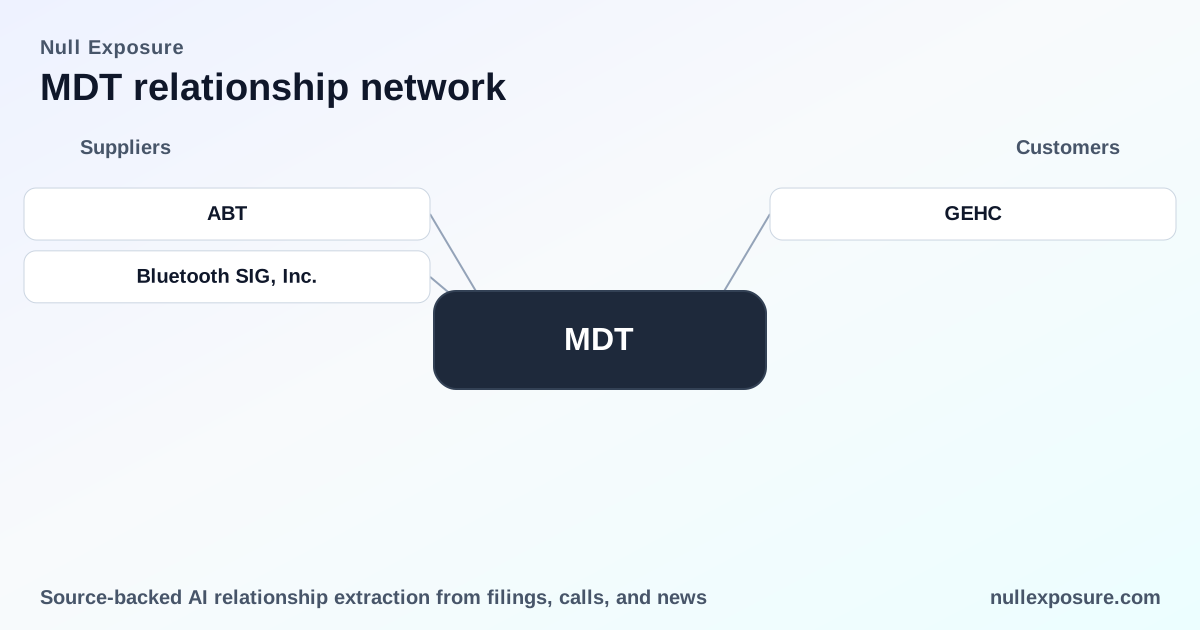
Medtronic (MDT) — supplier relationships, operational posture, and investor implications
Medtronic monetizes a broad portfolio of implanted and external medical devices, consumables, and related services, converting a large installed base into recurring revenue through device sales, disposables, and aftermarket support; the company reported roughly $35.5 billion in TTM revenue and carries a market capitalization north of $113 billion, underlining its scale and pricing power in medical devices. For investors evaluating supplier relationships, the core questions are how Medtronic sources critical components (and licenses), how payment and financing terms shape supplier economics, and how third‑party service providers influence operational resilience.
Explore supplier footprints and counterparty risk further at https://nullexposure.com/.
How to read Medtronic’s supplier posture — the quick thesis
Medtronic operates with standardized, transaction-heavy supplier arrangements and centralized treasury counterparty management. The company runs a supplier financing program and standard 90‑day payment terms, indicating a contracting posture that optimizes Medtronic’s working capital while offering suppliers earlier payment options through third‑party finance. Medtronic also relies on licensed standards and outside service providers for cybersecurity and financial operations, embedding external vendors into both product delivery and risk management.
The relationships that matter (what the press data shows)
Below are the supplier and license relationships surfaced in public reporting for FY2026; each entry includes the primary public source.
-
Abbott — Multiple trade reports indicate that Medtronic’s MiniMed insulin delivery products integrate the Abbott Instinct Go™ glucose sensor, with compatibility and commercial launches noted in EMEA and referenced around the MiniMed separation/IPO news. According to a BioSpace press release (March 2026), compatibility of Abbott’s Instinct Go sensor with MiniMed Go in Europe is pending CE‑mark approval, and DrugDeliveryBusiness coverage (March 2026) also described the Instinct sensor as the sensor component in the integrated insulin delivery offering.
Sources: BioSpace press release, March 2026; DrugDeliveryBusiness coverage, March 2026. -
Bluetooth SIG, Inc. — In product launch material for MiniMed Go, Medtronic uses Bluetooth® word marks under license, signaling reliance on Bluetooth standards and associated trademark licensing for device communications. A BioSpace press release (March 2026) discloses that the Bluetooth marks are registered trademarks owned by Bluetooth SIG and are used by Medtronic under license.
Source: BioSpace press release, March 2026.
What these specific relationships imply for revenue and operations
The Abbott integration is strategically important for Medtronic’s diabetes portfolio: using a third‑party continuous glucose sensor lets Medtronic accelerate time‑to‑market for integrated insulin delivery systems while avoiding the R&D and regulatory burden of developing an in‑house sensor. That tradeoff accelerates revenue ramp for new insulin products but creates supplier dependency on Abbott for a component that is functionally critical to product performance and regulatory approvals. The pending CE mark for sensor compatibility is a product gating factor with direct commercial consequences. (Sources: BioSpace, DrugDeliveryBusiness, March 2026.)
Bluetooth trademark licensing is a routine but necessary arrangement that ensures interoperability and regulatory compliance for wireless medical devices; this is low‑friction operationally but enforces adherence to certification and trademark requirements that are part of product launches. (Source: BioSpace, March 2026.)
Explore Medtronic’s broader supplier risk indicators at https://nullexposure.com/.
Company‑level constraints and what they signal about the operating model
Publicly extracted constraint evidence provides actionable signals about Medtronic’s supplier ecosystem and treasury posture:
-
Contracting posture — short‑term / standardized: Medtronic’s supplier financing program and standard 90‑day payment terms indicate the company operates with standard, short-term supplier contracts while enabling suppliers to access earlier cash via third‑party financing. This is consistent with centralized procurement practices and suggests predictable invoice cycles.
Evidence: supplier financing program and 90‑day terms. -
Counterparty concentration — large financial institutions: Treasury and derivative exposures are managed with major financial institutions, with periodic credit evaluations and collateral agreements for derivatives counterparties, signaling conservative counterparty governance rather than fragmented bank risk.
Evidence: cash, investments, and derivative counterparties with major financial institutions. -
Relationship role — reliance on service providers: The company contracts third‑party service providers for cybersecurity testing and assessment, and maintains collateral credit agreements with primary derivatives counterparties; these service providers are operationally significant for risk management and regulatory readiness.
Evidence: engagement of third‑party cybersecurity assessment and financial counterparty arrangements.
Together these constraints portray a company that centralizes supplier/payment terms to preserve liquidity, preserves financial counterparty discipline, and outsources specialized risk functions to established service providers. These are company‑level signals; they are not attributed to any specific supplier unless explicitly named in the supporting excerpts.
Risk profile and what investors should watch
- Regulatory gating for Abbott‑supplied sensors is a direct commercial risk: CE‑mark timing affects go‑to‑market windows and revenue recognition. (BioSpace, March 2026.)
- Supplier dependency on third‑party sensors increases operational leverage to a partner’s manufacturing and regulatory cadence.
- Working capital posture (90‑day terms + supplier financing) benefits Medtronic’s cash conversion but puts pressure on suppliers’ liquidity if financing access is constrained.
- Service provider criticality for cybersecurity and derivative management creates outsourcing concentration risks that require ongoing vendor governance.
Practical next steps for investors and operators
- Monitor regulatory milestones for Abbott’s Instinct Go CE approval and Medtronic’s MiniMed commercialization updates; these directly affect the diabetes revenue trajectory.
- Assess counterparty credit discipline: review Medtronic’s disclosures on collateral and derivative counterparties in the next quarter filing to validate the stated large‑institution concentration.
- For operators, ensure vendor governance around cybersecurity assessments and supplier financing program terms to manage reputational and supply continuity risks.
For deeper supplier analytics and continual monitoring, visit https://nullexposure.com/.
Bottom line
Medtronic combines scale and recurring revenue with a supplier model that uses external component specialization (e.g., Abbott sensors) and standardized contracting to accelerate product launches while preserving working capital. The operational tradeoffs are clear: faster commercialization at the cost of a degree of supplier dependency and regulatory exposure. Investors should track regulatory approvals and treasury counterparty disclosures as the most direct, high‑signal indicators of near‑term upside or operational stress.
Learn more about supplier risk and exposure mapping at https://nullexposure.com/.