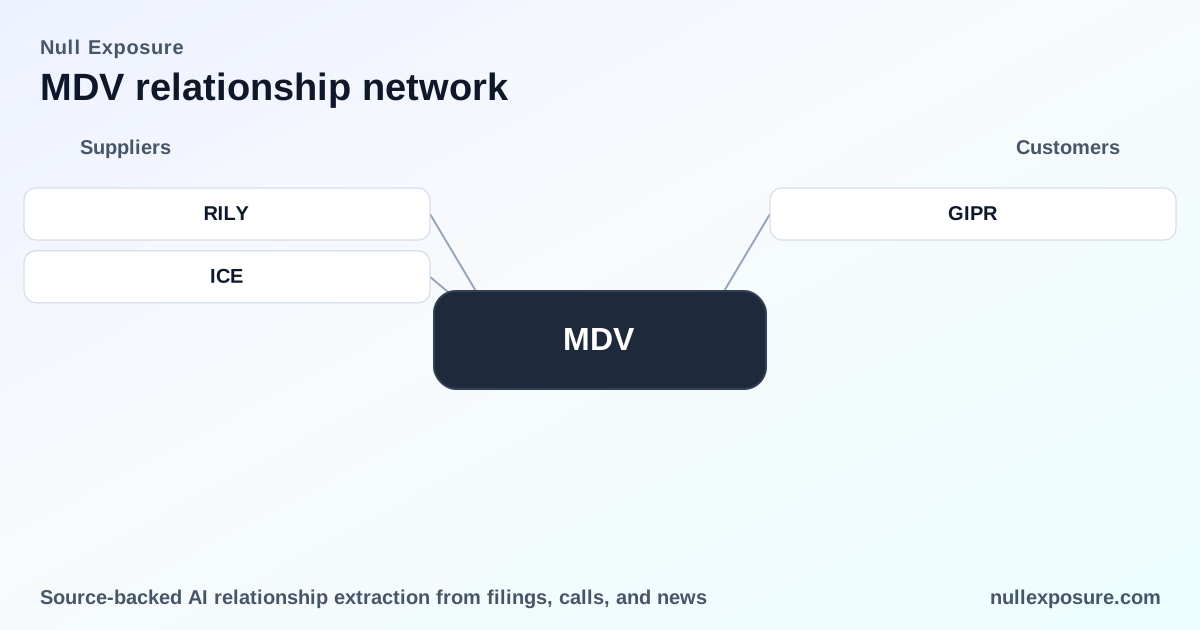
Modiv Inc (MDV) — supplier relationships that matter for investors
Modiv Inc is a single-tenant, net-lease REIT that generates cash flow by acquiring properties leased to creditworthy, essential businesses and collecting long-term rent. The company monetizes through stable rental income, opportunistic property sales and portfolio optimization while relying on capital markets activity to fund growth and maintain liquidity. For investors tracking counterparty exposure and operational resilience, the supplier map highlights capital markets partners and an explicit reliance on third‑party cloud services. Learn more about supplier intelligence and risk signals at https://nullexposure.com/.
How Modiv’s operating model converts leases into investor returns
Modiv’s core economics are straightforward: buy properties with long-term, triple-net leases; collect rent; recycle capital through offerings or dispositions when advantageous. This business model depends on two parallel supplier groups:
- capital markets partners that enable equity and debt transactions, and
- operational technology and service providers that support lease administration, investor reporting, and asset management.
Capital partners directly affect growth speed and cost of capital; operational suppliers affect day-to-day continuity and reporting integrity. Both classes are material to valuation and execution.
The two explicit supplier relationships in public records
Below I cover every supplier relationship surfaced in the available results and what each relationship means for investors and operators.
B. Riley Securities, Inc.
B. Riley Securities acted as the bookrunning manager for a public offering of Modiv common stock in FY2022, positioning it as a primary capital markets intermediary for that transaction. According to a BizWire press release distributed via FinancialContent on February 10, 2022, B. Riley led the offering process and underwriting activities. This establishes a direct execution relationship with a mid‑sized investment bank that can influence deal timing and placement costs (BizWire / FinancialContent, Feb 10, 2022).
New York Stock Exchange
Modiv’s Class C common stock was listed to begin trading on the New York Stock Exchange under the ticker “MDV” starting February 11, 2022, providing public market liquidity and price discovery. The same BizWire release notes the NYSE listing and ticker commencement, which formalizes the exchange venue investors use to source liquidity and trade the shares (BizWire / FinancialContent, Feb 10, 2022).
Company-level constraint: reliance on third‑party SaaS and cloud services
In public disclosures, Modiv states: “We rely heavily on SaaS solutions supplied by third party providers, including data centers and cloud storage services.” This is a company-level signal about operational dependencies rather than a relationship with a single named vendor.
What that means in practice:
- Contracting posture: Modiv uses vendor-supplied software and cloud hosting rather than in-house platform builds, which shortens time to market but creates standard vendor contract exposures and renewal cycles.
- Concentration risk: The disclosure implies aggregation of services across a small number of cloud and SaaS platforms; if providers consolidate or change pricing, Modiv’s operating costs and reporting capability can be affected.
- Criticality: These suppliers are mission-critical for accounting, investor reporting and lease administration; prolonged outages or data integrity issues would directly impair investor transparency.
- Maturity: Reliance on established SaaS/cloud vendors is consistent with a modern, outsourced real estate operating model and supports scalable reporting and remote asset management.
What investors and operators should watch next
Capital markets partners and cloud suppliers create distinct risk vectors. Focus areas:
- Deal execution and dilution risk. Bookrunners like B. Riley determine pricing and syndication; track any repeated use of the same underwriter for signal on relationships and terms. The FY2022 offering establishes precedent for future capital raises (BizWire / FinancialContent, Feb 10, 2022).
- Liquidity mechanics. The NYSE listing supplies the trading venue and governs market structure exposure for MDV shares; monitor trading volume and spread relative to peers for liquidity risk (BizWire / FinancialContent, Feb 10, 2022).
- Operational resilience. Given the explicit reliance on external SaaS and cloud services, test vendor continuity plans, SLAs and data-recovery procedures as part of operational due diligence.
- Counterparty concentration. Evaluate whether Modiv’s cloud and SaaS stack is concentrated with a single provider, which would increase negotiating leverage risk from the vendor side.
For deeper supplier mapping and to see how these relationships compare across REITs, visit https://nullexposure.com/.
Practical takeaways for portfolio managers and operators
- For portfolio managers: underwrite capital raises against demonstrated access to bookrunners and exchange liquidity. Evidence that B. Riley executed a FY2022 offering and that MDV is NYSE-listed informs realistic assumptions on funding channels (BizWire / FinancialContent, Feb 10, 2022).
- For operations and risk teams: prioritize vendor governance and incident response testing for SaaS and cloud providers given their stated centrality to Modiv’s operations.
- For credit analysts: model the cost and execution risk of future equity issuance by referencing the underwriting precedent and marketplace venue disclosed during FY2022.
Explore supplier risk scoring and comparative analytics at https://nullexposure.com/ to convert these relationship signals into actionable investment inputs.
Final assessment
Modiv’s supplier footprint in the public record is compact but strategically important: capital markets intermediaries (B. Riley) and the NYSE deliver access to liquidity and capital, while outsourced SaaS/cloud providers sustain operational delivery and investor reporting. Investors should weigh both the financing relationships that affect cost of capital and the vendor dependencies that influence operational continuity. The combination determines execution risk and the firm’s capacity to scale its net-lease strategy while maintaining transparent investor communications.