MiMedx (MDXG): Supplier relationships that shape its wound‑care distribution strategy
MiMedx (NASDAQ: MDXG) operates as a commercial-stage regenerative medicine and wound‑care company that monetizes through direct product sales and by securing exclusive U.S. distribution agreements for complementary wound and surgical products. The firm combines an in‑house portfolio of human birth tissue‑based biologics with third‑party products sold under exclusive U.S. distribution terms to expand addressable markets and accelerate revenue growth.
Explore provider and supplier exposure at a glance on the NullExposure homepage: https://nullexposure.com/
Why investors should track these supplier relationships now
MiMedx’s recent announcements and its FY2024 filing show a two‑track operating model: manufacturing and clinical sourcing for its core tissue‑based products, and distribution partnerships to widen its commercial offering. That mix creates both upside (broader product reach, recurring revenue from distribution) and supply/contractual dependencies (manufactured SKUs and exclusive distribution terms).
- Concentration and geography: MiMedx sources human birth tissue through partnerships with physicians and U.S. hospitals, which establishes a domestic supply footprint and operational concentration within the United States. This is a company‑level sourcing posture documented in corporate disclosures.
- Manufacturing outsourcing: The company outsources the manufacturing of certain products—HELIOGEN is specifically manufactured by Regenity Biosciences—introducing supplier concentration risk for named product lines.
- Distribution strategy: Exclusive U.S. distribution agreements (recently announced) expand the commercial portfolio quickly without internal R&D investment, but they create dependence on partner product performance and contract renewal.
- Vendor and service risk: MiMedx has formal processes to manage cybersecurity risks associated with third‑party service providers, indicating an awareness of service‑provider exposure at the organizational level.
If you want a consolidated view of MiMedx supplier relationships and constraints, visit our research hub: https://nullexposure.com/
The supplier list — what each relationship means for operators and investors
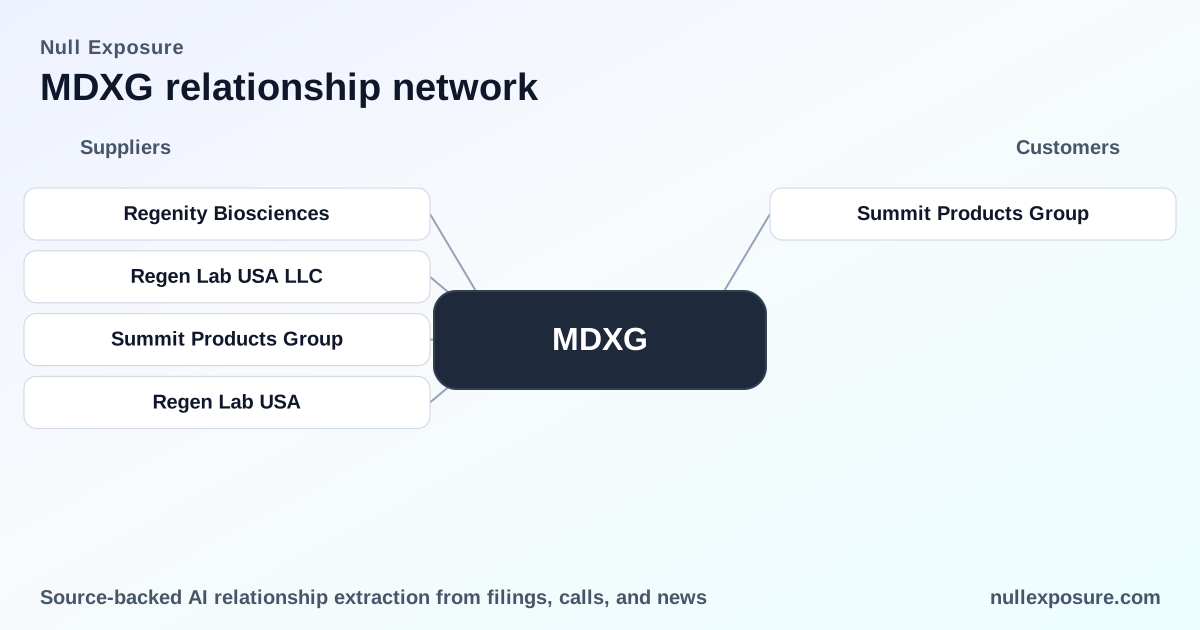
Regenity Biosciences
Regenity Biosciences is the named manufacturer of MiMedx’s HELIOGEN product, indicating MiMedx uses third‑party manufacturing for at least some bioresorbable technologies and exposing HELIOGEN to supplier continuity risk. According to MiMedx’s FY2024 10‑K, “HELIOGEN is manufactured by Regenity Biosciences.” (MiMedx FY2024 10‑K)
Regen Lab USA LLC (Regen Lab USA)
MiMedx entered an exclusive U.S. distribution agreement with Regen Lab USA to market and sell RegenKit®‑Wound Gel in the United States, an arrangement announced in a December 22, 2025 press release and carried widely by GlobeNewswire and related market outlets. This contract expands MiMedx’s wound‑care lineup with a partner product positioned for clinicians treating chronic or hard‑to‑heal wounds. (Company press release, December 22, 2025; GlobeNewswire coverage)
Summit Products Group
MiMedx announced an exclusive agreement with Summit Products Group to distribute three 510(k)‑cleared surgical and wound products—Hydrelix, NovaForm®, and G4Derm® Plus—broadening its surgical portfolio with cleared devices announced on February 4, 2026. The Summit relationship reinforces MiMedx’s strategy of acquiring distribution rights for regulatory‑cleared complementary products to accelerate revenue without internal product development. (Company press release, February 4, 2026; GlobeNewswire and syndicated press)
How these relationships translate into operating constraints and strategic signals
The supplier fragments and constraint excerpts together reveal concrete company‑level characteristics that matter to investors and operators:
- Contracting posture — exclusive distribution focus: MiMedx is actively pursuing exclusive U.S. distribution agreements for third‑party products, which is a growth posture that trades lower R&D spend for commercial risk concentrated on partner product success and contract renewals. The Regen Lab USA and Summit deals are recent examples.
- Supply concentration and criticality: Naming Regenity Biosciences as the manufacturer for HELIOGEN indicates single‑source manufacturing for that SKU, which raises criticality for continuous supply and quality oversight. That is a relationship‑specific constraint named directly in the 10‑K.
- Geographic sourcing concentration: MiMedx sources human birth tissue domestically by partnering with U.S. hospitals and physicians, which centralizes both logistics and regulatory exposure within the U.S. healthcare ecosystem—an important consideration for procurement resilience and regulatory compliance.
- Vendor maturity and governance: The company documents formal processes to manage cybersecurity risks from third‑party service providers, signaling established vendor governance practices at the firm level rather than ad‑hoc arrangements.
Risks and opportunities for investors and operators
- Opportunity — faster commercial scale: Exclusive distribution deals with Regen Lab USA and Summit provide immediate product breadth and potential margin accretion without the time and cost of internal product development. This supports near‑term revenue growth if clinical adoption follows.
- Risk — supplier concentration for manufactured SKUs: Manufacturing dependency on Regenity for HELIOGEN is a material operational risk that requires backup plans or dual sourcing to mitigate production interruptions.
- Regulatory and reimbursement dynamics: The Summit products are 510(k)‑cleared, which shortens adoption pathways; however, coverage, coding, and reimbursement remain commercial gating factors that investors must monitor.
- Operational resilience: Domestic tissue sourcing simplifies compliance jurisdictionally but concentrates supply chain disruption risk domestically (e.g., localized regulatory changes or hospital procurement shifts).
Key takeaway: MiMedx is executing a mixed model—outsourced manufacturing for core biologics combined with exclusive distribution partnerships to scale its commercial footprint quickly, but this model concentrates supplier and contractual risk that requires active governance.
If you want a consolidated supplier exposure map and timeline for MDXG, see the NullExposure research center: https://nullexposure.com/
Practical next steps for due diligence
- Request contract maturity and exclusivity term details for the Regen Lab USA and Summit agreements to assess renewal risk and revenue runway.
- Validate manufacturing contingency plans and quality audit results for Regenity Biosciences given its named role for HELIOGEN.
- Review reimbursement strategy for the distributed products (RegenKit®‑Wound Gel; Hydrelix, NovaForm®, G4Derm® Plus) to model adoption and margin contribution.
- Assess vendor cybersecurity attestations and third‑party risk management reports to confirm operational resilience.
For ongoing supplier monitoring and alerts tied to MDXG, visit NullExposure and subscribe to supplier intelligence: https://nullexposure.com/
Bottom line
MiMedx’s supplier relationships are a deliberate lever to broaden product reach while keeping capital intensity low; exclusive distribution deals provide commercial upside, while named manufacturing and domestic tissue sourcing create operational concentration that investors must price. Track contract terms, manufacturer continuity planning, and adoption metrics to convert these supplier signals into investment convictions.