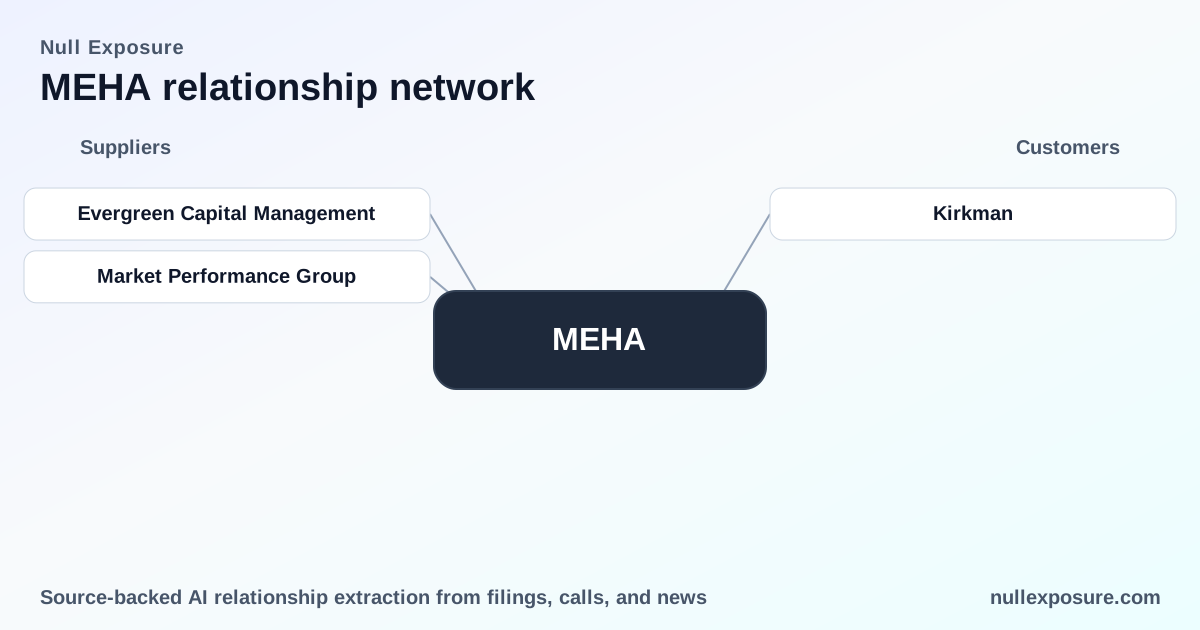
MEHA (Functional Brands): Supplier relationships that shape near-term distribution and balance-sheet posture
Functional Brands Inc. (NASDAQ: MEHA) operates as a consumer wellness and performance products company that monetizes through product sales across omnichannel retail and direct-to-consumer channels and by partnering with specialist agencies for go‑to‑market execution. Recent public notices show the company engaging both commercial partners and capital counterparties in ways that influence distribution reach and liquidity management — two vectors investors should watch closely. For an investor-oriented view of how these ties impact execution and risk, read on.
Explore more supplier and partner intelligence at https://nullexposure.com/.
Why these relationships matter to investors today
Functional Brands is in a phase where commercial partnerships directly accelerate brand reach while financing moves affect cash runway and governance. The combination of an omnichannel commerce agency relationship and a capital transaction financed from working capital is a clear signal: management is pursuing growth through third‑party execution while actively managing short‑term liquidity and ownership instruments. That mix impacts revenue growth potential, margin pressure from agency fees, and balance‑sheet flexibility.
If you want a consolidated view of MEHA’s external ties to inform diligence, see the full platform at https://nullexposure.com/.
Reported relationships — what the record shows
Market Performance Group (commercial/agency partnership)
Functional Brands announced a commercial partnership with Market Performance Group (MPG) to drive growth for the KirkmanR brand, positioning MPG as the omnichannel commerce agency responsible for accelerating customer acquisition and distribution across digital and retail channels. According to a Newsfile press release (FY2025), the arrangement frames MPG as a growth partner to scale KirkmanR within the broader health and wellness market. Source: Newsfile press release (FY2025).
Evergreen Capital Management (preferred‑share transaction)
In a separate notice, Functional Brands purchased 12,445 shares of Series A Preferred from Evergreen Capital Management at $50.00 per share for $622,250, funded from working capital, indicating a transaction that altered the company’s preferred‑shareholdings and used internal cash resources to complete the purchase. This was reported via TradingView news coverage in March 2026 (FY2026). Source: TradingView news item (March 10, 2026 / FY2026).
What these relationships imply for execution and risk
- Commercial execution is outsourced for scale. The MPG engagement signals that Functional Brands relies on specialized agency partners to execute omnichannel growth strategies rather than building all capabilities in‑house; that reduces fixed costs but increases variable cost exposure and dependency on partner performance.
- Liquidity and capital posture are active considerations. The use of working capital to fund a meaningful preferred‑share purchase shows management is willing to deploy operating cash into capital reorganization or counterparty transactions, which affects short‑term cash available for marketing, inventory, and expansion.
- Concentration and brand criticality are practical risks. Public messaging singles out KirkmanR as a named brand in the MPG relationship — revenue concentration around a small number of brands increases sensitivity to partner execution and category demand.
- Maturity and contracting style lean growth‑stage. The combination of agency partnerships and preferred‑share transactions indicates a company still building scale while negotiating capital structures and distribution funnels, rather than a fully vertically integrated incumbent.
How to read contracting posture, concentration and criticality (company-level signals)
Investors should interpret these developments as company-level operating characteristics rather than isolated occurrences:
- Contracting posture: transactional and partnership‑oriented, favoring external agencies for channel acceleration instead of internal build‑out.
- Concentration: brand and partner concentration is elevated, given public emphasis on a single brand and named agency partner.
- Criticality of partners: high for near-term revenue growth, since omnichannel deployment depends on the agency’s execution.
- Maturity: growth-stage with active balance‑sheet management, indicated by use of working capital for equity‑type transactions and public commercial partnerships.
Practical investor takeaways and actions
- Monitor MPG performance metrics (customer acquisition cost, conversion, and shelf/placement outcomes) because agency success will drive revenue trajectory for the KirkmanR brand. Ask for documented KPIs in diligence.
- Assess cash runway impact from the Evergreen transaction since the $622k working‑capital use is non-trivial for a smaller consumer company; reconcile cash flow plans with planned marketing and inventory investments.
- Evaluate counterparty and contractual terms with MPG to understand termination rights, fee structures, and performance clauses that affect operational leverage.
If you want the full relationship intelligence and a consolidated supplier-risk view for MEHA, visit https://nullexposure.com/ for a structured deep dive.
Final synthesis — what to watch next
Functional Brands’ public disclosures show a two‑track approach: outsource execution to scale brands quickly while actively reshaping capital positions to support strategic choices. That combination can accelerate topline growth if partners deliver, but it concentrates execution risk and places a premium on cash management discipline. Investors should request partner performance reporting and updated balance‑sheet projections as the next step in diligence.
Explore supplier and partner risk profiles and related intelligence at https://nullexposure.com/ — use the platform to triangulate partner performance and capital moves before committing capital.