MER-P-K: What investors and operators need to know about this Merrill Lynch trust preferred
Merrill Lynch & Company, Inc. 6.45% Trust Preferred Securities (Ticker: MER-P-K) is a classic hybrid income instrument: a fixed‑rate preferred security issued by a Merrill Lynch trust that provides a steady coupon and trades on the NYSE, while credit exposure ultimately links to its parent banking franchise. The security monetizes for investors through a fixed 6.45% coupon and secondary‑market liquidity, and it monetizes for the issuer by providing perpetual‑style regulatory and capital management flexibility. For operating and counterparty diligence, the critical lens is the parent‑sponsor relationship and franchise strength rather than pure operating metrics of the trust. For more supplier relationship intelligence, visit https://nullexposure.com/.
How MER‑P‑K functions in plain English
MER‑P‑K is a trust preferred security that behaves like fixed income with equity‑like subordination features. Investors receive a fixed dividend stream at 6.45% and liquidity via NYSE listing; the economic and credit support derives from Merrill Lynch’s capitalization and its integration into the Bank of America ecosystem. The instrument is particularly suited to income‑seeking institutional portfolios that prioritize yield with partial sensitivity to bank credit conditions.
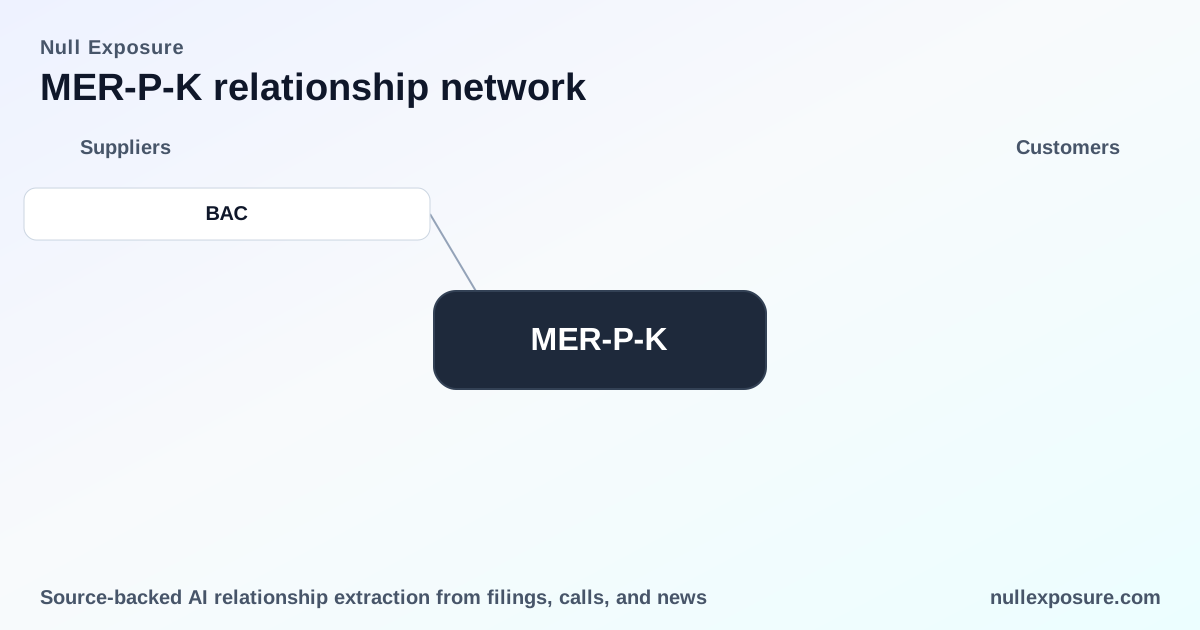
The single supplier relationship you must evaluate: Bank of America
Bank of America Corp. — the parent franchise that matters
Bank of America is the implicit economic anchor behind MER‑P‑K through its ownership and integration of Merrill Lynch. The preferred security’s credit and market behavior are highly correlated with the parent’s wealth‑management and corporate banking strategy, because Merrill’s distribution and referral model channels balance‑sheet products into the broader Bank of America platform. According to an InvestmentNews report referencing fiscal 2015 strategic posture, Bank of America’s wealth management strategy actively cross‑sells bank products to brokerage clients and routes referrals back to the bank, a dynamic that strengthens enterprise cash flows and deposit capture. (InvestmentNews, FY2015 — https://www.investmentnews.com/wirehouses/new-bofa-wealth-chief-to-deepen-bank-ties/63530)
What that relationship means for credit and operational risk
- Concentration and criticality: The trust preferred is dependent on the parent bank’s credit profile for ultimate payment support and market confidence. This is a company‑level signal: the instrument’s risk is concentrated in the sponsor franchise rather than diverse operating subsidiaries.
- Contracting posture: The security is issuer‑led; contractual cash flow is fixed and prioritized under preferred terms, but it sits below senior debt in the capital stack, exposing holders to bank restructuring or regulatory capital actions.
- Maturity and optionality: Although marketed as fixed income, trust preferreds often carry perpetual‑like features (call options, regulatory treatment) that affect duration and price sensitivity; treat MER‑P‑K as a long‑duration credit tool rather than a short‑term cash instrument.
- Operational linkage: Distribution and liquidity for the issue are a function of Merrill/Bank of America’s retail and institutional sales channels; marketability benefits when the parent emphasizes integrated product flows (as noted in the InvestmentNews coverage).
Market signals and observable pricing behavior
The security trades in a tight price band reflecting low volatility and steady yield capture: the reported 52‑week range is $25.02–$26.13, indicating limited price dispersion for holders focused on yield stability. That narrow range should be read as a signal of stable investor demand and an expectation of consistent coupon treatment under current banking conditions.
Risk and opportunity for investors and operators
- Primary risk: Credit concentration in the parent bank. Operational or regulatory shocks to Bank of America will transmit directly to MER‑P‑K pricing and default risk. Assess parent balance‑sheet trends, deposit stability, and regulatory capital posture first.
- Relative opportunity: The security offers a predictable income stream and benefits from the parent’s broad distribution network and deposit referral strategy, which enhances funding resilience over cycles.
- Liquidity consideration: NYSE listing supports secondary liquidity, but this is contingent on investor appetite for bank‑sponsored hybrids; monitor macro policy shifts that change preferred treatment or regulatory capital rules.
How to use this instrument in portfolios and counterparty programs
Operators and treasury managers should treat MER‑P‑K as a yield enhancer with bank‑credit exposure. Use it to:
- Increase portfolio yield where duration and subordinated credit exposure are acceptable.
- Hedge or express views on Bank of America franchise strength via fixed income allocation rather than equity.
- Incorporate into liability or asset‑allocation programs where the parent’s deposit and referral dynamics reduce idiosyncratic liquidity risk.
For deeper supplier relationship mapping and credit context on bank‑sponsored securities, consult the coverage at https://nullexposure.com/.
Due diligence checklist for MER‑P‑K counterparties
Perform the following as part of supplier and counterparty diligence:
- Review Bank of America’s recent capital adequacy disclosures and proxy statements for changes that affect preferred treatment.
- Monitor regulatory developments that could recharacterize trust preferreds’ capital status.
- Validate secondary-market liquidity under stressed scenarios using trade blotter and market‑making capacity tests.
- Track corporate strategy commentary on cross‑selling and referral practices, since distribution policy materially affects funding and liquidity.
Final synthesis and recommended next steps
MER‑P‑K is a yield‑oriented hybrid that trades like fixed income but is fundamentally a credit‑linked instrument anchored to Bank of America’s franchise strength. Investors should treat the security as a parent‑dependent instrument: portfolio allocation and counterparty limits should reflect the sponsor concentration and regulatory sensitivity described above. For proactive monitoring and supplier intelligence on bank‑sponsored preferreds, visit https://nullexposure.com/ for ongoing updates and relationship analysis.
Bold takeaways:
- MER‑P‑K delivers a fixed 6.45% coupon with NYSE liquidity but is credit‑concentrated in Bank of America.
- Operational and market support for the security is directly tied to the parent’s distribution and referral strategy.
- Treat holdings as long‑duration, bank‑credit exposures rather than short‑term cash instruments.
Act now: review parent credit metrics, confirm liquidity tolerances, and integrate this security into your counterparty risk framework using resources at https://nullexposure.com/.