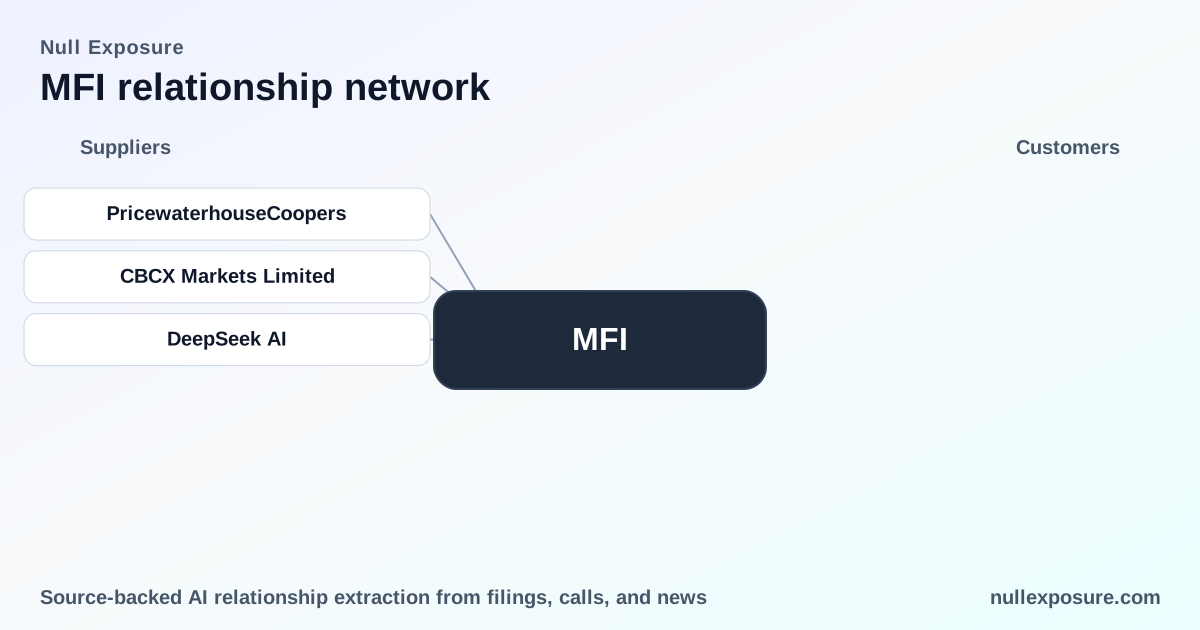
mF International (MFI): Supplier map and what it tells investors about operational leverage
mF International monetizes through software-driven payment and trading infrastructure sold to broker-dealers and institutional clients and by integrating third‑party liquidity and analytics partners into its platform. The company collects transaction and service fees, licenses platform modules, and enhances margins through partner-driven market access and AI-enhanced products. Investors should view the supplier mix as an operating lever: third‑party liquidity and analytics partnerships directly affect product breadth, execution quality, and gross margin expansion. For a practical supplier-risk scorecard and ongoing relationship monitoring, visit https://nullexposure.com/ to review vendor intelligence and signal tracking.
The supplier map: the three relationships in our source set
This section covers every relationship returned in the research results and summarizes the practical implication of each mention.
PricewaterhouseCoopers — historical auditor reference
PricewaterhouseCoopers is referenced in a 2012 Frontline piece about the MF Global collapse; the excerpt shows PwC pressed MF Global to disclose bond trades and played an active audit role in the run‑up to that firm’s failure. This is a historical auditor interaction documented by PBS Frontline and is not presented in the source material as a current supplier engagement with mF International. (PBS Frontline reporting on MF Global, FY2012.)
CBCX Markets Limited — liquidity partner announced March 2025
mF International formed a strategic partnership with CBCX Markets Limited in March 2025 to broaden its liquidity network, giving brokerage clients deeper market access and improved execution terms. This deal positions CBCX as a critical liquidity conduit for mF’s trading and brokerage products, directly affecting spreads and execution quality. (Yahoo Finance press report, March 2025.)
DeepSeek AI — AI models integrated into institutional product
mF International partnered with DeepSeek AI to integrate large‑language models into its broker tools, delivering actionable insights and operational automation for clients. This relationship signals a push to convert AI capabilities into client-facing workflow improvements and back‑office efficiency gains, which can lower costs per transaction if adoption scales. (Yahoo Finance press report, March 2025.)
What the supplier mix reveals about mF International’s operating model
mF International runs a hybrid go‑to‑market model: core platform software augmented by third‑party liquidity and AI partners. That combination shapes contracting posture, supplier criticality, concentration, and maturity.
- Contracting posture: The company uses strategic, commercial partnerships rather than heavy vertical integration. The CBCX alliance illustrates a commercial outsourcing posture for market access; the DeepSeek tie shows preference for specialized AI partners rather than in‑house model development. These contracts are structured to accelerate product capability without the capex or time cost of building identical capabilities internally.
- Concentration: Supplier concentration is moderate but directionally important—few relationships listed are high‑impact (liquidity and AI). A single liquidity partner like CBCX can become a concentration risk if execution or access terms change, so diversification of market access should be monitored.
- Criticality: Suppliers are functionally critical. Liquidity provision directly affects client execution economics; AI partners influence value delivered to end customers and operating efficiency. Supplier performance will map directly to client retention and gross margin movement.
- Maturity: The relationship footprint is consistent with a growth‑stage fintech: partnerships supply capability gaps while the company scales. mF’s financial profile demonstrates early‑stage characteristics—negative earnings and elevated market multiples—so supplier deals are being used to compress time‑to‑market rather than to substitute for scale.
Financial context matters: as of the latest quarter ended 2025‑06‑30, mF International reports roughly $28.7 million in trailing revenue with negative EPS and operating margins, and a market capitalization near $581 million, producing high implied valuation multiple metrics (Price/Sales ~20x). These numbers underscore that supplier execution and revenue scaling are central to justify current valuation.
(If you want a comparative supplier-risk assessment and real‑time alerts on partner changes, see https://nullexposure.com/.)
How each relationship translates to investor-facing risks and opportunities
CBCX Markets Limited
- Opportunity: immediate expansion of tradable instruments and improved execution can drive higher client volumes and tighten spreads, lifting gross profit.
- Risk: dependence on a single large liquidity provider creates execution concentration; adverse contract renegotiations would directly compress margin.
Source: Yahoo Finance press report, March 2025.
DeepSeek AI
- Opportunity: embedding LLMs into broker workflows reduces manual churn, improves client analytics, and can be monetized as premium features.
- Risk: AI partnerships carry model‑risk, operational integration costs, and potential regulatory scrutiny around model outputs and client suitability.
Source: Yahoo Finance press report, March 2025.
PricewaterhouseCoopers
- The PwC mention originates from historic reporting about MF Global’s 2012 collapse; it signals the presence of legacy audit‑and‑regulatory narratives in the broader market conversation but does not constitute evidence of a current supplier relationship with mF International in the released materials. Investors should distinguish historical market narratives from present counterparty arrangements.
Source: PBS Frontline reporting on MF Global, FY2012.
Practical investor implications — what to watch next
- Contract clauses and termination rights: scrutinize public disclosures and partner announcements for exclusivity windows, minimums, and repricing triggers tied to volume bands. Those clauses determine how quickly adverse outcomes propagate to gross margin.
- Supplier diversification: track additions of alternate liquidity conduits or secondary AI vendors; lack of diversification is a near‑term counterparty risk given the company’s scale.
- Integration timelines and adoption metrics: measure client adoption rates for CBCX‑enabled instruments and DeepSeek‑enabled features—these are leading indicators of revenue lift and operating‑leverage realization.
- Regulatory and audit signals: the PwC historical reference is a reminder that audits and regulatory narratives can influence market sentiment; confirm current auditor and any material audit findings in the latest filings. According to company filings through 2025‑06‑30, the business remains loss‑making while growing revenue, so supplier execution is a key value driver.
Key takeaways: supplier partnerships are not peripheral; they are core operating levers for product capability, cost structure, and client economics. Monitor execution metrics and contract terms to understand how partner performance will translate into revenue and margin trajectories.
Conclusion — where investors should focus now
mF International uses third‑party liquidity and AI partners to expand product breadth rapidly while it scales revenue from a small base. That approach accelerates go‑to‑market but concentrates execution risk on a handful of high‑impact suppliers. Investors should demand transparency on contract terms, adoption metrics, and contingency plans for supplier disruption.
For ongoing supplier intelligence, contract analytics, and alerts tailored to fintech operator risk, visit https://nullexposure.com/ to access vendor monitoring and research tools. If you want a bespoke supplier risk memo for MFI, the team at NullExposure can produce a focused assessment that highlights contractual leverage, concentration buckets, and remediation scenarios—start here: https://nullexposure.com/.