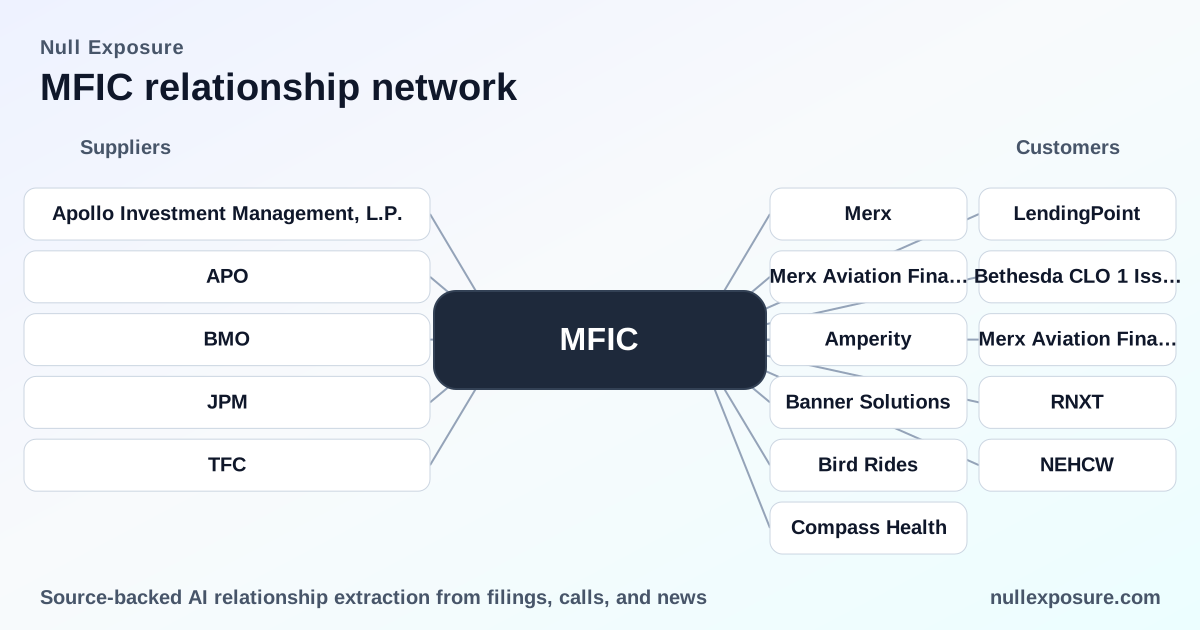
MidCap Financial Investment Corporation (MFIC): supplier map and investor implications
MidCap Financial Investment Corporation is an externally managed business development company that monetizes through advisory and administration fee streams managed by Apollo affiliates and by running credit and first-lien loan investments on its balance sheet; its economic model depends on external management fees (base and performance) and third‑party administrative arrangements tied to the Apollo platform. For investors, the key question is operational control and counterparty concentration: Apollo’s affiliates supply core investment advisory and administrative services, while large banks provide capital markets and credit facility support. For a concise view of MFIC’s supplier exposure and contractual posture, see NullExposure’s research hub: https://nullexposure.com/.
Operating model and what it implies for returns and risk MFIC’s practical operating model is externally managed and externally administered, which concentrates operational, reputational and execution risk in a small set of providers. The company pays a base management fee plus a performance‑based incentive to its Investment Adviser and uses an affiliate for administration and facilities — a structure that drives predictable fee outflows and aligns MFIC’s portfolio management with Apollo’s middle‑market credit platform. The firm also maintains a senior secured revolving credit facility and first‑lien secured debt, which locks in a long‑dated financing posture that affects liquidity flexibility through the business cycle.
- Contracting posture: Evidence indicates long‑term contractual commitments — MFIC’s senior secured revolving credit facility was amended and extended with final maturity through October 17, 2029 — signaling multi‑year financing stability but also multi‑year lock‑ins with bank counterparties.
- Concentration and criticality: Apollo affiliates are essential: they serve as investment adviser, administrator and provider of branded licensing, making them both critical and concentrated suppliers for operations, compliance and market standing.
- Maturity and stage: Relationships are active and operational; MFIC’s advisory and administration arrangements are in force today and govern day‑to‑day asset oversight. For more supplier-level analysis and exposure scoring, visit https://nullexposure.com/ for a customizable view.
Who supplies MFIC — the counterparties you need on the radar Below are the counterparties surfaced in recent filings and releases, each followed by a plain‑English summary and the original source context.
Apollo Investment Management, L.P. Apollo Investment Management, L.P. is MFIC’s external investment adviser and the primary manager of day‑to‑day operations, receiving a base management fee and a performance‑based incentive fee for portfolio management services (FY2026). Source: GlobeNewswire press release reporting FY2026 financial results (Feb 26, 2026) and related earnings call transcripts (2026) that reaffirm AIM’s advisory role (https://www.globenewswire.com/ and supporting earnings transcripts).
Apollo Global Management, Inc. Apollo Global Management appears as the ultimate affiliate and infrastructure owner behind MFIC’s adviser and administrator; MFIC is integrated into Apollo’s broader infrastructure and uses Apollo branding under license arrangements (FY2025–FY2026). Source: market filings and news commentary noting integration within the Apollo Global Management infrastructure and licensing agreements (Markets FinancialContent; ad‑hoc news, FY2025–FY2026).
BMO Capital Markets Corp. BMO Capital Markets Corp. served as a Joint Bookrunner and Joint Lead Arranger on MFIC’s amended senior secured revolving credit facility, positioning BMO among the banks syndicating MFIC’s committed bank lines (FY2025). Source: press release on the facility amendment (Markets FinancialContent, Oct 2, 2025).
JPMorgan Chase Bank, N.A. JPMorgan Chase Bank, N.A. is the Administrative Agent on MFIC’s senior secured revolving credit facility, meaning JPMorgan handles agent duties for the syndicated facility and exercises administrative controls over facility mechanics (FY2025). Source: facility amendment notice (Markets FinancialContent, Oct 2, 2025).
Truist Securities, Inc. Truist Securities is another Joint Bookrunner and Joint Lead Arranger on MFIC’s senior secured facility, placing it among the principal banks that structured and underwrote MFIC’s revolving credit line (FY2025). Source: facility amendment announcement (Markets FinancialContent, Oct 2, 2025).
Additional Apollo references across periods Multiple press releases and analyst notes across FY2022–FY2026 reiterate that Apollo Investment Management remains MFIC’s adviser and that Apollo affiliates provide administration and licensing, reinforcing the persistence and breadth of Apollo’s role across advisory, administration and naming rights. Sources: GlobeNewswire (Aug 2, 2022; Feb 26, 2026), MarketScreener and analyst coverage (2026).
What the contractual constraints tell investors The supplied constraint excerpts explain MFIC’s supplier dynamics in practical terms:
- The long‑term credit facility extension through October 17, 2029 shows MFIC has a multi‑year financing commitment that reduces near‑term refinancing risk but creates a time‑bound dependency on bank syndicate cooperation. This is a company‑level signal of a long‑term bank financing posture.
- The license agreement granting MFIC the right to use the “MidCap Financial” name and an Apollo name license shows that MFIC’s brand identity and market positioning are contractually tethered to Apollo for as long as the investment advisory agreement remains in effect — this is an explicit licensor relationship with Apollo Global Management.
- The service provider role is explicit: Apollo Investment Management and Apollo Investment Administration provide advisory and administrative services, backed by indemnification language and fee structures (base and incentive), which creates both operational dependency and clear fee leakage from gross investment returns.
- Relationship stage is active, and segment classification lands in services, confirming that third‑party service delivery (advisory, administration and capital markets) drives MFIC’s operating costs and execution.
Investor implications and risk framing
- Concentration risk is material: a single platform (Apollo) supplies MFIC’s core advisory, administrative and brand services; governance and performance reviews should focus on the terms and incentives embedded in those agreements.
- Liquidity posture is predictable but constrained: long‑dated credit arrangements reduce short‑term refinancing risk, but they lock MFIC to underwriting banks and administrative agents — monitor upcoming covenant windows and bank relationships through 2029.
- Operational control is external: because key functions are outsourced, investors should demand tight disclosure around fee calculations, indemnity exposures and sub‑servicing arrangements to assess true net economic returns.
Actionable next steps
- Review MFIC’s advisory and administration agreements for fee mechanics and termination triggers; pay particular attention to performance fee waterfalls and indemnity clauses.
- Monitor the syndicated credit facility covenant schedule and agent‑level controls at JPMorgan, BMO and Truist to understand refinancing risk through 2029.
- For a consolidated supplier exposure report and vendor risk scoring tied to MFIC’s contracts, visit NullExposure’s platform: https://nullexposure.com/.
Conclusion and how to follow this supplier risk story MFIC is structurally reliant on Apollo affiliates for portfolio management, administration and even branding, while traditional banks provide the capital markets plumbing. That dual dependency—one on a dominant asset manager and the other on a small bank syndicate—defines MFIC’s operational and financial risk profile. To track changes in these supplier relationships and to get a vendor‑level risk score for MFIC, visit https://nullexposure.com/ for the latest updates and alerts.