MGE Energy (MGEE): supplier relationships and what they mean for investors
MGE Energy is a rate-regulated Midwestern utility holding company that monetizes through regulated electric and natural gas distribution, long- and short-term commodity purchase arrangements, and nonutility investments; the company collects predictable cash flows from customer rates while using contracted suppliers and service providers to secure generation, fuel, transmission and logistics. With roughly $726.7 million in trailing revenue, $286.8 million of EBITDA and a market capitalisation near $2.76 billion, MGEE operates a capital- and contract-intensive supply chain that drives both operating stability and vendor concentration risk. Explore more supplier profiles at https://nullexposure.com/.
How MGEE sources energy and services — the operating model that matters to investors
MGE Energy’s supply posture balances long-term commitments for reliability and short-term purchases for flexibility. Company filings show that MGE executes both long-term and short-term purchase power commitments to meet expected electric energy needs, and it maintains commodity supply, transportation and storage contracts to deliver electricity and natural gas to customers (Form 10‑K disclosures covering obligations as of December 31, 2024). That contracting mix creates a predictable baseline of supply costs while preserving the ability to respond to market price moves.
- Long-term contracting is embedded in the model. MGE’s ownership interests in generation assets include long-term leases and commitments that underpin capacity availability; the filing language highlights undivided interests in coal-fired generating units leased under long-term arrangements.
- Short-term purchases and operational leases provide flexibility. Filings also document short-term power purchases and lease contracts with near-term expirations that are expensed straight-line, supporting operational agility during price or demand variability.
- Transmission and service providers are critical. MGE pays material transmission charges to regional providers; filings report transmission service payments of $36.3 million in 2024, rising from $33.8 million in 2023 and $31.4 million in 2022, indicating an ongoing, material service relationship with ATC for grid access.
These contracting choices produce stable regulated cash flows but concentrate exposure in a handful of high-dollar supply relationships and long-tenor obligations.
The specific supplier relationship the market flagged
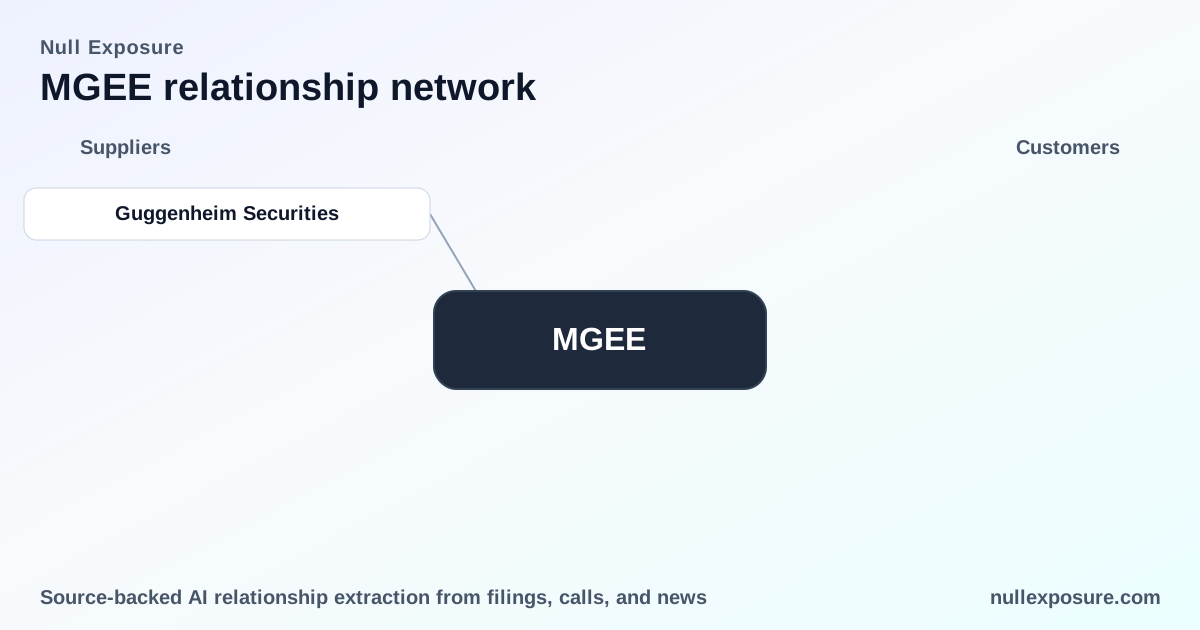
Guggenheim Securities (equity distribution agreement)
- MGE entered an equity distribution agreement with Guggenheim Securities on February 24th, 2026 to facilitate potential share issuances under an established program, reflecting a capital markets relationship rather than a commodity-supply contract; Marketscreener reported the transaction alongside routine investor communications in March 2026. (News report via MarketScreener, first seen March 10, 2026.)
The broader supplier landscape investors should model
Beyond the single news-cited capital markets relationship, MGE’s filings and notes identify a broader set of counterparty roles that define supplier risk and opportunity:
- Buyer role for fuels and services. MGE acts as a buyer of electricity, natural gas, coal, transmission and pipeline capacity under purchase obligations disclosed in the company’s financial statements; those purchase obligations include line items in the low hundreds of millions and multiple mid‑double‑digit millions, signaling large, routine spend commitments (Form 10‑K, purchase obligations schedule as of Dec 31, 2024).
- Service provider dependencies (transmission). The company records tens of millions of dollars annually for transmission services from ATC—$36.3 million in 2024—showing a recurring, essential operating expense that is not easily restructured without transmission alternatives (Form 10‑K note on transmission service payments).
- Mixed contract tenors. The company explicitly states it uses both short‑term and long‑term purchase power commitments, plus leases with varying terms; that structure preserves reliability while creating multi-year contractual liabilities that affect balance-sheet and liquidity planning (Form 10‑K; lease and purchase commitment disclosures).
- Global regulatory and tariff sensitivity as a company-level signal. Filings note external policy and trade developments—including referenced tariffs implemented in early 2025—that can influence fuel and equipment costs through cross-border pricing dynamics; treat trade policy as a non-operational but material cost-driver for supply lines that source internationally.
What these relationships mean for risk, margins and capital planning
- Cost pass-through and rate regulation limit margin volatility, but supplier shocks transmit to rate cases. MGE’s regulated status protects margins over time, but large swings in fuel or transmission costs will surface in regulatory filings and rate proceedings; investors should model regulatory lag and recovery mechanisms.
- Concentration and scale of spend are meaningful. Purchase obligations include several line items above $10 million and at least one in excess of $100 million, which creates counterparty concentration and negotiation leverage for large suppliers. Supplier failure or material pricing shifts in a top-tier counterparty would force either short-term market purchases at higher prices or accelerated regulatory action.
- Maturity of relationships is mixed but leans long-term. Explicit long‑term leases and multi-year purchase commitments indicate mature supplier ties that support reliability but reduce short-term bargaining flexibility.
Practical investor takeaways and next steps
- Treat MGEE as a cash-flow-weighted regulated utility with material supplier concentration. The balance of long-term contracts and sizeable transmission spends creates a predictable expense base but also creates exposure points in procurement and regulatory recovery.
- Stress-test regulatory recovery timelines and large counterparty price shocks. Build scenarios where transmission or fuel costs rise materially for 12–24 months and evaluate the impact on free cash flow versus the company’s ability to recover through rate mechanisms.
- Monitor capital markets relationships separately from commodity suppliers. The Guggenheim Securities equity distribution agreement is a financing tool, not a supply contract, and is relevant to dilution and capital access rather than operational counterparty risk (MarketScreener news, Feb 24, 2026).
For deeper supplier mapping and to compare MGEE’s counterparties across peers, visit https://nullexposure.com/ for the full suite of supplier intelligence tools.
Final recommendation
MGEE is a stable, mid‑cap regulated utility with material, long‑tenor supplier obligations and meaningful transmission spend that require active monitoring by investors focused on cash-flow durability and regulatory exposure. Maintain exposure with attention to rate-case timelines and supplier concentration; prioritize diligence on contract rollovers, transmission cost trajectories and any further capital markets activity that could alter leverage. Learn more about supplier-driven risk models and comparable utility profiles at https://nullexposure.com/.