MacroGenics (MGNX): supplier relationships are the product-development shock absorber
MacroGenics discovers and develops antibody-based therapies—principally antibody-drug conjugates (ADCs)—and monetizes through collaborative R&D, licensing, milestone receipts and eventual product sales if candidates clear regulatory hurdles. The company operates with a single cGMP facility for certain activities but deliberately outsources specialized steps—bioconjugation, fill/finish and payload sourcing—which makes supplier performance central to the pathway from pipeline to revenue. For sourcing intelligence and supplier risk profiling, visit https://nullexposure.com/.
Why supplier strategy is the operating lever for investors
MacroGenics’ business model converts scientific assets into value only when clinical programs advance and regulatory approvals permit commercial launches. That conversion hinges on reliable manufacturing and supply relationships. Outsourcing is not ancillary for MacroGenics; it is a core operating choice that concentrates execution risk outside the company’s four walls. Company disclosures make this explicit: the firm runs one cGMP facility in Rockville but continues to rely on third parties for bioconjugation and fill-finish activities that its plant cannot yet perform.
That operating posture creates three practical commercial dynamics:
- Execution dependency: third-party compliance with cGMP standards is a gating factor for approval and commercialization.
- Contract leverage: MacroGenics’ negotiating position depends on program stage, scale prospects, and available alternative suppliers.
- Time-to-market risk: supplier issues can delay pivotal trials and filings, compressing runway and investor returns.
For ongoing tracking of supplier risk and counterparty exposure, see https://nullexposure.com/.
The supplier relationships you can see (and what they mean)
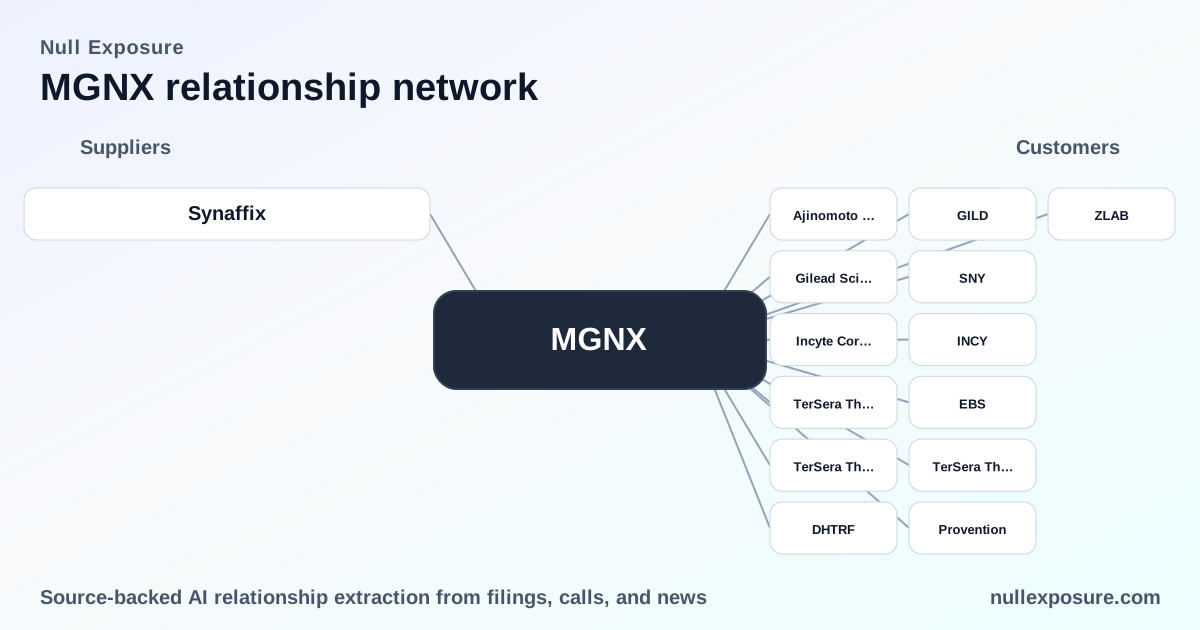
- Synaffix — MacroGenics is developing three ADCs that incorporate a novel, glycan-linked TOP1i payload developed by collaboration partner Synaffix (a Lonza company). This makes Synaffix the provider of a critical payload technology embedded in multiple ADC candidates. (Source: MacroGenics press release via GlobeNewswire, November 12, 2025.)
Why that single disclosed counterpart matters: the payload is a technical dependency—if integration, supply or IP terms with Synaffix/Lonza falter, multiple programs could be disrupted simultaneously.
The constraints that define MacroGenics’ supplier risk profile
Company disclosures and public excerpts reveal a set of firm-level constraints that govern supplier relationships. These are not relationship-specific unless the text names the counterparty; they signal how the company runs its supplier network.
- Materiality — critical. The firm states it will depend on third-party manufacturing partners to meet FDA cGMP requirements and warns that failure by these partners could prevent approvals or trigger product recalls. This elevates supplier risk to a program-critical category rather than a cost-optimization exercise.
- Relationship roles — distributor and manufacturer. MacroGenics uses third parties across the value chain—from CROs to distributors and CMOs—indicating a hybrid supplier set that spans active manufacturing and downstream distribution services.
- Relationship stage — active. The company continues to outsource active functions such as bioconjugation and fill-finish that its own facility cannot accommodate, so these supplier relationships are operationally live and directly tied to clinical progress.
- Segment focus — manufacturing. Procurement and third-party spend concentrate in manufacturing: acquiring clinical trial materials, CMOs for production and fill/finish services.
These constraints combine into a clear operating picture: MacroGenics is partially vertically integrated but relies on a small set of specialized third parties for mission-critical manufacturing steps, creating concentration and regulatory-execution risk. (Source: company disclosures and filing excerpts.)
What this means for investors and operators right now
MacroGenics’ financials show constructive revenue scale for a clinical biotech (Revenue TTM $149.5M) but sustained losses (EPS -1.18; negative EBITDA), modest market capitalization (~$197M) and heavy institutional ownership (~65%). Under those conditions, supplier performance directly influences capital efficiency and clinical timelines.
Key investment implications:
- Regulatory and supply risk is value-dilutive. A supplier breach of cGMP or a disrupted payload supply from Synaffix/Lonza would delay filings and increase cash burn.
- Concentration amplifies downside. Multiple ADCs relying on the same payload source raise program correlation; a single counterparty problem impacts several assets at once.
- Contract terms and contingency plans become essential catalysts. Milestones, supply volumes, exclusivity, and contingency sourcing provisions materially affect the valuation of the underlying pipeline.
Watchlist items that will move the risk-reward equation:
- Announcements on long-term supply agreements or redundancy arrangements for bioconjugation and fill/finish.
- Milestone and manufacturing updates involving Synaffix/Lonza—especially any commercial supply commitments.
- Regulatory filings specifying suppliers or manufacturing sites for pivotal or BLA-stage programs.
If you need a structured supplier risk report tailored to MacroGenics’ counterparty map, start here: https://nullexposure.com/.
Practical next steps for procurement and operations teams
To reduce execution risk and preserve optionality, operators should:
- Secure long-term supply agreements with clear quality and contingency clauses.
- Implement supplier audits focused on cGMP compliance and change-control governance.
- Negotiate multi-sourcing where technical substitution is feasible, or staged capacity expansion where it is not.
- Link commercial milestones and payment schedules to supplier performance metrics.
Bottom line: supplier risk is a core valuation driver for MGNX
MacroGenics’ path to value realization is tightly coupled to its external partners. Synaffix (as a Lonza company) is the single disclosed supplier counterparty in public results and supplies a payload embedded across multiple ADC programs—making it a high-impact relationship. Company-level constraints emphasize that manufacturing partners are critical, active, and central to the manufacturing segment of the business, elevating both operational and regulatory risk.
Investors should treat supplier announcements, supply agreements and manufacturing audits as primary signals rather than peripheral detail. For ongoing monitoring and supplier-level intelligence on MGNX and other healthcare suppliers, visit https://nullexposure.com/.