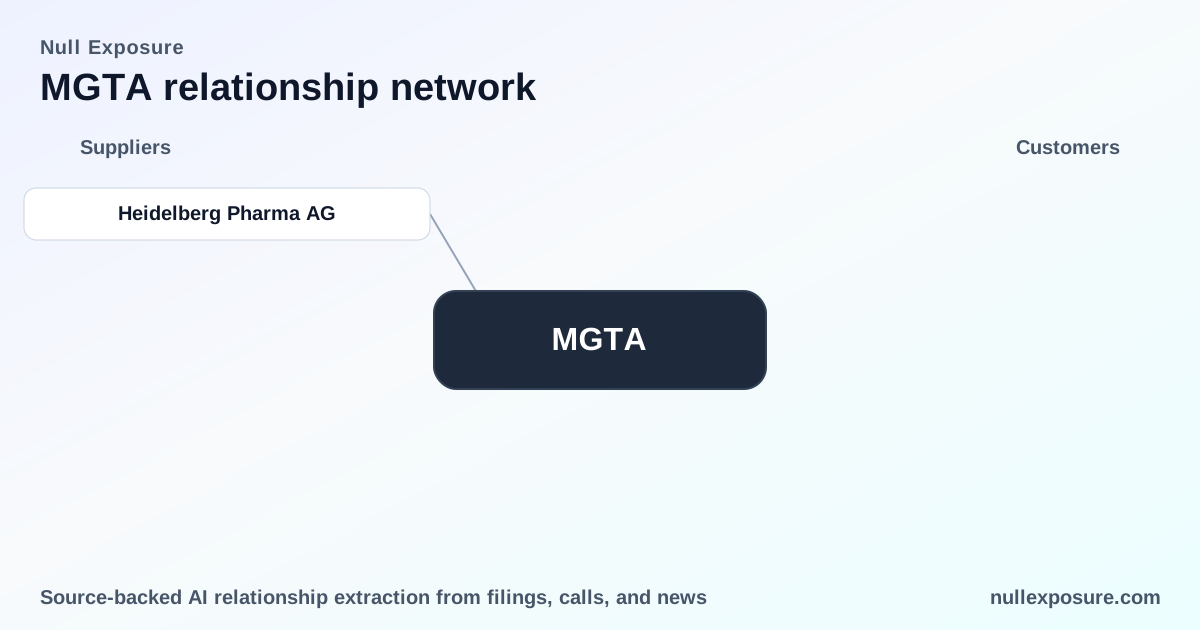
MGTA supplier relationships: what the Heidelberg Pharma ATAC licence exercise signals to investors
Magenta Therapeutics operates as a clinical-stage life sciences company that builds value by developing cell- and gene-therapy enabling technologies and commercial-stage product opportunities while monetizing through structured collaborations, option-and-license exercises, and milestone-driven cash flows from supplier and partner agreements. For investors and operators evaluating MGTA supplier exposure, the company’s public supplier interactions are concentrated, strategic, and executed through option-first contracting that converts into licensed access when technical or program milestones justify further investment. Explore more supplier intelligence at https://nullexposure.com/.
The headline transaction and why it matters to a supplier-risk lens
A March 2026 European Biotechnology report states that Magenta exercised an option to license Heidelberg Pharma AG’s anti‑CD45 Antibody Targeted Amanitin Conjugate (ATAC). This is a classic biotech supplier-to-partner conversion: an optioned discovery or conjugate that Magenta decided to take into an exclusive or defined-license arrangement, transferring program control and committing future spend and milestone obligations. (European Biotechnology, March 10, 2026.)
- Why this matters: option exercises convert contingent supplier relationships into active, higher‑commitment supplier / license relationships, which changes cash flow timing, counterparty concentration, and IP control dynamics.
How the Heidelberg Pharma relationship reads for investors and operators
Magenta’s exercise of the ATAC licence option with Heidelberg Pharma converted a prior supplier option into a live license, aligning the two companies on development and future commercialization economics. According to the European Biotechnology news item, Magenta specifically exercised the option for Heidelberg’s anti‑CD45 ATAC, signalling program-level prioritization and an increased commitment of resources to a linked therapeutic pathway. (European Biotechnology, March 2026.)
- Commercial consequence: this is a supplier-to-license conversion that typically triggers upfront payments, future milestones, and royalty mechanics — a predictable monetization path for the supplier and a deliberate capital allocation for the licensee.
- Operational consequence: license exercises increase MGTA’s supplier concentration risk for that program while simultaneously increasing MGTA’s control over downstream development choices and supplier-managed manufacturing or CMC obligations.
Every supplier relationship surfaced in the public record
- Heidelberg Pharma AG — Magenta exercised the option to license Heidelberg’s anti‑CD45 Antibody Targeted Amanitin Conjugate (ATAC), moving a previously optioned supplier technology into a licensed development relationship. (European Biotechnology, March 10, 2026.)
This article’s search of supplier records returned a single distinct supplier relationship in the public record: the Heidelberg Pharma option-to-license conversion. That singularity is itself an informative signal about MGTA’s public supplier footprint.
What the absence of additional supplier constraints indicates about MGTA’s contracting posture
The supplier constraint inventory returned no explicit contractual constraints or encumbrances in the available record. As a company-level signal, the lack of extracted supplier constraints suggests MGTA’s public filings and press disclosures emphasize project-level option-and-license structures rather than extensive multi-vendor encumbrance reporting.
- Contracting posture: option-first, low-profile supplier agreements that convert to licenses when program criteria are met, which concentrates supplier exposure around exercised programs.
- Concentration: public record indicates limited disclosed supplier relationships, implying concentration around a handful of strategic collaborators rather than broad-based vendor diversification.
- Criticality: licensed bioconjugates and payload technologies (like ATAC) are highly critical to program outcomes; a single-technology supplier can materially affect timelines and valuation when exercised.
- Maturity: these are mid-stage partnering constructs — discovery/option leading to license — that place MGTA in a product-control position post-exercise but keep supplier IP and revenue-sharing mechanics central to long-term economics.
Investment and operational implications — an operator checklist
- Balance concentration risk: the Heidelberg exercise makes the ATAC pathway operationally and commercially more central; institutional investors should evaluate how dependent program valuation is on a single licensed supplier technology.
- Model in milestone timing and payments: convert the option exercise into explicit cash‑flow items — upfront, development milestones, and potential royalties — and test scenario sensitivity to delayed development or manufacturing setbacks.
- Assess IP and manufacturing handoff: licensing a conjugate like ATAC often leaves manufacturing or CMC responsibilities shared; confirm which party retains manufacturing control and the contingency plans if supply issues arise.
- Counterparty strength and exit clauses: validate supplier balance-sheet health and contractual termination or step-in rights; option conversions change the leverage and downside protections for both sides.
- Regulatory pathway alignment: ATACs and targeted payloads carry specific regulatory and safety profiles; ensure the license terms accommodate iterative CMC or safety studies without disproportionate cost allocation to MGTA.
What investors should watch next
- Disclosure cadence: monitor MGTA press releases and filings for the detailed economics of the Heidelberg licence (upfront payment, milestones, royalties, field exclusivity).
- Supply and manufacturing updates: confirm whether Heidelberg or a third party will supply clinical and commercial materials and the related timelines.
- Additional supplier engagements: a pattern of option-to-license plays can concentrate MGTA’s supplier exposure into fewer, higher‑value relationships; new option announcements will signal continued strategy.
For a tailored supplier exposure review and continuous monitoring of MGTA’s partner economics, visit https://nullexposure.com/ — our platform aggregates, contextualizes, and surfaces the contract-level signals investors need.
Bottom line
The Heidelberg Pharma ATAC licence exercise is a material supplier-to-license conversion that raises MGTA’s program-specific supplier concentration but also consolidates development control and future upside capture. Investors should model the contractual economics, validate manufacturing contingencies, and track further option exercises to understand how MGTA’s supplier strategy will shape near-term cash flows and long-term program value.
Keep pace with evolving supplier and partner signals at https://nullexposure.com/ — practical intelligence for investors and operators managing counterparty risk and program economics.