MeiraGTx (MGTX) supplier relationships and what they mean for investors
MeiraGTx is a clinical-stage gene therapy company that builds value by advancing proprietary and in-licensed gene therapy programs toward commercialization and by capturing value through licensing and future product sales. The company currently funds operations through equity and structured financings while relying on third-party partners for key manufacturing, legal and licensing functions—an operating model that monetizes intellectual property and clinical progress rather than recurring product revenue. For investors, the critical questions are whether pipeline expansion (through licensing deals) and capital access can be executed while third-party manufacturing and legal arrangements scale to commercial needs.
Visit NullExposure for further supplier and counterparty intelligence: https://nullexposure.com/
Operational snapshot and how MeiraGTx runs its supply chain
- MeiraGTx is clinical-stage with limited revenue (Revenue TTM $27.4m) and negative profitability (EBITDA -$151.4m), which makes external capital and partner arrangements essential to advancing programs. Market capitalization stands around $619m and institutional ownership is high at roughly 66%.
- Manufacturing is outsourced: the company discloses it contracts third parties for the manufacture of plasmid and related inputs. The firm also states it purchases required supply on a purchase order, spot basis rather than under long-term supply agreements.
- These disclosures are company-level signals about contracting posture, supplier criticality and maturity: spot procurement increases operational exposure, while third-party manufacturing makes supplier relationships functionally critical to development timelines and future commercialization.
Contracting posture, concentration and criticality MeiraGTx’s own disclosure that it buys supply on a purchase-order basis—“We do not have a long-term supply agreement with any of the third-party manufacturers, and we purchase our required supply on a purchase order basis.”—is an explicit indicator of a spot contracting model. Separately, the company states it “contracts with third parties for the manufacture of plasmid used in producing product candidates.” These statements should be treated as firm-level constraints on supply strategy rather than commitments tied to any specific supplier.
Implications:
- Operational risk is elevated: spot contracts reduce supply predictability and negotiating leverage right when capacity will be most valuable (late-stage development and launch).
- Commercial readiness gap: absence of long-term supply agreements signals a need to prioritize supplier qualification and contracting ahead of pivotal studies or launch.
- Concentration risk: reliance on specialized third-party manufacturers for plasmid and vector components concentrates critical capabilities external to MeiraGTx.
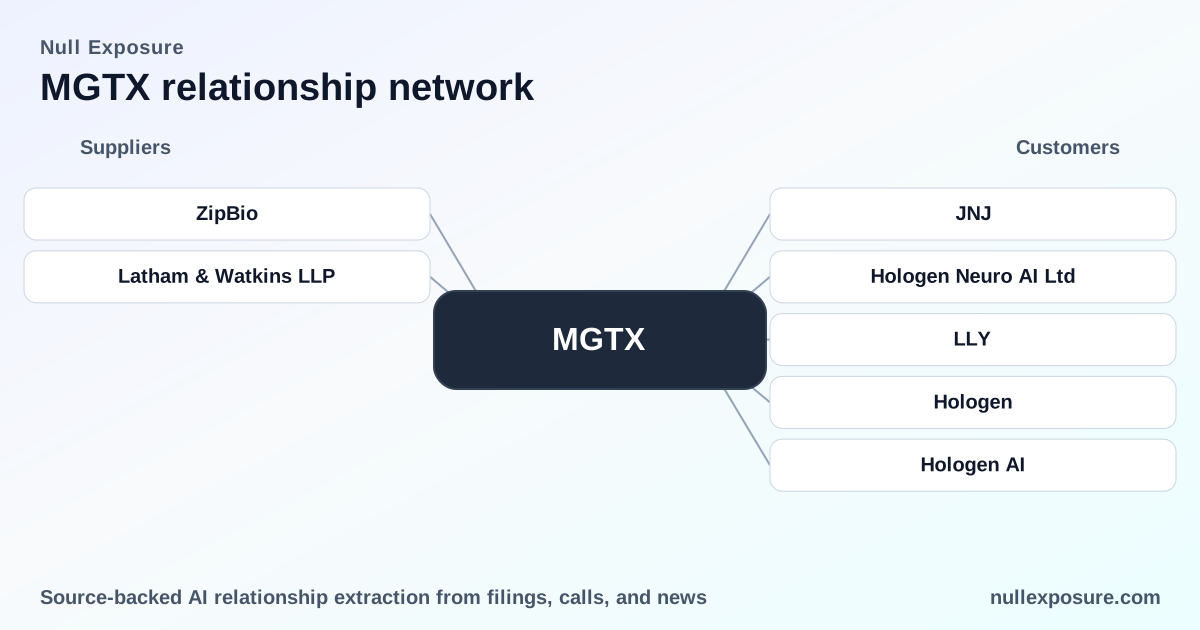
Supplier and external-relationship ledger (public record) The public record for MeiraGTx’s supplier and partner activity is sparing but material. Below are the relationships captured in available results.
ZipBio — exclusive license for geographic atrophy program
MeiraGTx executed an agreement to receive exclusive rights to ZipBio’s first-in-class AAV therapies targeting the complement pathway for Geographic Atrophy. This is an in-licensing of retinal assets that expands MeiraGTx’s pipeline into an age-related ophthalmology indication. According to an InvestingNews report from March 2026, the deal gives MeiraGTx exclusivity on ZipBio’s geographic atrophy program and its complement-pathway approach (InvestingNews, March 2026).
Latham & Watkins LLP — legal adviser on secured growth financing with Perceptive Advisors
Latham & Watkins acted as legal counsel to MeiraGTx in connection with a secured growth financing led by Perceptive Advisors, reflecting the company’s use of structured financings to extend runway. Latham & Watkins noted this engagement in August 2022 when describing its representation of MeiraGTx’s financing (Latham & Watkins announcement, August 2022).
What these relationships reveal about strategy and execution
- Pipeline-first growth via licensing: The ZipBio deal is an explicit signal that MeiraGTx is willing to broaden its pipeline through exclusive license arrangements rather than relying solely on internal discovery. That strategy accelerates program diversity but transfers upstream development and IP integration tasks onto MeiraGTx’s development and regulatory teams.
- Capital markets dependence: Use of secured growth financing, with recognized law-firm counsel on the transaction, shows active capitalization strategy to fund R&D and operations while the company remains pre-commercial. Legal support from a top firm is consistent with larger, structured financings rather than ad hoc smaller debt.
- Manufacturing remains outsourced: Neither public relationship removes the operational requirement to scale third-party manufacturing; in-license programs will still require plasmid/vector production that MeiraGTx currently sources from third parties on purchase orders.
Constraints and what they mean for risk assessment Two corporate-level constraint excerpts are notable:
- Contract type: spot procurement (max confidence 0.80). The explicit excerpt reads that the company purchases required supply on a purchase-order basis and has no long-term supply agreement. Treat this as a company signal that supplier commitments are short-term.
- Relationship role: manufacturer (max confidence 0.80). The company expressly contracts third parties to manufacture plasmid used in products.
Together these constraints indicate a transitional operating model: strong in licensing and clinical development but under-contracted on manufacturing. For investors and operators this translates to priorities—secure long-term supply agreements, diversify qualified suppliers for plasmid/vector capacity, and align financing cadence to manufacturing commitments.
What to watch next (actionable checklist for investors and operators)
- Track any announcements of long-term manufacturing agreements or capacity buildouts; these materially reduce execution risk.
- Monitor clinical and regulatory milestones for the ZipBio-licensed GA program; progression would trigger larger manufacturing commitments.
- Watch capital markets activity and covenants tied to secured financings; refinancing or additional financing will affect dilution and runway.
- Assess supplier concentration by probing the number of qualified plasmid/vector manufacturers under contract.
Middle-stage intelligence and consulting offer For investors assessing counterparty risk or operators preparing procurement strategy, targeted supplier due diligence and contract benchmarking materially improve outcomes. Find deeper supplier-credit and operational intelligence at NullExposure: https://nullexposure.com/
Final takeaways and investor posture
- MeiraGTx is advancing a licensing-driven pipeline expansion while relying on spot third-party manufacturing. That combination preserves agility but elevates supply risk ahead of commercialization.
- ZipBio’s license augments the pipeline in ophthalmology; Latham & Watkins’ role underscores use of structured financings. Both relationships support near-term value creation but do not obviate the need for durable manufacturing contracts.
- Investors should prioritize evidence of supplier contracting and manufacturing scale as leading indicators of de-risking prior to commercialization.
For practical next steps, review supplier agreements, monitor trial milestones for the ZipBio program, and evaluate the company’s financing timeline. For comprehensive counterparty and supplier intelligence, visit NullExposure: https://nullexposure.com/