MITT-P-C: External management, fee capture, and what that means for investors
MITT-P-C represents a capital claim on an externally managed mortgage REIT that generates returns through interest spread on mortgage assets and fee arrangements with its external manager. The company operates under an outsourced operating model: investment decisions, servicing and strategic oversight flow through a named management affiliate, and shareholders receive distributions funded by mortgage yield and manager compensation mechanics. For a complete supplier and governance view, see the supplier mapping at https://nullexposure.com/.
One-line investor thesis
This security’s economics are a function of underlying mortgage yields, leverage choices set by an external manager, and the manager’s fee structure — control and execution live off balance sheet with material governance implications for preferred holders.
Supplier relationships — the full list investors should evaluate
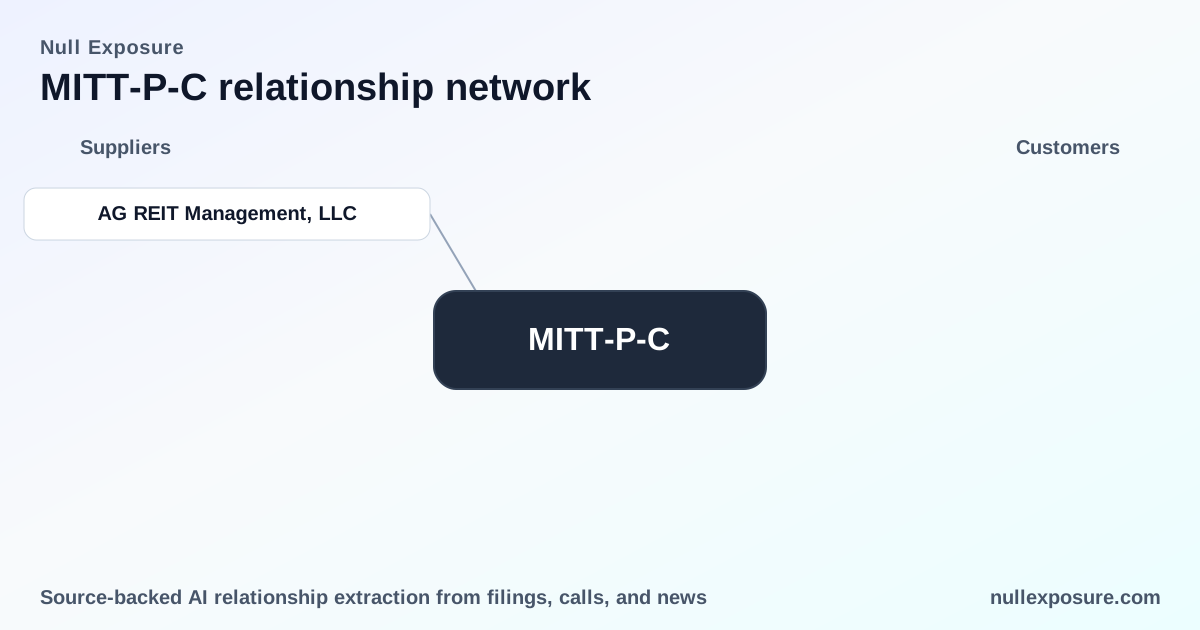
Below is every supplier relationship returned in the results for MITT-P-C.
- AG REIT Management, LLC — The company is externally managed and advised by AG REIT Management, LLC, an affiliate of TPG Inc.; this naming indicates that day-to-day investment and advisory responsibilities sit with an outside manager rather than in-house corporate management. According to a press release reported by The Globe and Mail (press release dated March 10, 2026 covering FY2025 details), the external management arrangement is explicit (https://www.theglobeandmail.com/investing/markets/stocks/MITT/pressreleases/36678786/ag-mortgage-announces-name-change-to-tpg-mortgage/).
Why the supplier map matters to returns and risk
External management is not a neutral structural choice — it defines where economic value is captured and where agency risk accumulates. The presence of a single named manager translates into concentrated operational dependence: the manager sets leverage, sourcing priorities, and servicing protocols that determine net income available to preferred holders. When a manager is an affiliate of a large alternative asset firm, investors should expect professional capability but also incentive structures that prioritize fee-bearing activities.
- Revenue composition: Preferred distributions derive from the REIT’s net cash flows after manager fees and operating costs. That makes the contractual manager a primary economic gatekeeper.
- Governance channel: Board and governance arrangements in externally-managed REITs often embed different change-of-control and termination economics than internally-managed peers; these terms directly affect minority investors’ ability to influence outcomes.
- Execution risk: Sourcing, underwriting standards, and hedging choices live with the manager; market cycles amplify the impact of those choices on preferred yield coverage.
For a deeper supplier and governance breakdown, visit https://nullexposure.com/.
Operating model and business-model signals (company-level)
The relationships data returned no specific contractual constraints, so the following are company-level operating signals derived from the externally managed posture and market norms for mortgage REITs:
- Contracting posture — outsourced, manager-centric: The company operates under an external management contract that centralizes investment discretion outside the corporate payroll. That posture accelerates agility but embeds contractual counterparty risk.
- Concentration — single-manager dependency: With one named manager in the public record, operational concentration is high, creating single points of failure in sourcing and execution.
- Criticality — high to governance and fee structure: Management control over leverage and fee capture makes the manager relationship critically material to distributions and capital allocation.
- Maturity — likely institutionalized practices: Affiliation with a well-known alternative manager suggests established underwriting playbooks and capital markets access, supporting scalability; however, institutional sophistication coexists with structured fee extraction.
These signals should be read at the company level and are not tied to any constraint excerpt naming a specific supplier.
Investment implications and major risk takeaways
Investors evaluating MITT-P-C should price the following into models and active monitoring routines.
- Fee leakage is a core variable: The external manager’s compensation reduces distributable earnings; models that ignore manager fees overstate available cash flow for preferred claims.
- Governance protections dictate downside: The terms that govern manager termination, change-in-control, and related-party transactions determine the ease with which shareholders can respond to underperformance.
- Concentration amplifies operational shock: A single manager relationship creates correlated risk across origination, servicing, and hedging errors — investors must stress-test for manager-led performance swings.
- Affiliation with a large manager brings both scale and directionality: Access to capital markets and institutional pipelines improves deployment during favorable markets, but strategic priorities of the affiliate can shift capital allocation away from minority preferred holders’ interests.
Key operational items to track: manager fee schedule, manager termination rights and penalties, board independence profile, and any disclosures of related-party servicing or cost-sharing arrangements.
For a vendor and governance-focused lens on mortgage REITs, check the platform summary at https://nullexposure.com/.
What to watch next — actionable monitoring list
- Quarterly filings and any press releases updating the manager name, fee changes, or amended management agreements.
- Board minutes and governance disclosures that reveal independence or compensation links.
- Cash-flow coverage metrics published by the issuer that isolate distributable earnings net of management fees.
- Market commentary from the manager’s parent (TPG affiliate references) for strategic shifts that could cascade to the REIT.
Bottom line for investors
MITT-P-C is an externally-managed capital instrument whose performance is tightly coupled to the manager’s execution and contractual terms. The single supplier relationship in the public results — AG REIT Management, LLC — makes management disclosures and fee mechanics first-order inputs into valuation and risk management. Prioritize governance documentation, manager incentive alignment, and fee-adjusted cash-flow modeling when sizing positions.
For an expanded supplier map and governance screening tools tailored to mortgage REIT exposures, visit https://nullexposure.com/.