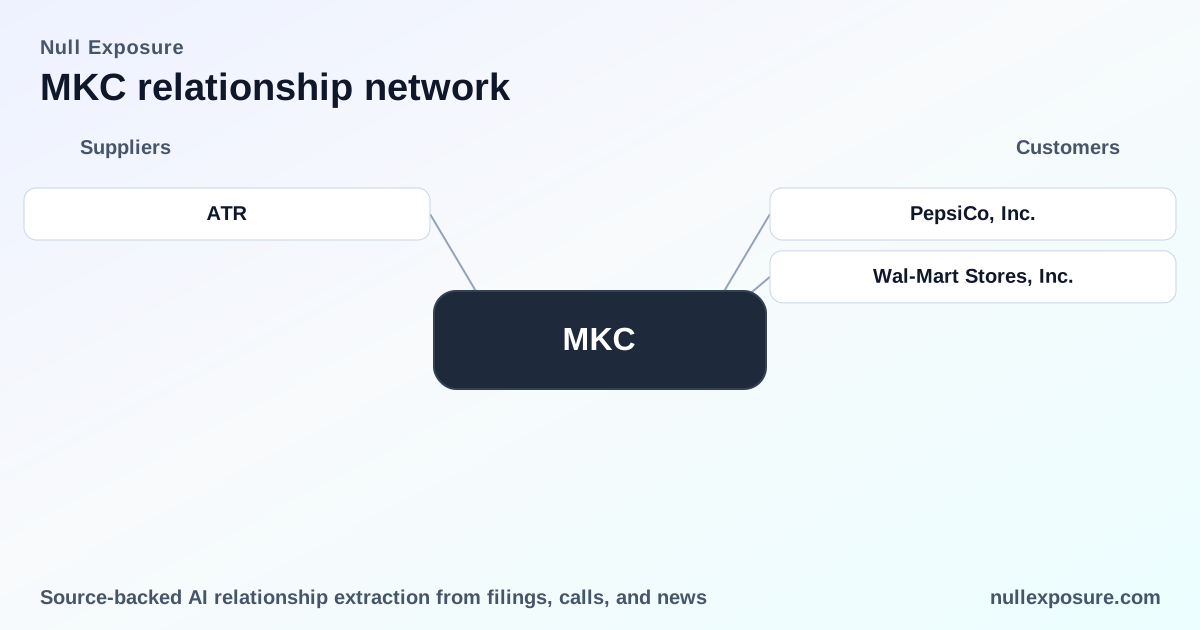
McCormick (MKC) — supplier profile and what AptarGroup reveals about sourcing, financing, and operational leverage
McCormick operates as a global flavors and condiments manufacturer and monetizes through branded spice and sauce sales, private-label production, and ingredient solutions sold to foodservice and industrial customers. Its supplier relationships are a mix of high-volume raw-material and packaging contracts that are managed with flexible payment terms and an active supply-chain finance (SCF) program, creating working-capital optionality while concentrating meaningful payable balances with participating suppliers. For investors and operators, the essential lens is: how McCormick leverages supplier finance, contract cadence, and critical packaging partnerships to protect margins and speed product launches. Learn more about supplier intelligence at https://nullexposure.com/.
How McCormick structures supplier economics and working capital
McCormick’s supplier posture is organized around commercial flexibility and scale procurement. Payment terms run from immediate payment up to 180 days, which supports liquidity management and enables seasonal sourcing strategies tied to raw-material cycles. According to the company’s reporting on payment terms, these ranges are considered commercially reasonable and vary by industry and geography (payment-terms excerpt referencing zero to 180 days).
McCormick also operates a formal supply-chain finance (SCF) facility that allows qualifying suppliers to sell receivables to third‑party SCF banks, effectively shifting cash flow timing without changing McCormick’s own payables profile. As of November 30, 2025, amounts due to suppliers participating in the SCF and included in trade accounts payable were approximately $332.1 million, down from $417.4 million a year earlier and up from $300.5 million in 2023 — a clear signal that SCF is material to payables. These figures are reported as part of the company’s FY2025 disclosures (payment and SCF balances excerpt).
Contracting posture and supplier roles
- Short-term contracting is prominent: McCormick’s disclosed supplier payment framework and SCF program indicate a contracting posture that supports short-term commercial arrangements, with flexibility for both buyers and sellers.
- Supplier roles are mixed: Company disclosures identify suppliers acting as both service providers (for transport, packaging, and third-party auditing services such as Ernst & Young LLP) and sellers who can elect to sell receivables into the SCF (service-provider and seller excerpts).
Concentration, criticality, and maturity signals
McCormick’s reliance on SCF and large payable balances points to moderate supplier concentration and high criticality for suppliers participating in the program—packaging and transport partners that support product launches and distribution are operationally important. The presence of a Big Four auditor (Ernst & Young LLP, Baltimore) and structured commercial terms indicate corporate maturity and established governance around third-party relationships.
Packaging partnership highlight: AptarGroup (ATR) and the Cholula Cremosa launch
A notable public relationship is with AptarGroup, a packaging and closure provider. In early 2026, McCormick used AptarGroup’s flip-top pour spout closure on a new condiment SKU, Cholula Cremosa, enabling clean, directional dispensing for the product launch in North America. According to an earnings call transcript published in March 2026, this closure was specifically cited as part of the product’s format innovation. (InsiderMonkey earnings call transcript, March 10, 2026).
- The AptarGroup tie illustrates how packaging suppliers play a direct role in go-to-market differentiation and can be leveraged for incremental revenue through SKU upgrades.
What every investor and operator should take from these relationships
- Operational risk is concentrated in packaging and logistics: Packaging partners like AptarGroup are not commodity vendors in McCormick’s model; they are functional enablers of product launches and consumer experience, which makes them strategically important.
- SCF amplifies counterparty credit exposure: The SCF program reduces McCormick’s cash outflow timing while increasing the nominal balances visible in trade payables; investors should monitor payables participating in SCF as a leading signal of working-capital strategy and supplier leverage.
- Negotiation posture is flexible but short-dated: The zero-to-180-day payment range fosters commercial negotiation across geographies and supplier types and reflects an intent to preserve procurement optionality rather than lock into long-term fixed-price contracts.
If you’re tracking supplier risk or structuring financing around large consumer goods supply chains, deeper vendor-level visibility is essential — start here: https://nullexposure.com/.
Practical implications for risk management and sourcing strategy
For portfolio managers and procurement leads, the combination of short-term contracts, significant SCF participation, and product-level packaging partnerships implies these action points:
- Run scenario stress tests on payables under different SCF participation rates and counterparty funding shocks.
- Prioritize continuity plans for packaging and transport providers that support innovation (product launches such as Cholula Cremosa).
- Monitor quarterly shifts in SCF balances for signs of tightening supplier liquidity or changing supplier negotiation leverage.
These points translate into both financial risk signals (working capital stress) and operational signals (launch cadence and packaging dependency).
Actionable next steps for diligence and monitoring
- Map material suppliers to SCF participation and quantify the share of trade payables in SCF monthly or quarterly.
- Validate continuity contracts for critical packaging suppliers and test alternate sourcing to reduce single-vendor dependency.
- Reconcile auditor and third-party service-provider roles (e.g., Ernst & Young and transportation providers) into audit and logistics contingency plans.
For a consolidated supplier risk view and continuous monitoring tools, visit https://nullexposure.com/ to explore coverage and intelligence on supplier relationships.
Final assessment
McCormick’s supplier model combines short-term contracting flexibility, meaningful use of supply-chain finance, and targeted strategic partnerships with packaging vendors like AptarGroup. This creates an operational architecture that protects liquidity and accelerates product innovation but also concentrates exposure in packaging and funded payables. For investors, the signal is clear: evaluate payables structure, SCF trends, and vendor-criticality when modeling earnings and working-capital needs — and incorporate supplier-level diligence into valuation and operational risk frameworks.