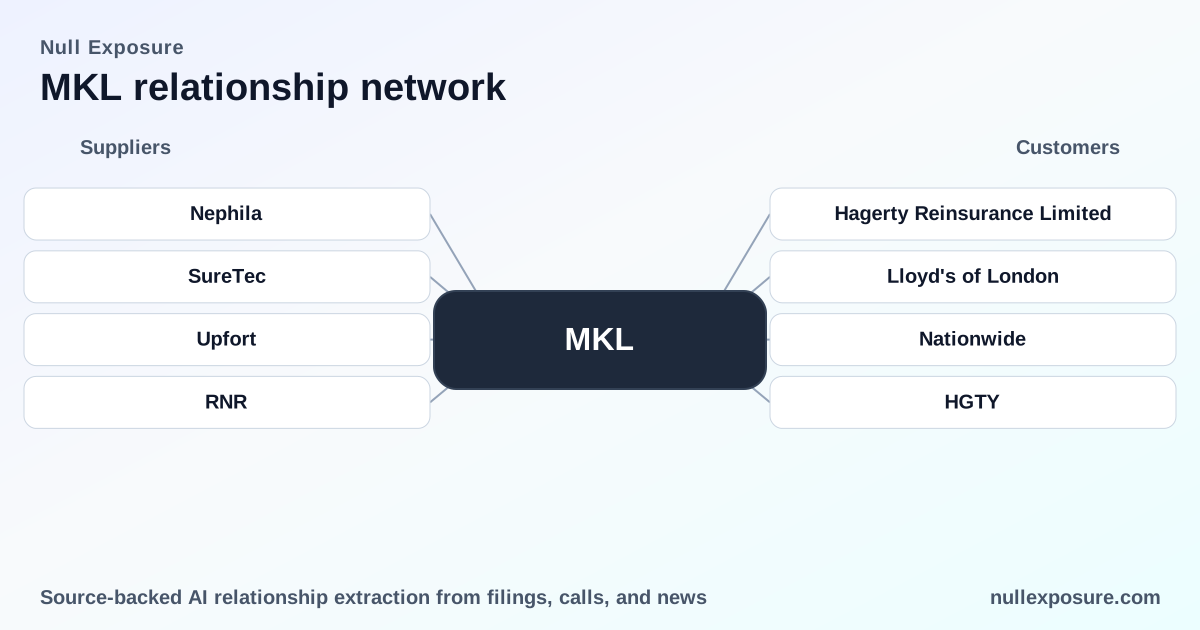
Markel (MKL) — supplier relationships that shape underwriting economics
Markel operates as a specialty insurer and investment manager that monetizes through underwriting profit, fee income from specialty units, and returns on invested capital. The firm scales limits and product reach by purchasing reinsurance, acquiring niche specialty franchises, and partnering with third‑party service and cyber vendors to widen distribution and reduce loss exposure. For investors, the interplay between reinsurance concentration, broker distribution, and targeted partnerships is the primary driver of operational leverage and capital efficiency.
For a full supplier map and ongoing updates, visit https://nullexposure.com/.
How Markel structures counterparty and supplier exposure
Markel runs a conservative supplier posture designed for capital protection and underwriting flexibility. The company requires reinsurance partners to meet high rating and capitalization thresholds (A.M. Best or S&P “A” or better; minimum capital and surplus benchmarks and collateral requirements), which enforces a large‑enterprise counterparty profile and limits participation to established reinsurers. The firm also outsources claims administration, technology hosting, and other business process functions, creating a hybrid model of internal underwriting and outsourced operations.
- Concentration is intentional: the top five independent brokers accounted for 38% of gross premiums written in 2024, which concentrates distribution risk but also concentrates client acquisition cost efficiencies and broker relationships.
- Capital and collateral discipline: reinsurance participation standards and collateral arrangements lower credit risk and support larger policy limits.
- Service dependency: third‑party administrators and technology providers perform claims management and IT hosting, embedding operational dependency outside the balance sheet.
These characteristics produce a supplier landscape that is highly curated, skewed toward large, rated counterparties, and materially influential on underwriting results. For more granular relationship analytics, explore https://nullexposure.com/.
Supplier relationships that matter (what the filings and press say)
Nephila
The Financial segment — which includes State National and Nephila — generated $327 million in adjusted operating income in 2025, up 25% year‑over‑year, indicating Nephila contributes meaningfully to Markel’s investment and risk‑transfer economics. Source: MKL 2025 Q4 earnings call (2025Q4).
SureTec
Markel’s surety portfolio has been highly profitable since Markel acquired SureTec in 2017, underlining the value of targeted acquisitions to build steady, fee‑driven specialty earnings. Source: MKL 2025 Q4 earnings call (2025Q4).
Upfort
Markel announced a partnership with Upfort in FY2026 to deliver the Upfort Shield platform and expanded cybersecurity resources to eligible U.S. cyber policyholders, a move that strengthens policyholder loss mitigation and reduces cyber claim frequency through AI‑enabled defenses. Source: ReInsurance News and Yahoo Finance reporting on the Markel–Upfort partnership (FY2026).
RenaissanceRe (RNR)
At December 31, 2024, the largest reinsurance balance due to Markel was from RenaissanceRe, representing 19% of reinsurance recoverables before allowances and collateral, signaling material counterparty credit exposure within the reinsurance recoverables pool. Source: MKL 2024 Form 10‑K (FY2024).
What these relationships imply for investors
Markel’s supplier network blends strategic acquisitions, curated reinsurer relationships, and targeted vendor partnerships to achieve scale and protect underwriting capital.
- Concentration risk is quantifiable and material. A single reinsurer accounting for 19% of recoverables creates a meaningful credit exposure that investors must monitor alongside collateral arrangements and reinsurance allowances.
- Distribution concentration is a strategic lever. With 38% of GWP flowing through the top five brokers in 2024, broker relationships amplify top‑line growth but create single‑channel dependency that can compress pricing power if broker negotiating dynamics shift.
- Vendor and service dependencies are operationally critical. Outsourced claims administrators and cloud/hosting partners underpin day‑to‑day operations; failure or contract dislocation would have operational and claims‑management consequences.
- Partnerships drive product resiliency. The Upfort collaboration demonstrates how Markel uses vendor partnerships to reduce loss frequency and enhance the attractiveness of cyber products, supporting premium retention and underwriting margins.
Practical risk checklist for investors and operators
- Track reinsurance collateral and allowance trends for top counterparties, especially when a single counterparty represents a high percentage of recoverables.
- Monitor broker concentration metrics and retention rates for the top five broker relationships to assess distribution durability.
- Evaluate progress and KPIs for outsourced claims administrators and tech providers (SLAs, adjudication timeliness, system availability).
- Assess the effectiveness of risk‑mitigation partnerships (e.g., Upfort) by tracking cyber loss trends and policyholder adoption rates.
If you want ongoing, structured intelligence on Markel’s supplier profile and counterparty exposures, check the supplier mapping at https://nullexposure.com/.
Investor actionables and final take
Markel’s supplier strategy is deliberate, capital‑centric and outcome‑oriented: it restricts reinsurance partners to large, rated firms, concentrates distribution through a handful of brokers, and supplements underwriting with external service providers and cybersecurity partnerships. For investors, the critical monitoring points are reinsurance credit exposure (recoverables and collateral), broker concentration metrics, and the performance of outsourced operational vendors.
To review Markel’s supplier relationships alongside peer mappings and alerts, visit https://nullexposure.com/ for direct access and subscription options.