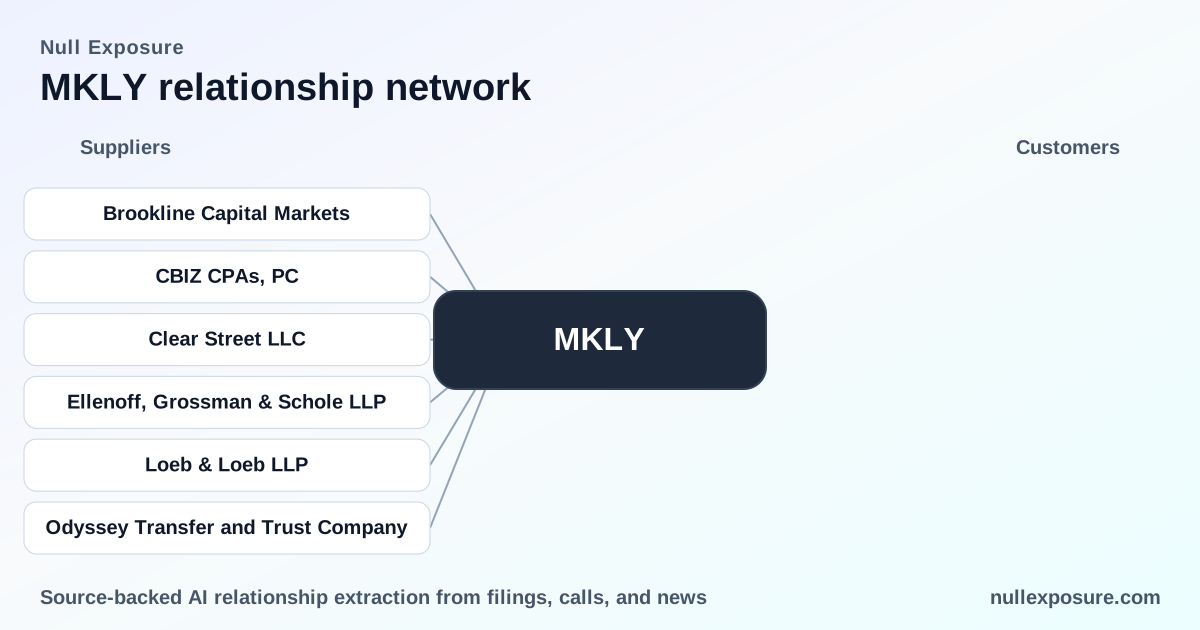
MKLY: Supplier map and tradecraft for investors evaluating the IPO ecosystem
Minute-oriented thesis: McKinley Acquisition Corporation (MKLY) operates as a blank‑check acquisition vehicle that raises capital through an IPO and holds proceeds in trust while sourcing a target company for a business combination; it monetizes through the sponsor promote, underwriting fees, and interest on trust balances prior to a merger. For investors and operators, the named suppliers around MKLY’s offering — underwriters, counsel, auditor and transfer agent — are transactional but structurally critical: they determine execution quality, timing and the post‑IPO corporate plumbing that protects investor funds. Learn how these counterparties position MKLY for execution and where operational attention is required at https://nullexposure.com/.
Who MKLY hired for the offering — and what that signals
The public record for MKLY’s $150 million IPO lists a tight, conventional set of capital markets and support firms. The following relationships were reported in coverage of the offering; each entry includes a concise plain‑English summary and the reporting source.
Clear Street LLC — sole book‑running manager
Clear Street acted as the sole book‑running manager on the offering, centralizing distribution and price discovery for the IPO. According to a SPACInsider report dated March 10, 2026 (covering FY2025 activity), Clear Street led order books and allocation for the deal.
Brookline Capital Markets (Arcadia Securities) — co‑manager
Brookline Capital Markets served as a co‑manager, providing supplemental distribution and institutional placement support alongside the book runner. The same SPACInsider article (March 10, 2026) documents Brookline’s role in the syndicate.
Loeb & Loeb LLP — issuer’s counsel
Loeb & Loeb LLP was designated issuer’s counsel, responsible for drafting and defending offering documents, corporate governance disclosures and regulatory filings. SPACInsider’s March 10, 2026 coverage lists Loeb & Loeb as counsel to the issuer.
Ellenoff, Grossman & Schole LLP — underwriter’s counsel
Ellenoff, Grossman & Schole LLP served as underwriter’s counsel, representing the book‑running syndicate on deal structure, indemnities and regulatory compliance tied to the underwriting agreement. This designation is noted in the SPACInsider report dated March 10, 2026.
CBIZ CPAs, PC — auditor
CBIZ CPAs, PC is recorded as the auditor, handling the financial statement audit work required for the registration statement and related filings. The auditor role is identified in the March 10, 2026 SPACInsider report covering FY2025.
Odyssey Transfer and Trust Company — trustee/transfer agent
Odyssey Transfer and Trust Company is acting as trustee, holding IPO proceeds in trust and administering redemptions and shareholder records until a combination is consummated. SPACInsider’s March 10, 2026 article lists Odyssey in this capacity.
What the supplier roster actually tells you about MKLY’s operating posture
This supplier set is textbook for a sponsor‑led SPAC offering: a single book‑runner supported by a co‑manager, separate counsel for issuer and underwriters, a third‑party auditor and a trust/transfer agent to safeguard investor funds. From a diligence and portfolio operations perspective, that configuration produces several clear implications:
- Contracting posture is transactional and short‑term. These relationships are structured for an IPO lifecycle: intense short‑term obligations around the offering, followed by either termination or conversion to ongoing service (e.g., transfer agent) after the listing.
- Concentration is low but functional concentration matters. There are few counterparties, but each plays a non‑substitutable role at specific execution points: the book‑runner controls demand and pricing; the trustee controls access to cash; the auditor and counsel control disclosure integrity.
- Operational criticality is high for a handful of deliverables. Errors or delays by counsel, auditor or trustee create outsized execution risk (registration amendments, qualified opinions, inability to process redemptions).
- Maturity is nascent and transactional. This supplier map reflects an offering stage entity rather than a mature operating company with diverse vendor relationships; monitoring should focus on continuity and conflict of interest risk as MKLY transitions to business combination activity.
Key takeaway: the supplier roster is standard but not interchangeable — oversight should focus on execution risk, legal alignment and custody controls.
Near‑term investor and operator risks to watch
The roster itself does not contain exotic counterparties, but it concentrates risk around operational handoffs that determine whether IPO proceeds are protected and whether disclosures withstand scrutiny. Monitor these items proactively:
- The underwriting and counsel split can create conflicts of interest in indemnities and fee allocation; review the underwriting agreement and fee schedules.
- Trust arrangement governance with Odyssey must include clear redemption mechanics and segregation controls; confirm bank counterparties and sweep schedules.
- Audit continuity and independence matter if MKLY seeks rapid extensions or amendments; CBIZ’s audit opinion timing is a gating item for filings.
Practical next steps for investors and operators include a targeted review of the underwriting agreement, trustee instructions and auditor consent letters before relying on the offering mechanics in valuation or deal timing assumptions. For a deeper supplier‑level intelligence framework, see our platform: https://nullexposure.com/.
A concise diligence checklist for counterparties and continuity
- Verify whether any of the named counsel or underwriters have pre‑existing relationships with the sponsor that could affect independence.
- Confirm the trust account custodian and sweep arrangements that Odyssey uses to hold IPO proceeds.
- Secure copies of the underwriting agreement, comfort letters, and auditor consent to identify post‑closing obligations and potential indemnities.
- Track any amendments to engagement letters that change fee economics or control provisions post‑IPO.
Final read: actionable investor stance
MKLY’s supplier map is conventional and execution‑oriented: no outlier firms, but several single‑point dependencies that require active monitoring. For investors underwriting risk or operators managing the integration pathway post‑de‑SPAC, the priority is governance at the tie‑points — trustee controls, audit sign‑off and counsel alignment — rather than expanding the supplier base.
For continuous monitoring of counterparty relationships and to integrate supplier intelligence into investment due diligence, visit https://nullexposure.com/ and subscribe for structured supplier profiles and alerts.
Bold, focused oversight of a few core counterparties yields disproportionate risk reduction for MKLY‑type SPACs; treat execution plumbing as the primary operational asset until a business combination converts MKLY into an operating company.