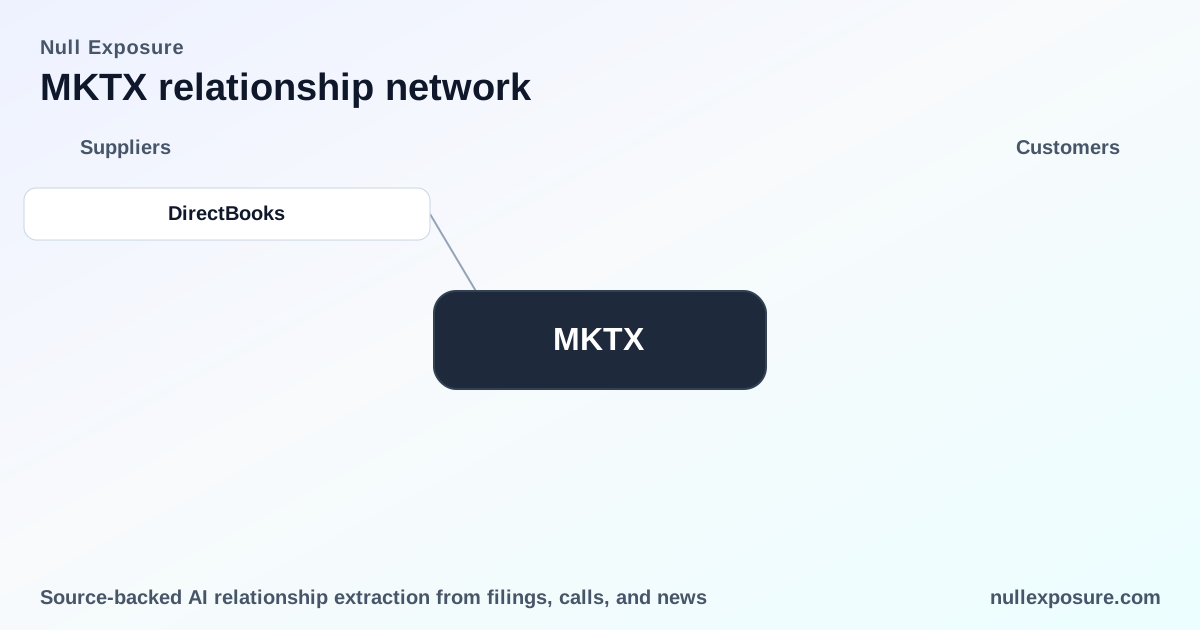
MarketAxess (MKTX): Supplier relationships and the strategic DirectBooks integration
MarketAxess operates a leading electronic trading venue for fixed‑income securities and monetizes through execution fees, subscription data services, and value‑added workflow tools that increase trading velocity and client stickiness. The company’s commercial strategy increasingly layers primary issuance connectivity and workflow integrations on top of core trading to capture distribution economics and recurring revenue from institutional clients. For investors and operations teams, the DirectBooks integration is a direct example of that playbook — it expands MarketAxess’s addressable workflow while creating new dependency vectors that require vendor governance and technical oversight.
Explore supplier risk profiles and integration intelligence at https://nullexposure.com/.
Why the DirectBooks tie-up matters to investors and operators
MarketAxess announced an integration that gives mutual clients streamlined access to DirectBooks’ primary issuance data and workflow tools through the MarketAxess platform. This is a revenue-accretive extension of MarketAxess’s platform strategy: it positions the trading interface not only as an execution venue but as the conduit for primary-market workflow, which can increase trading volumes and subscription uptake for data and workflow services. According to MarketsMedia and FX News Group on March 10, 2026, the agreement targets mutual clients who manage primary issuance workflows and distribution. A commentary piece also linked the integration to the company’s broader AI and platform modernization agenda under the new CTO, framing the deal as complementary to product-led monetization enhancements.
Relationship inventory (every relationship in the report)
DirectBooks
MarketAxess and DirectBooks agreed to an integration that exposes DirectBooks’ primary issuance information and workflow tools directly through the MarketAxess platform, enabling mutual clients to execute primary issuance workflows and distribution more efficiently. Sources: MarketsMedia (March 10, 2026) and FX News Group (March 10, 2026).
Additional commentary tied the integration to MarketAxess’s AI and platform modernization efforts in March 2026 (Simply Wall St).
What the disclosed constraints tell you about supplier posture
The constraint excerpts in the record give two company‑level signals relevant to supplier relationships and operational posture:
-
Short‑term contract/borrowing evidence: The presence of short‑term borrowings and repayments in disclosed excerpts is a company‑level indicator of liquidity and financing behavior rather than a relationship‑specific term. Operationally, this signals a tolerance for short‑duration financing instruments and, by extension, a commercial environment where short‑term vendor arrangements are plausible. For ops teams, that increases the importance of continuous vendor performance monitoring and rapid contract renewal processes.
-
Service provider dependence: Excerpts state MarketAxess “relies on several third parties to supply elements of our trading, information and other systems,” and maintains a risk‑based approach to third‑party cyber risk oversight. This is an explicit company‑level signal that third‑party service providers are central to core systems, raising concentration and cyber‑dependency considerations for investors and operators.
Together these constraints indicate a company that runs a hybrid contracting posture: strategic, revenue‑driving integrations (like DirectBooks) coexist with short‑term financing behaviors and ongoing reliance on external vendors for system components and support.
Operational characteristics investors should weigh
-
Contracting and maturity: The public excerpts suggest a mix of short-term financial instruments and longer strategic integrations; operationally, expect varying contract tenures across vendors — some short-term support contracts and some larger strategic platform partnerships. That mixed maturity profile increases the need for staggered renewal planning.
-
Concentration and criticality: MarketAxess’s statement that it “relies on several third parties” implies concentration risk in critical infrastructure (market data, order routing, cloud/on‑prem compute, and cybersecurity services). Any disruption to key suppliers would have immediate trading and revenue implications.
-
Governance and cyber oversight: The company’s explicit risk‑based third‑party cyber program is a governance positive, but it also flags the criticality of supplier security posture; investors should expect continued investment in vendor risk management as a line item in expense growth.
Investment and operational implications
The DirectBooks integration is strategically sensible: it extends the platform’s utility into primary issuance workflows and aligns with MarketAxess’s initiatives to monetize higher-margin data and workflow subscriptions. From an investor perspective, this can increase customer stickiness and create cross‑sell pathways that lift revenue per client over time. From an operator perspective, the deal introduces new integration, SLA and data‑quality responsibilities that must be managed.
Key risk vectors to monitor:
- Vendor concentration and single‑point failures for market data and workflow providers.
- Contract tenure mismatch between strategic integrations (multi‑year) and tactical support vendors (short‑term), which can produce renegotiation risk and operational churn.
- Cybersecurity and operational resilience as primary‑issuance workflows pass through combined systems.
Read more supplier intelligence and integrations analysis at https://nullexposure.com/.
Practical actions for investors and operators
- Prioritize diligence on SLA terms, data latency guarantees, and business continuity plans for the DirectBooks link and other critical suppliers.
- Monitor RFP/renewal timelines to anticipate vendor consolidation or cost pressure resulting from short‑term contracting behavior.
- Validate the vendor cyber oversight program and request evidence of real‑time monitoring, penetration testing, and third‑party attestations.
Quick takeaways and next steps
- DirectBooks is a strategic, revenue‑accretive integration that deepens MarketAxess’s workflow footprint in primary issuance and complements its AI/platform modernization agenda.
- Company‑level signals show reliance on third‑party service providers and a mixed short‑term financing posture, implying both governance strengths and operational exposure.
- For operators: insist on tight SLAs, redundancy plans, and continuous vendor risk monitoring. For investors: track subscription uptake and cross‑sell metrics tied to integrations as the best early indicators of monetization success.
For deeper supplier mapping and ongoing updates on integrations like DirectBooks, visit https://nullexposure.com/.