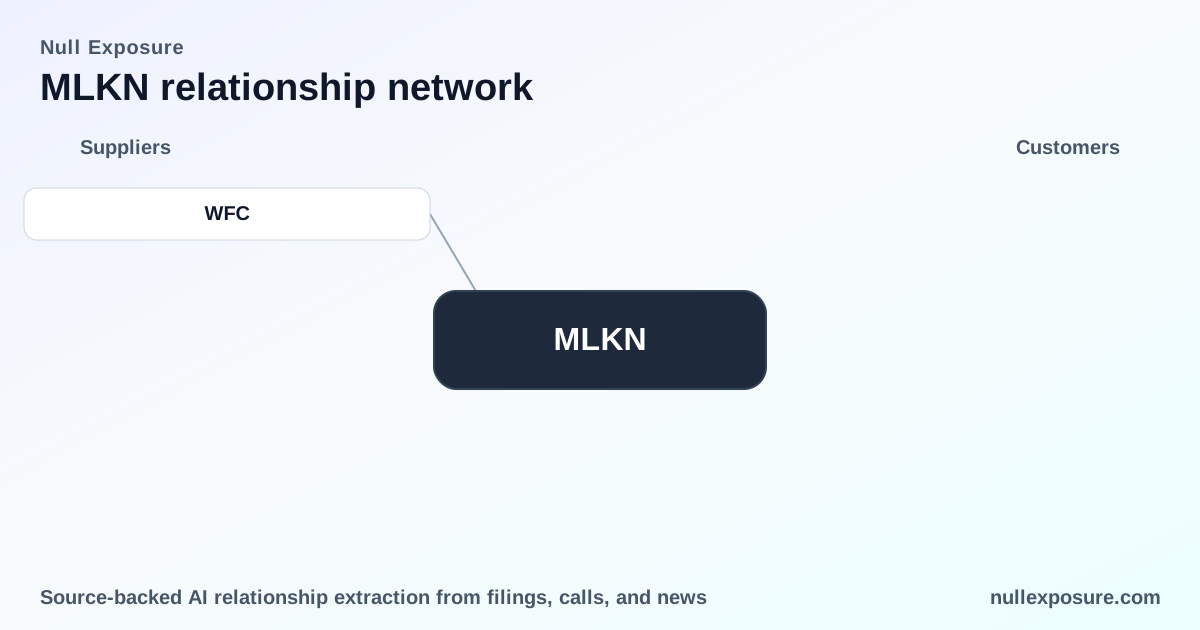
MillerKnoll (MLKN): Supplier relationships and what they mean for investors
MillerKnoll is a global designer and manufacturer of modern furniture that monetizes through product sales, project-based contract furnishing, and aftermarket services delivered across corporate, residential and institutional channels. The company leverages a broad brand portfolio and an international manufacturing footprint to win design-driven, higher-margin contracts, while financing and working-capital arrangements underpin its project cadence and supply continuity. Investors should evaluate both the company’s banking relationships and its multi‑regional sourcing profile to understand liquidity flexibility and commodity exposure. For deeper supplier-level insight and exposure mapping, visit https://nullexposure.com/.
A concise read on the Wells Fargo credit amendment and its investor implications
According to a TradingView news item dated 10 March 2026, MillerKnoll signed an amendment to its credit agreement with Wells Fargo Bank and participating lenders, confirming an active banking relationship for the company’s syndicated credit facility and working capital needs. This amendment is a direct supplier/partner touchpoint: banks function as financial suppliers whose terms affect liquidity, covenant headroom and capital allocation. (TradingView, 2026-03-10)
Key takeaway: the Wells Fargo amendment signals active covenant and liquidity management through established banking counterparts rather than emergency bilateral financing.
What MillerKnoll’s global sourcing footprint means for procurement risk
Company disclosures state that manufacturing materials are procured from sources in North America, South America, Europe and Asia, and that the firm manufactures products in the United States, United Kingdom, Canada, China, Italy, India, Mexico and Brazil, while also sourcing completed products and components from outside the United States. This multi‑regional footprint creates both resilience and complexity:
- It reduces single‑country concentration risk by spreading production across mature and emerging manufacturing centers.
- It increases exposure to cross‑border logistics, tariffs and localized supply disruptions.
- It enforces a procurement organization capable of managing multiple suppliers, standards and lead times.
Practical investor implication: global sourcing supports market responsiveness and price negotiation leverage, but it requires robust inventory and contract management to protect margins during commodity swings.
Direct materials exposure: the most immediate supplier risk
MillerKnoll explicitly identifies steel, plastics, textiles, wood particleboard and aluminum as its largest direct material costs. Those inputs are highly cyclical and susceptible to raw material price inflation and freight cost volatility. Latest reported figures show TTM revenue of $3.7489 billion and EBITDA of $384.6 million, so material cost swings feed directly into operating profitability and working capital needs.
Major risk vector: if prices rise rapidly, the company’s product pricing and margin pass‑through determine near‑term earnings volatility. Given current trailing performance (slim negative net margin but positive operating margin), procurement outcomes materially affect free cash flow and leverage metrics.
Contracting posture, concentration and maturity of supplier relationships
Company disclosures about multi‑regional sourcing and established manufacturing hubs indicate a mature supplier ecosystem with the following characteristics:
- Contracting posture: diversified and transactional, favoring multiple vendors across regions rather than single-source dependency; this supports competitive pricing and operational flexibility.
- Concentration: moderate to low geographic concentration overall, but material concentration exists at the commodity level (steel, textiles, etc.), which elevates systemic price risk.
- Criticality: direct materials are mission-critical—supply interruptions halt production and delay contract deliveries, making supplier performance and logistics a top operational priority.
- Maturity: long-standing brand and manufacturing network implies established procurement practices and negotiated supplier partnerships, which reduce but do not eliminate execution risk.
These company-level signals should be factored into credit and operational diligence rather than attributed to any single counterparty unless a filing explicitly names them.
Mid‑article action step for analysts
If you are benchmarking supplier risk across furniture manufacturers or monitoring covenant sensitivity, start with MillerKnoll’s financing counterparties and its commodity procurement map — both materially influence liquidity and margins. For consolidated supplier intelligence, visit https://nullexposure.com/ to access relational overlays and historical amendment tracking.
Operational metrics that investors should watch
Use the following indicators to monitor supplier- and bank-related stress points:
- Working capital trend and inventory turns, which indicate whether procurement costs are being passed through or absorbed.
- Covenant headroom and amendment frequency in credit agreements, which reveal recurring financing needs.
- Commodity procurement contracts (fixed-price vs. index-linked) and regional production mix, which determine margin sensitivity to raw material volatility.
The company’s reported PEGRatio of 0.696, forward P/E of 8.35, Price/Book around 1.0, and high institutional ownership (~93.5%) reflect market expectations for operational turnaround and the prominence of institutional investors in monitoring these supplier and financing dynamics.
Appendix — All supplier relationships detected
- Wells Fargo Bank (WFC): MillerKnoll executed an amendment to its credit agreement with Wells Fargo Bank and participating lenders in March 2026, confirming Wells Fargo’s role as a principal banking partner for the company’s syndicated credit facility. (TradingView news, 2026-03-10)
Final synthesis and investor action points
Bottom line: MillerKnoll runs a geographically diversified manufacturing and sourcing model supported by established banking relationships; this structure provides operational flexibility but keeps earnings exposed to a narrow set of commodity inputs. Investors should prioritize covenant tracking, working capital efficiency, and commodity procurement terms when assessing downside risk and upside margin recovery potential.
For ongoing monitoring of MillerKnoll’s supplier and financial relationships, and to integrate amendment events into your investment due diligence, use the tools and relational views available at https://nullexposure.com/.
Take action: review the Wells Fargo amendment language for covenant detail, map MillerKnoll’s commodity contracts to forecast margin scenarios, and subscribe to continuous supplier‑relationship alerts at https://nullexposure.com/ to stay ahead of material contract changes.