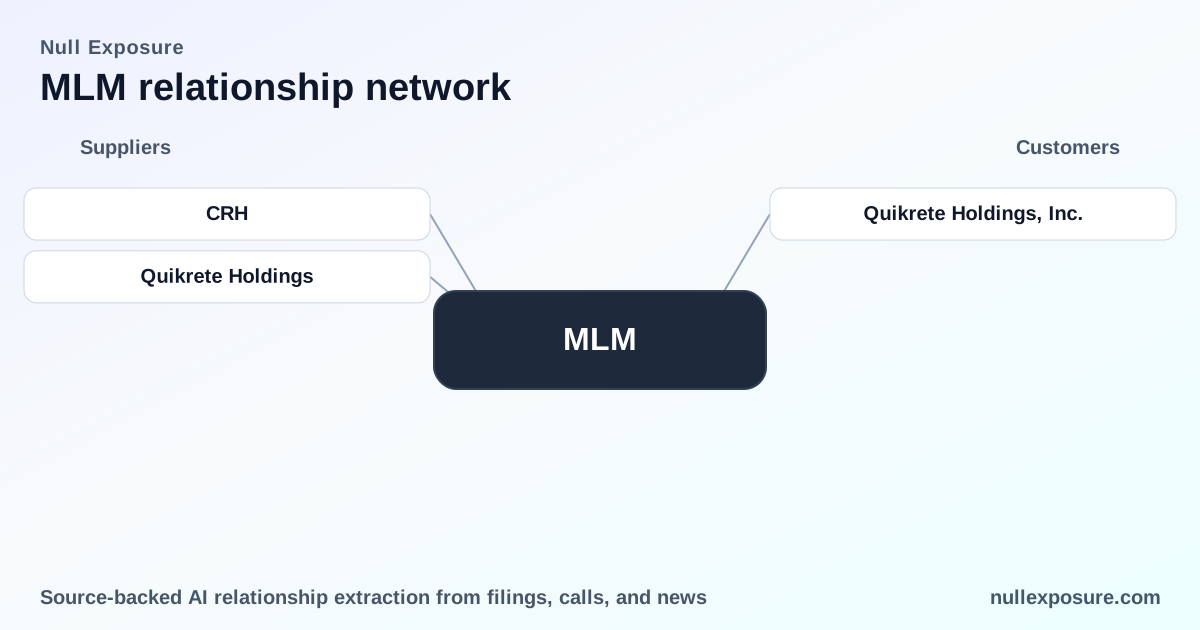
Martin Marietta Materials (MLM): supplier relationships and what they mean for investors
Martin Marietta monetizes by producing and selling aggregates, cement, ready‑mix and related heavy building materials across North America; revenue is generated from unit sales and long‑haul distribution margins, amplified by strategic asset swaps and targeted acquisitions that increase regional scale and control over feedstock and logistics. The company operates as both a buyer of transport and service capacity and an owner/operator of extraction and processing assets, with recent transactions enhancing its aggregates footprint and testing near‑term profit and volume outlook. For a deeper supplier‑risk signal view, see https://nullexposure.com/.
Why supplier relationships are central to the thesis
Martin Marietta’s product economics are simple: tons sold times pricing minus distribution cost equals margin. That arithmetic places supplier and logistics relationships at the center of both cost control and growth: the company relies on leased railcars and ships, take‑or‑pay shipping contracts, and third‑party rail and trucking networks to move heavy, low‑value density materials. Those relationships determine utilization, unit cost, and ultimately the company’s ability to realize price against volume.
- Distribution contracts are not a marginal input; they are a critical lever that can compress or expand operating margins quickly.
- Asset exchanges and acquisitions are used to consolidate market access and reduce per‑ton logistics expense through geographic density.
If you are evaluating MLM as an operator or investor, focus on logistics counterparty strength, contract tenure and structure, and regional concentration. For additional supplier exposure tools consult https://nullexposure.com/.
Deal-by-deal: what the CRH and Quikrete moves mean to the supply chain
Martin Marietta has recently closed transactions that reallocate physical assets and regional supply roles. Below I cover each counterpart relationship reported in public filings and press.
CRH — Minnesota aggregates and FOB asphalt assets (December 2025)
Martin Marietta disclosed acquisition of Minnesota aggregates and FOB asphalt assets purchased from CRH, which were integrated into FY2026 volume and revenue guidance and are expected to contribute to targeted mid‑point revenues and volume growth. According to multiple press reports and company commentary in February 2026, these assets were part of Martin Marietta’s strategy to deepen regional aggregates density and control. Source: GlobeNewswire press release and related coverage in February 2026; analyst note from SAHM Capital (Feb 25, 2026).
Quikrete Holdings — asset exchange that expands ready-mix and cement footprint
Martin Marietta completed an asset exchange with Quikrete Holdings that transferred aggregates, cement, ready‑mix and non‑operating land assets as part of a rebalancing strategy to strengthen integrated supply positions in targeted markets. Company statements and market commentary in late February 2026 framed the deal as immediately accretive to pro forma volumes and a means to test profit realization from a denser regional platform. Source: Martin Marietta press release via GlobeNewswire (Feb 23, 2026) and analyst reporting from SAHM Capital.
What the public constraints tell you about operational risk and contracting posture
Public excerpts from company disclosures reveal a coherent set of supplier and logistics characteristics that are material to an investor’s view:
- Contracting posture — mix of long‑term and usage‑based arrangements. The company operates a long‑haul distribution network where a portion of railcars and all oceangoing vessels are on short‑ and long‑term leases and contracts of affreightment, many of which are take‑or‑pay with defined minimums and maximums. That structure transfers volume risk and capacity cost to contractual terms rather than spot market swings, which stabilizes unit cost when volumes meet minimums and penalizes underutilization when they do not.
- Pricing linkage — usage‑based royalties exist. Martin Marietta reports royalty agreements that require payments based on tons produced, tons sold or total sales dollars with minimum payments, indicating some supplier cash‑flows scale with production but also carry fixed floors.
- Geographic concentration — North America centric. The rail, truck and oceangoing elements primarily serve Texas, the Southeast and the Gulf Coast, with Bahamas and Nova Scotia operations linking to coastal ports; that regional footprint concentrates supply‑chain exposure on U.S. infrastructure, port performance, and regional construction cycles.
- Criticality of logistics providers — high. The company’s dependence on rail and shipping performance (crew, track congestion, railcar and locomotive availability) is called out explicitly; logistics counterparty performance is therefore a core operational risk and differentiator.
- Maturity and timing risk — staggered contract expiries. Several shipping agreements expire in 2026 and 2027, which creates near‑term renegotiation risk that can alter take‑or‑pay economics or require capital reallocation.
Together these signals describe a business that is highly dependent on long‑term logistics arrangements, exposed to regional concentration risk, and partially insulated from spot volatility by take‑or‑pay structures — but with contract expiries that present tangible negotiation exposure in the near term.
How these supplier relationships affect investor-level risks and opportunities
- Upside: Asset exchanges (Quikrete) and targeted buys (CRH assets) rationalize local capacity, improve load density and reduce per‑ton transport cost, which should lift operating margin if volumes track management guidance. Scale in tight regional markets translates directly to pricing power and higher free cash flow per ton.
- Downside: Take‑or‑pay and minimum royalty obligations create fixed cash commitments that erode flexibility during demand downturns; upcoming contract expiries create a negotiation inflection where service cost can materially change.
- Operational monitoring: Investors should track railcar and vessel availability metrics, quarterly volume guidance versus take‑or‑pay floors, and any disclosures around contract renewals in 2026–2027.
For an investor‑grade view of counterparty exposure and supplier risk scoring, explore more at https://nullexposure.com/.
Practical checklist for diligence (quick read for analysts and operators)
- Verify contract expiration timetables for shipping and affreightment agreements and assess renewal notice windows.
- Map regional scale post‑transactions: where did density improve and where are single‑point logistics dependencies concentrated?
- Quantify minimum payment obligations from royalties and take‑or‑pay contracts relative to free cash flow under a conservative volume scenario.
Bottom line and next steps
Martin Marietta is using asset exchanges and targeted purchases to consolidate regional supply chains and capture per‑ton margin uplift, while remaining heavily dependent on long‑term logistics contracts that contain fixed commitments. The CRH and Quikrete transactions are growth‑and‑density plays that improve structural economics but increase the importance of successful contract renewals and rail/shipping performance over the next 12–24 months.
If you want a clean, supplier‑focused lens on Martin Marietta or comparable materials companies, visit https://nullexposure.com/ for modelable exposure and counterparty risk signals.