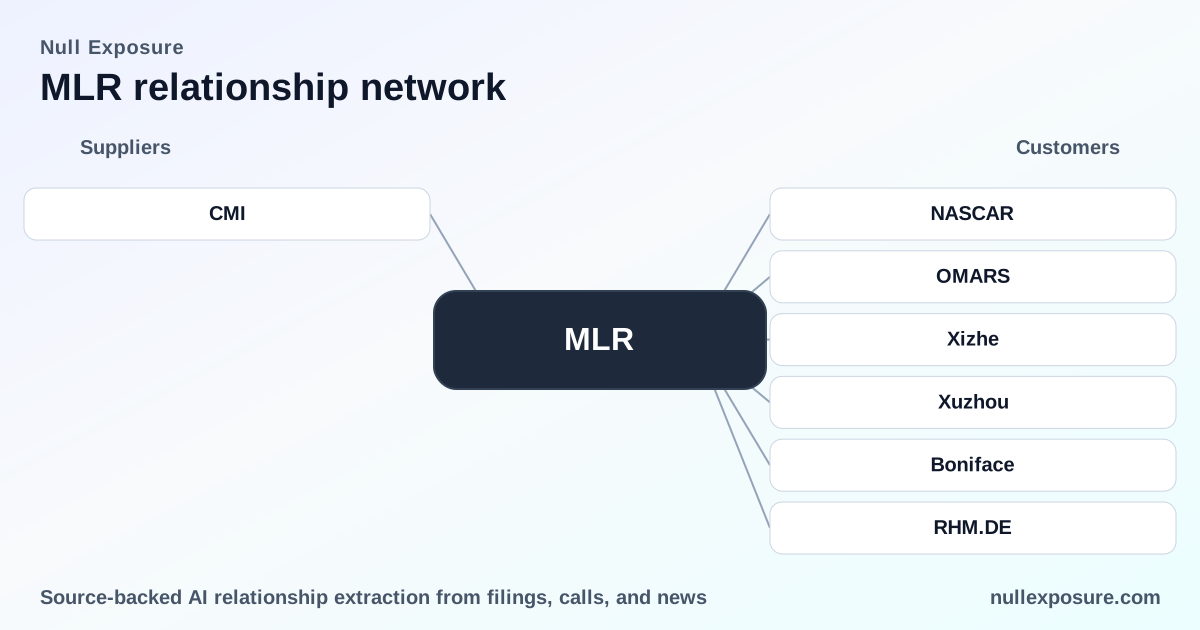
MLR supplier briefing: how chassis partnerships and a short‑term supply posture shape risk and opportunity
MLR designs and manufactures truck bodies—car carriers and wreckers—that are mounted on externally sourced chassis, and it monetizes principally by selling finished vehicles and replacement components to fleets and dealerships. Revenue is driven by body manufacturing and aftermarket parts, while cost and delivery performance are heavily influenced by relationships with chassis and component suppliers such as Cummins. Investors should evaluate MLR as a manufacturer whose margin and delivery volatility track supplier collaboration, not a vertically integrated OEM. For a concise portfolio-risk view and supplier analytics, see https://nullexposure.com/.
How MLR really operates and where the dollars come from
MLR’s operating model is straightforward: design and manufacture specialized bodies that are installed on third‑party chassis, then sell the completed units to commercial customers. The company recognizes revenue at sale of unit assemblies and aftermarket parts, which creates recurring demand sensitivity to truck cycles and fleet replacement programs. Because chassis and key powertrain components are sourced, MLR’s gross margin is a function of component cost push and assembly efficiencies rather than captive engine production.
This supplier‑dependent model produces both leverage and vulnerability: when chassis and engine suppliers coordinate design updates or have capacity constraints, MLR’s throughput calibrates accordingly. Investors should treat MLR as a component‑supply‑sensitive manufacturer rather than a fully integrated truckmaker. For access to supplier relationship intelligence and scenario planning, visit https://nullexposure.com/.
Key operating constraints that determine supplier risk
MLR’s public disclosures signal several company‑level constraints that shape contracting posture and operational flexibility:
-
Short‑term contracting posture. MLR discloses it has no long‑term supply contracts and often purchases raw materials and component parts from several sources; management characterizes relationships with primary suppliers as good but not under long‑term lockups. The company also applies a practical expedient for short‑term leases under 12 months in its accounting. Taken together, MLR operates with short‑term supplier commitments, trading long‑term price protection for flexibility. (Company disclosure excerpts on supply contracts and short‑term lease accounting.)
-
Manufacturing as core competency. MLR explicitly states it “design[s] and manufacture[s] bodies of car carriers and wreckers, which are installed on chassis manufactured by third parties.” This is a manufacturer’s profile: critical in assembly and integration but dependent on upstream chassis manufacturers for core platform components. (Company manufacturing description.)
Those two signals create a clear operating posture: flexible buying and assembly strength, coupled with exposure to external chassis and engine supplier cycles and design decisions. Investors should price in supply‑side volatility rather than long‑term contractual insulation.
The one supplier relationship you must model: Cummins Engine Company
According to MLR’s 2024 Q4 earnings call, MLR’s chassis suppliers are actively working with Cummins Engine Company to design new trucks, which positions Cummins as an important upstream collaborator in vehicle platform updates. The reference comes from MLR’s company commentary in the 2024Q4 earnings call (first seen March 8, 2026) and explicitly links chassis supplier coordination to Cummins’ engine and platform activity. (MLR 2024 Q4 earnings call, quoted March 2026.)
Why this matters: Cummins supplies engines and system integration expertise that feed directly into the compatibility and performance of MLR’s finished bodies. Design coordination with Cummins reduces integration friction for new truck models but also concentrates technical dependency on a major powertrain supplier.
What the relationship list tells investors (and what it doesn’t)
MLR’s visible supplier footprint in our capture is concentrated on a single named partner: Cummins. That single explicit mention should be interpreted in context:
-
Concentration signal: Only Cummins is explicitly named in the captured results, which highlights a material technical dependency on engine/chassis platform choices even though MLR purchases from several suppliers. This does not imply exclusivity, but it does indicate key technical interfaces that require close collaboration.
-
Contracting and maturity: The company‑level disclosures about short‑term purchasing and lease treatment indicate a younger or opportunistic contracting posture rather than long‑dated strategic supply agreements. This posture provides agility for cost management but increases exposure to spot‑price movements and supplier capacity disruption.
-
Criticality of the relationship: Because MLR assembles bodies onto third‑party chassis, relationships with chassis and engine suppliers are operationally critical—they directly affect product design cycles and revenue timing.
Investment implications: pricing, operations, and scenario planning
Investors should consider three practical implications when modeling MLR:
-
Margin sensitivity to component pricing and supplier capacity. With no long‑term lock on supply prices, input cost shocks translate quickly to margins unless absorbed or passed to customers. Expect short‑term earnings volatility tied to supplier markets.
-
Execution risk around model refresh cycles. Engineering cooperation with Cummins on new truck designs is an operational positive that can accelerate product acceptance; however, successful launches require synchronized supplier schedules and carry execution risk if upstream partners miss timelines.
-
Flexible balance sheet posture but limited contractual protection. Short‑term leases and absence of long‑term supply contracts increase financial flexibility and lower fixed commitments, but they also mean MLR cannot rely on contractual supply certainty in stressed markets.
If you are building scenarios for due diligence or portfolio risk, prioritize supplier cadence, Cummins’ product roadmap alignment, and the potential for component cost pass‑through to end buyers. For access to supplier impact scoring and risk heatmaps, explore https://nullexposure.com/.
Bottom line: active supplier monitoring is a value driver
MLR’s business is manufacturing‑centric with supplier‑driven exposure: design and integration competence are strengths, while short‑term supplier contracting elevates input volatility and execution risk. The explicit mention of Cummins in the earnings call signals a critical technical partner whose roadmap and capacity influence MLR’s product flow and margin trajectory. For investors, active monitoring of Cummins’ program timelines and MLR’s supplier coordination provides actionable signals for revenue timing and margin stress.
To help convert these observations into investment action, review our supplier risk playbooks and scenario tools at https://nullexposure.com/.