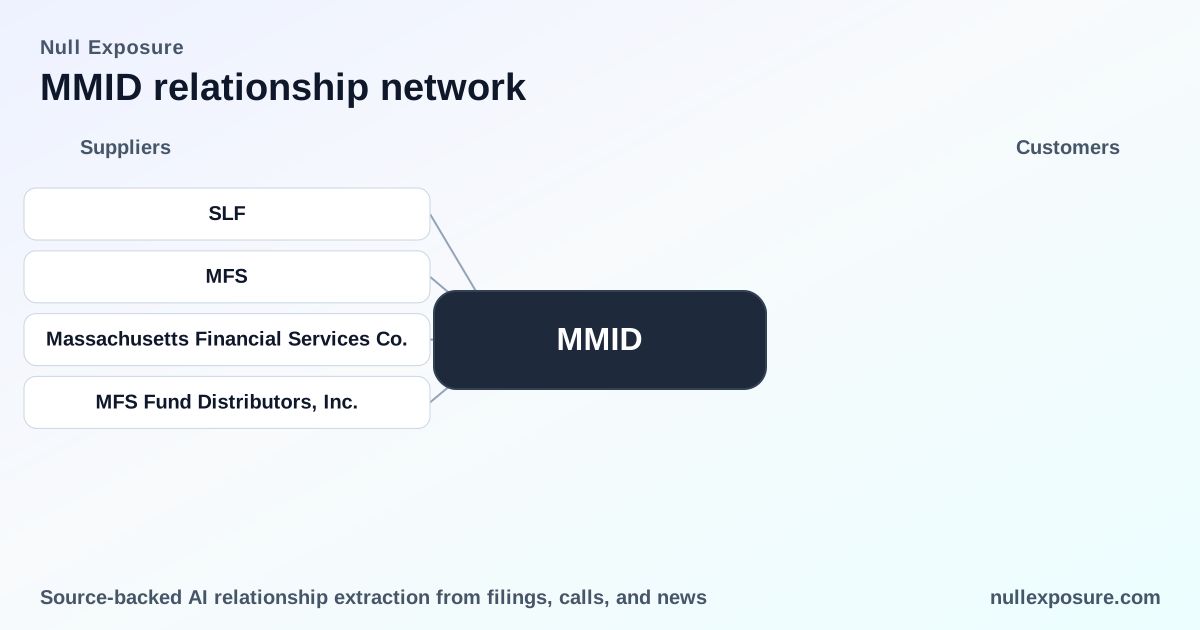
MMID: An investor’s briefing on the supplier relationships powering MFS’s Active Mid-Cap ETF
Thesis — MMID is an actively managed mid‑cap ETF launched by MFS that monetizes through asset‑management economics: advisory and management fees collected from fund assets and distribution channels that convert MFS’s institutional strategies into a retail ETF wrapper. The fund’s operational model delegates classical ETF roles — issuer, advisor, and distributor — to established firms, concentrating execution risk with a small set of counterparties. For deeper diligence on fund counterparties and supplier exposure, visit https://nullexposure.com/.
Context and how this product generates revenue MMID converts MFS’s existing mid‑cap equity strategies into an ETF vehicle, capturing fee revenue as assets flow in and recurring management fees accrue. Revenue drivers are: net new inflows into the ETF, the ongoing management fee (expense ratio), and distribution/sales execution effectiveness. Operational value is delivered through the advisor’s investment track record and the distributor’s sales network; custody, creation/redemption mechanics, and regulatory issuer responsibilities are allocated to partner firms.
Who does what — the supplier relationships investors should know The public reporting and press coverage identify four named counterparties involved in MMID’s operation. Below I summarize each relationship in plain English and cite the source.
MFS — product sponsor and launch sponsor
MFS launched the MFS Active Mid Cap ETF (NYSE: MMID) as part of its expansion of active ETF offerings. The firm is the engine behind the strategy and the brand driving asset gathering. According to a Yahoo Finance press release dated March 10, 2026, MFS announced MMID as a new offering building on its 2024 ETF roll‑out. (Yahoo Finance, Mar 10, 2026)
Massachusetts Financial Services Co. — primary investment advisor
Massachusetts Financial Services Co. is listed as the primary advisor for the ETF, which implies responsibility for portfolio construction, investment decisions, and day‑to‑day management of the strategy. TradingView’s issuer details (Mar 10, 2026) identify MFS/ Massachusetts Financial Services Co. as the fund’s advising entity. (TradingView, Mar 10, 2026)
MFS Fund Distributors, Inc. — distributor and sales lead
MFS Fund Distributors, Inc. handles distribution and sales for the ETF, a role reinforced by a statement from Emily Dupre, national sales manager, describing the fund as an addition to the firm’s distribution line‑up. That quote appears in the same Yahoo Finance announcement (Mar 10, 2026), positioning the distributor as the frontline asset‑gathering engine for MMID. (Yahoo Finance, Mar 10, 2026)
Sun Life Financial Inc. — issuer of shares
TradingView documentation notes that MMID shares are issued by Sun Life Financial, Inc. — placing the issuer or trust role with Sun Life rather than directly within the MFS corporate entity. That allocation indicates a separation between the sponsor/advisor and the legal issuer of fund shares. (TradingView, Mar 10, 2026)
Operational characteristics and constraints (company‑level signals) No explicit contractual constraints were included in the data payload; therefore the following are company‑level operating signals derived from the relationship map rather than contractual excerpts.
- Contracting posture: The structure follows a conventional asset‑management contracting posture where advisory and distribution responsibilities are devolved to affiliated MFS entities while issuance/legal responsibilities sit with a third‑party issuer. This suggests standard industry agreements (advisory agreements, distributor/underwriting agreements, and trust/issuer arrangements) govern the relationship.
- Concentration: The supplier set is narrow and concentrated. Critical functions—portfolio management, distribution, and issuance—are split across only four named firms, so operational or commercial stress at any one partner can have outsized effects on the fund’s growth and servicing.
- Criticality: Advisor and distributor roles are highly critical to performance and flows: advisor performance drives investment returns (and therefore retention) while distributor effectiveness determines net new flows. The issuer role is functionally critical for legal compliance and share creation/redemption mechanics.
- Maturity and integration: The parties involved are established industry players, indicating mature operational relationships rather than nascent partnerships; however, the ETF itself is a new product, so ecosystem testing will be incomplete until initial liquidity and flows stabilize.
Risk and opportunity implications for investors and operators MMID’s structure brings a clear set of tradeoffs for investors and platform operators.
- Concentration risk in counterparties. With advisor and distributor tightly linked to the MFS franchise and issuance delegated to Sun Life, investors are exposed to counterparty actions across a small supplier group. That raises governance and continuity questions investors should test in diligence calls.
- Distribution execution determines growth. The MFS Fund Distributors channel and sales leadership statements indicate distribution is the decisive lever for scaling MMID; early routing of flows will influence expense ratio economics and total revenue capture.
- Operational separation of legal issuer and advisor. Having Sun Life as the issuer can be an advantage for legal robustness and trust operations, but it also places a third party between the sponsor and the share‑level mechanics — a structural dependency to monitor during market stress.
- Track record translation risk. Converting an institutional mid‑cap strategy into an ETF vehicle brings performance‑delivery and tracking dynamics that investors must evaluate versus the advisor’s existing wrap products.
Mid‑article note: for institutional diligence on counterparty exposures and deeper supplier mapping, see https://nullexposure.com/ — the platform is built to surface these relationships and their materiality.
What to ask in next‑round diligence When evaluating exposure to MMID as an investor or operator, prioritize these lines of inquiry:
- Confirm the advisory agreement terms, including fee schedules, termination rights, and transition plans if the advisor relationship changes.
- Obtain distribution terms with MFS Fund Distributors: placement commitments, revenue sharing, and marketing support levels for the ETF.
- Validate the issuer/trust arrangement with Sun Life: who holds creation/redemption facilities, and what operational SLAs govern share issuance under stress scenarios.
- Request historical metrics on the advisor’s mid‑cap sleeve performance and evidence that strategy implementation and liquidity assumptions translate to an ETF vehicle.
Final takeaways and recommended next steps MMID is a classic asset‑management product roll‑out: an established manager packaging an institutional mid‑cap strategy into an actively managed ETF, supported by an affiliated distributor and an external issuer. The key investor questions are about counterparty concentration, distribution execution, and the legal issuer split. For operators, the commercial upside depends on distribution ramp and advisor performance; for investors, the primary risk is supplier concentration and operational dependency on a small number of counterparties.
For more detailed supplier analytics and to run your own counterparty exposure checks, start your review at https://nullexposure.com/.
Actionable next steps: request the advisory and distributor agreements, confirm operational SLAs with the issuer, and track early flows and expense ratio competitiveness as the primary indicators of commercial success. For a structured supplier risk report on MMID and comparable funds, visit https://nullexposure.com/ for industry‑grade exposure mapping.