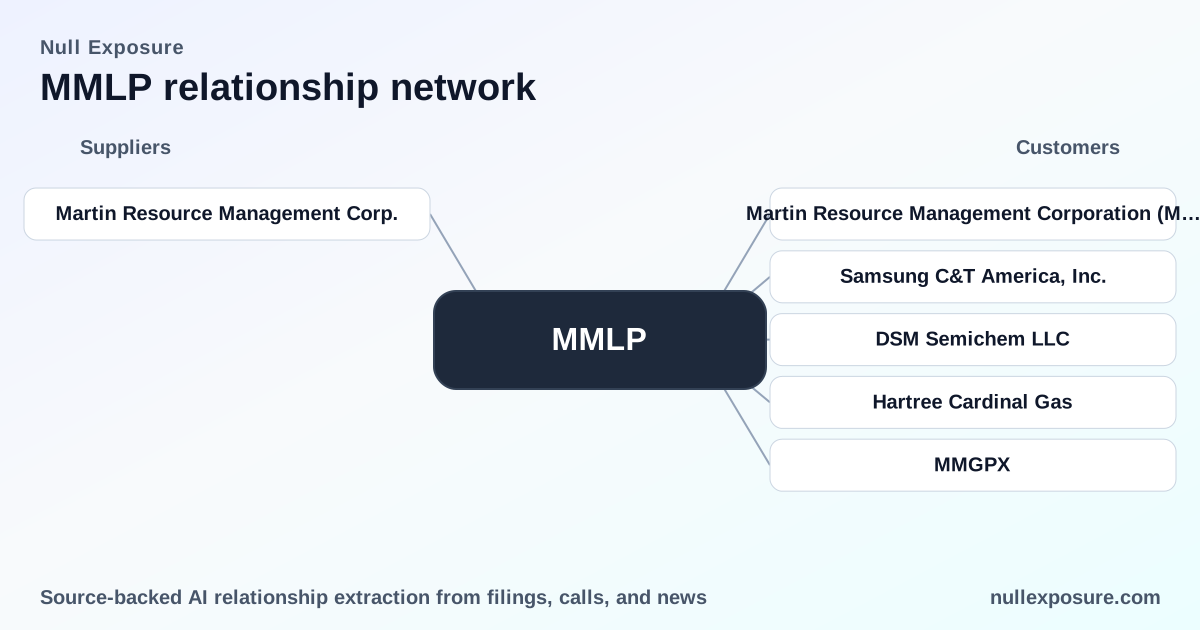
Martin Midstream Partners (MMLP): supplier relationships, concentration, and operational leverage
Martin Midstream Partners operates a Gulf Coast-focused midstream platform that captures margin by completing, processing, storing and packaging refined petroleum products and by-products, then monetizing logistics and feedstock flows through a mix of short-term sales contracts and service agreements. Its cash generation is driven by processing and transportation throughput, with significant counterparty and operational integration into related entities, making supplier relationships a central underwriting issue for investors and operators. For a deeper supplier-risk view and ongoing monitoring, visit https://nullexposure.com/.
How Martin actually makes money and where the risk sits
Martin Midstream monetizes infrastructure and logistics: processing fees, storage arbitrage and transportation margins on a base of roughly $716 million in trailing twelve-month revenue with EBITDA around $97 million (TTM). The partnership combines short-term purchase and sale agreements (1–2 year price-linked contracts) with longer-dated financing and service arrangements, producing a business model that is cash-sensitive to throughput and to fuel/condensate price indices. Financial signals are mixed: negative diluted EPS (-$0.37 TTM) alongside modest dividend distributions and elevated insider ownership (~35%), which underscores governance and related-party importance for counterparty assessment.
The single supplier relationship that matters today
Martin Resource Management Corp. — Martin’s long-running affiliate — is integral to Martin Midstream’s logistics and cost base. According to a news report describing corporate history, Martin Resource Management has owned and operated Martin Transport (or its predecessor) for over 40 years and is integral to routine movements of sulfur and natural gas liquids (LPGas Magazine, March 2026). The company’s own filings show purchases from Martin Resource Management accounted for approximately 27% of Martin Midstream’s total costs and expenses in 2024, making this a material and ongoing commercial relationship (company filings as of Dec. 31, 2024).
The operational dimension: transport, feedstock and services
Martin Resource Management and its transport affiliate, Martin Transport, Inc. (MTI), function as both service provider and feedstock counterparty. The partnership’s SEC disclosures state that employees of Martin Resource Management conduct core operations under an Omnibus Agreement, and MTI provides land transportation for produced volumes. The filings also describe Martin Midstream as the exclusive feedstock provider to the ELSA facility while retaining a 10% non-controlling interest in DSM, which binds feedstock flows and operating responsibilities together (company filings, FY2024). The LPGas Magazine acquisition note provides additional context for the legacy and continuity of the transport franchise (March 2026).
Contracting posture, concentration and maturity — what drives downside and optionality
- Contract mix: Martin runs short-term commercial agreements (1–2 years, price-indexed) for product sales, alongside longer-term credit and debt arrangements that drive liquidity profile. The firm discloses a $150 million credit facility maturing Feb 8, 2027, and $400 million of 11.5% second-lien notes due 2028, reflecting a heavier maturity load in the 2027–2028 window (company filings).
- Concentration and criticality: Purchases from Martin Resource Management represented roughly 27% of costs in 2024, making this a politically and operationally material counterparty. In practice, that level of concentration implies single-counterparty operational risk and the potential for related-party governance issues, especially given the high insider ownership.
- Spend scale and leverage: Reimbursements to Martin Resource Management totaled $175.8 million in 2024 (and $165.6 million in 2023), placing this relationship squarely in the >$100m spend band and signalling large recurring cash flows routed through the affiliate (company filings).
- Contract maturity risk: The combination of short-duration commercial contracts and concentrated supplier spending raises exposure to feedstock price volatility and to the timing of refinancing around the 2027–2028 debt maturities (company filings).
These characteristics create an operating model with high operational coupling to an affiliate provider, significant spend concentration, and a clustered maturity profile that investors must monitor.
For a real-time view of supplier concentration across energy counterparties, explore https://nullexposure.com/ — the platform surfaces related-party and counterparty signals for active monitoring.
Practical implications for investors and operators
- Credit and refinancing are primary risks: The near-term maturity wall and the 11.5% coupon on the 2028 notes concentrate refinancing risk under stressed throughput scenarios (company filings).
- Related-party governance is investment-critical: With large reimbursements to an affiliate and ~35% insider ownership, investors must track board independence, contract terms and third-party benchmarking of service rates.
- Operational continuity is both a strength and a single point of failure: The long-standing transport franchise provides operational expertise and continuity, but reliance on a single transport/service provider materially concentrates execution risk (LPGas Magazine; company filings).
- Cash flow sensitivity: Short-term market-linked sale contracts create revenue volatility; EBITDA is positive but EPS negative, so liquidity underpins the partnership’s capacity to service debt and capital needs (company financials).
What to watch next — catalysts and triggers
- Debt refinancing outcomes around Feb 2027 and Feb 2028 and any covenant changes on the credit facility or second-lien notes (company filings).
- Contract renewals or re-pricing of the short-term purchase and sale agreements that index to market indicators; material changes would alter margin capture.
- Related-party transaction disclosures and any changes to the Omnibus Agreement or the operational role of Martin Resource Management and MTI.
- Throughput trends and DSM/ELSA feedstock arrangements that drive utilization and the partnership’s fee-based revenue.
Bottom line: concentrated supplier exposure requires active monitoring
Martin Midstream’s economics are operationally integrated with Martin Resource Management and its transport affiliates, with material reimbursement flows (> $175m/year) and purchases representing ~27% of costs — a combination that creates both steady execution advantage and concentrated counterparty risk. Investors should treat refinancing timelines, related-party governance, and contract re-pricing as the primary levers that will determine downside protection and upside optionality. For continual supplier-risk tracking and to compare counterparty concentration across portfolios, visit https://nullexposure.com/.
Bold takeaway: Martin Midstream is a throughput and logistics business whose value hinges on one materially integrated supplier relationship and a concentrated debt maturity profile — monitor refinancing and related-party terms first.