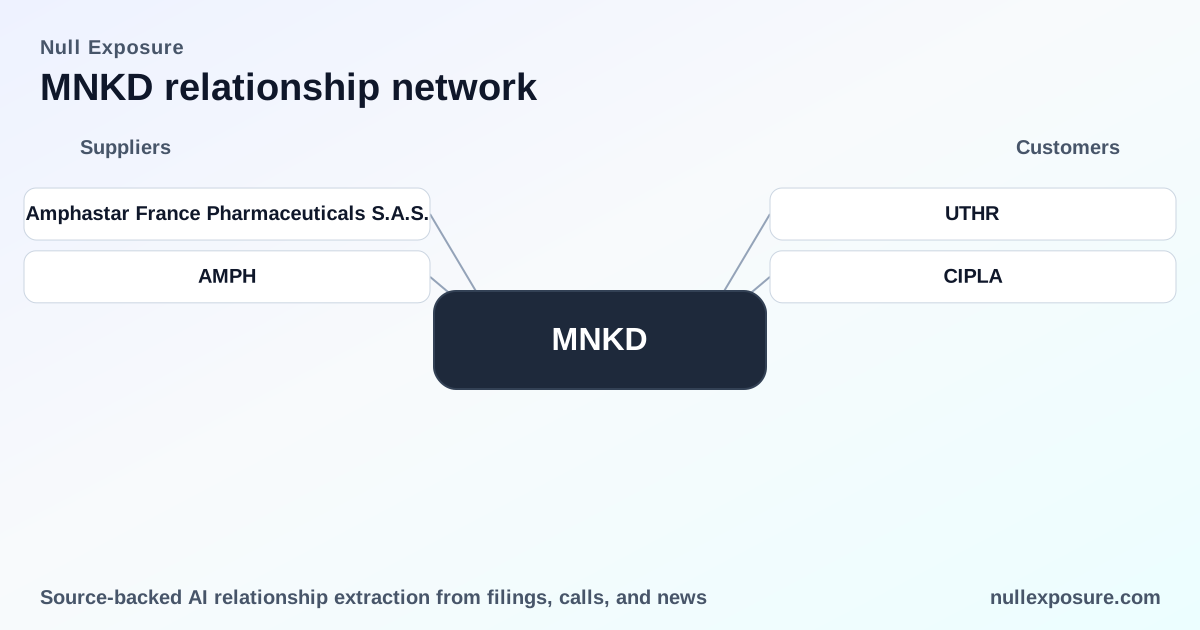
MannKind (MNKD) — How its insulin supply relationship with Amphastar shapes risk and runway
MannKind monetizes its franchise primarily through commercialization of inhaled insulin (Afrezza) and related product sales; the company's ability to deliver product and forecast revenue is tightly coupled to a long‑term manufacturing and supply relationship for insulin. A binding supply agreement with Amphastar, denominated in euros and carrying material committed purchase obligations, is a central commercial lever and a core operational dependency for investors and operators to understand. Learn more about exposure mapping and supplier signals at https://nullexposure.com/.
One supplier, long contract — why that matters for returns and operations
MannKind’s 10‑K makes clear that Amphastar is the only qualified source of insulin for Afrezza, and the parties operate under a multi‑year Insulin Supply Agreement that runs through at least December 31, 2034 with substantial minimum purchase commitments. This structure converts a manufacturing relationship into a strategic dependency: it guarantees supply continuity and volume predictability while locking MannKind into concentration and currency exposures tied to a single manufacturer and Euro‑denominated payment terms.
Key takeaways:
- Single‑source criticality: Afrezza’s qualified insulin supply is limited to Amphastar, making supplier operational performance a direct driver of revenue realization.
- Long‑dated committed spend: The contract contains multi‑year minimums and an aggregate commitment that reduces procurement flexibility in the near to medium term.
- Material financial exposure: Outstanding purchase commitments in the tens of millions of euros create both cash flow and FX management imperatives.
Supplier relationships in the filing — plain-English summaries with sources
Amphastar France Pharmaceuticals S.A.S.
Amphastar France Pharmaceuticals S.A.S. is cited as the only qualified supplier of insulin for Afrezza, placing it at the center of MannKind’s Afrezza production chain and creating a single‑point supplier dependency. This detail comes from MannKind’s Form 10‑K for the fiscal year ended December 31, 2024.
Amphastar (AMPH)
Under the Insulin Supply Agreement with Amphastar (ticker AMPH), payment obligations are denominated in euros, and the contract was amended to extend purchaser minimums through at least December 31, 2034; as of December 31, 2024, €55.2 million remained in aggregate purchase commitments under the agreement. These specifics are disclosed in MannKind’s FY2024 Form 10‑K.
Operating‑model constraints that drive the commercial profile
The 10‑K disclosures generate a short list of structural constraints that define MannKind’s supplier posture and should drive investor diligence.
- Contracting posture — long‑term, committed: MannKind entered the Insulin Supply Agreement in 2014 and amended it in 2021 and 2023 to extend the term and minimum purchase obligations through at least 2034, including an aggregate purchase commitment of €120.1 million. That level of commitment converts the supply relationship into a durable contractual obligation rather than a spot commercial arrangement (MannKind FY2024 10‑K).
- Relationship role — manufacturer: Amphastar is contracted to manufacture recombinant human insulin for Afrezza, which positions Amphastar as a manufacturing partner rather than a passive distributor; manufacturing control and quality performance are therefore operationally critical (MannKind FY2024 10‑K).
- Spend and scale — material committed spend (€10M–€100M band): With €55.2 million remaining under contractual purchase commitments as of 12/31/2024, the supplier relationship represents a non‑trivial procurement obligation that affects cash flow planning and potential re‑negotiation leverage (MannKind FY2024 10‑K).
- Currency exposure — Euro‑denominated payments: Payment obligations under the Insulin Supply Agreement are in euros, creating direct FX exposure for MannKind’s US‑dollar reporting and working capital.
These are company‑level signals that define how procurement, treasury, and commercial teams should prioritize supplier monitoring and contingency planning.
Explore how supplier concentration impacts portfolio construction and counterparty risk at https://nullexposure.com/.
Risk posture and potential mitigants — what investors and operators should track
The combination of single‑source manufacturing, long‑dated minimums, and euro‑denominated obligations creates a distinctive risk–return profile:
- Supply continuity risk is elevated because alternative qualified insulin sources are not documented in the filing; therefore, operational disruptions at Amphastar translate directly into Afrezza supply disruptions. The 10‑K’s statement that Amphastar is the only qualified source makes supplier uptime and regulatory compliance critical.
- Contractual lock‑in reduces near‑term procurement flexibility; while long‑term commitments support production planning, they also constrain MannKind’s ability to pivot to alternative manufacturers without potential financial consequences tied to the minimums.
- Currency risk is explicit: euro payments require active FX management to protect gross margin and cash flows unless offset by natural currency hedges or contractual adjustments.
Practical mitigants operators should pursue include active supplier performance metrics and audit rights, treasury hedging for euro exposure, and parallel efforts to qualify alternative manufacturing partners or expand internal manufacturing capabilities to lower concentration risk.
Strategic implications for valuation and diligence
For investors, the Amphastar relationship is a binary factor in valuation under two headings: revenue visibility and downside concentration. The long‑term, minimum‑volume commitment provides predictable supply and revenue visibility, which supports revenue forecasts tied to Afrezza. Simultaneously, concentration imposes a non‑diversifiable operational risk that must be priced into downside scenarios.
Due diligence items that flow directly from the filing:
- Monitor Amphastar operational KPIs and regulatory status.
- Validate treasury policies for euro exposures and the cost of hedging committed payments.
- Track any public statements or filings from Amphastar/AMPH that could signal capacity, quality, or commercial changes.
Bottom line: a durable but concentrated supply model, actionable next steps
MannKind’s supplier profile is defined by a single qualified manufacturer (Amphastar), a long‑term Insulin Supply Agreement running through at least 2034, and material remaining purchase commitments (€55.2M as of 12/31/24). That combination creates predictable supply and committed demand, but also concentration, contractual inflexibility, and FX exposure that directly affect cash flow, margin, and operational risk.
Operators and investors should prioritize supplier performance monitoring, currency hedging, and contingency planning for alternative manufacturing qualification. For a deeper cross‑supplier exposure assessment and proactive counterparty monitoring, visit https://nullexposure.com/.
For ongoing coverage of supplier contracts, counterparty concentration, and supplier‑level risk signals relevant to investment decisions, return to the homepage: https://nullexposure.com/.