Miniso (MNSO) — Supplier relationships that shape margin expansion and distribution risk
Miniso Group Holding Limited operates a global value-retail model: it sources low-cost lifestyle and IP-branded merchandise, sells through owned and franchise retail channels worldwide, and monetizes through product sales, licensing partnerships and franchise fees. Revenue growth is driven by international store openings and an IP-led merchandising strategy, while profitability depends on scale purchasing, low-cost sourcing and effective platform distribution. For investors evaluating supplier and partner concentration, these commercial ties reveal both upside in brand leverage and downside in platform-dependent promotion costs. Learn more at https://nullexposure.com/.
Operating model and business-model constraints investors should weigh Miniso is a retail and wholesale operator with a diversified international footprint—reported revenue TTM of roughly $19.9B and strong gross margins that support operating margin expansion. Its business model mixes proprietary SKUs with licensed IP collections, creating a two-track revenue engine: commodity-style sales and higher-margin licensed products. Contracting posture is commercial and partnership-driven rather than supplier-monopsony: Miniso relies on licensing deals and platform distribution relationships to reach customers, while franchise partners expand physical reach.
Company-level signals:
- Concentration and criticality: IP licensing is a strategic growth lever—multiple reports show a high share of sales tied to Disney and Sanrio product lines—so intellectual-property partners are commercially important even if not sole revenue drivers.
- Distribution risk: Miniso uses large digital platforms for e‑commerce storefronts; commentary from management highlights promotional cost exposure on those platforms.
- Maturity and scale: With market capitalization and margins consistent with a mature specialty retailer, Miniso’s investment case centers on international roll-out and successful IP monetization rather than early-stage unit economics. For deeper supplier analytics and tracking, visit https://nullexposure.com/.
What each partner relationship signals for investors Below I cover every partner relationship surfaced in recent reporting and how each affects Miniso’s commercial profile.
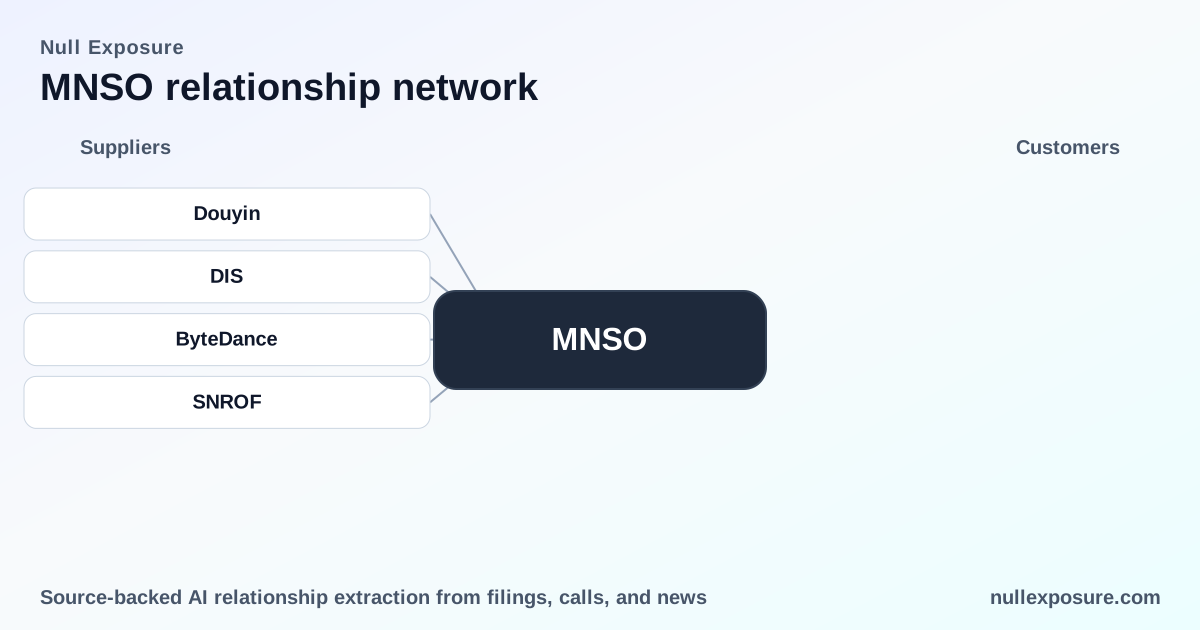
Douyin Miniso’s founder publicly criticized Douyin for charging exorbitant promotion fees relative to sales, highlighting a direct cost pressure on digital distribution that can erode retail margins and influence channel mix decisions (South China Morning Post, March 2026; FY2024 commentary). Source: South China Morning Post coverage, first reported March 2026.
ByteDance Miniso operates multiple storefronts on the ByteDance-owned ecosystem, which positions ByteDance as a key distribution partner but also a source of promotional cost risk that management has flagged in public comments (SCMP, March 2026; FY2024 excerpt). Source: South China Morning Post coverage, March 2026.
Disney Miniso has expanded its IP-led strategy with prominent Disney merchandise assortments and theme activations in flagship stores (reports cite Disney-branded collections and in-store promotions), underlining high-margin licensed product exposure and stronger brand appeal in international markets (SimplyWallSt and Yahoo Finance coverage, FY2025–FY2026). Source: SimplyWallSt Q3/FY2025 coverage and Yahoo Finance reporting on Thailand flagship (March 2026).
Sanrio Sanrio characters are a core licensed partner used in Miniso’s IP collections and themed stores (including Singapore and Vietnam activations), reinforcing the retailer’s strategy of driving traffic and higher basket values through recognizable character IP (Yahoo Finance and SimplyWallSt, FY2025–FY2026). Source: Yahoo Finance report on Thailand flagship and SimplyWallSt articles (March 2026).
Implications for contracting posture, concentration and risk
- Contracting posture: Miniso negotiates licensing agreements with global IP owners and enters platform distribution contracts with tech companies; this mix demands active management of royalty terms, promotion budgets and co-marketing arrangements. The public criticism of platform fees signals management is prepared to push back on economically unfavorable platform economics.
- Concentration: No single relationship dominates revenue based on the available reporting, but IP partners like Disney and Sanrio are strategically significant for store design and premium SKU penetration—this elevates the commercial importance of licensing renewals and product exclusives.
- Criticality: Digital platforms such as ByteDance/Douyin are critical for reach in China; however, platform fee pressure is a clear earnings vulnerability if Miniso cannot shift volume to owned channels or reduce spend.
- Maturity: The nature of the relationships—long-standing licensing and standard retail platform deals—fits a mature retail operator rather than an early-stage aggregator, which supports predictable cash flows but leaves fewer levers for rapid margin improvement beyond scale and sourcing efficiency.
Investor takeaways (concise)
- IP-led international expansion is the main growth engine; Disney and Sanrio are visible contributors to store-level traffic and higher-margin SKUs.
- Platform promotion costs, especially on Douyin/ByteDance, are a direct margin pressure; investor attention should focus on channel economics and cost-per-sale trends.
- Operational maturity and healthy margins position Miniso to monetize scale, but success depends on managing licensing economics and reducing reliance on paid platform promotion.
For investors conducting supplier due diligence or commercial counterparty modeling, Miniso’s partner map is a mix of strategic IP licensors and high-reach digital platforms—each with different negotiating dynamics and margin implications. For ongoing monitoring of supplier ties and commercial risk exposure, visit https://nullexposure.com/ to access tracking and analysis tools.
Conclusion and action items Miniso’s commercial model combines low-cost sourcing with branded IP execution and platform distribution; investors should monitor promotional spend on major platforms and the economics of IP licensing as primary drivers of margin delta. To compare partner exposures across your portfolio or to receive updates on supplier-related newsflow for MNSO, explore further at https://nullexposure.com/.