Mobix Labs (MOBX): Supplier Relationships, Manufacturing Posture, and What Placement Activity Signals to Investors
Thesis: Mobix Labs monetizes by designing and selling next‑generation wireless and interconnect solutions for IoT and smart devices, combining in‑house manufacturing of critical interconnect components with selective contract manufacturing; revenue is currently modest while the company relies on capital markets to fund R&D and working capital. Investors should view Mobix as a capital‑intensive technology supplier with strategic manufacturing constraints tied to U.S. production rules, a concentrated ownership base, and active equity financing behavior that increases supplier and partner dependency risks. Learn more about supplier and counterparty analytics at https://nullexposure.com/.
Company snapshot and operating model Mobix Labs is a small‑cap, NASDAQ‑listed technology company focused on wireless systems and interconnect products. Trailing twelve‑month revenue is roughly $8.6 million against negative EBITDA (‑$29.3 million), producing negative margins and a highly leveraged operating profile relative to scale. The business model mixes product engineering and direct manufacturing: Mobix produces the majority of its interconnects at its own U.S. facilities while outsourcing specific production steps to contract manufacturers, enabling tighter IP control but concentrating operational risk in a few sites and contractors.
What this means for suppliers and partners
- Contracting posture: Mobix operates with a supplier posture that favors in‑house control for critical parts; contracts with third parties are selective and likely transactional (outsourced phases, testing, or scale production runs).
- Concentration & criticality: Interconnects have national security and defense applications, and the company states these components must be manufactured in the U.S. in most cases—this makes certain manufacturing relationships high‑criticality and subject to regulatory oversight.
- Maturity: The mix of in‑house production and contract manufacturing indicates a company in growth/scaleup mode: it owns core capabilities but relies on partners to extend capacity and manage costs.
- Capital sensitivity: Ongoing negative operating cash flow and recent placement agent activity highlight reliance on external capital to fund operations and supplier payments.
Placement agent relationships: what investors need to know Mobix engaged placement agents to raise public equity for working capital in FY2026. These engagements are not suppliers in the production sense, but they materially affect capital availability, covenant negotiations, and supplier payments.
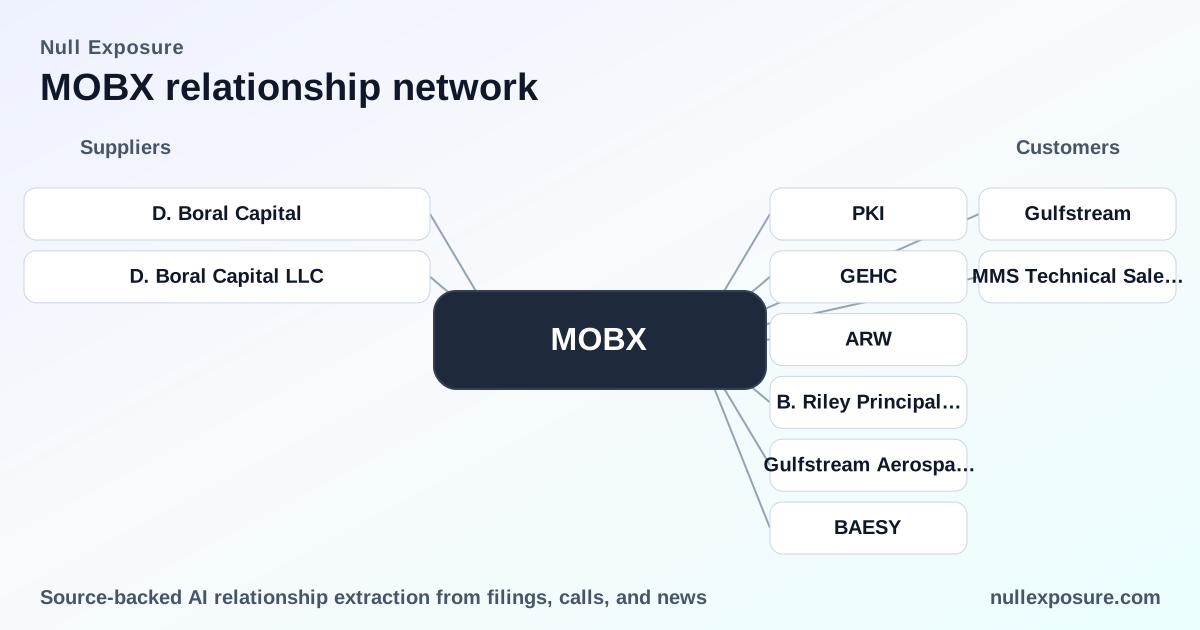
- D. Boral Capital — The firm acted as the Sole Placement Agent for a public offering announced in March 2026, facilitating equity issuance to finance working capital. This appointment signals immediate funding needs and a standard placement fee/indemnity structure. (Press release first seen March 10, 2026; QuiverQuant).
- D. Boral Capital LLC — Mobix disclosed engagement of D. Boral Capital LLC as placement agent in connection with the offering, agreeing to customary fees, indemnification, and expense reimbursements. This corroborates the sole‑placement arrangement and identifies standard contractual terms that shift some issuance costs and liabilities. (Company press release reported March 10, 2026; The Globe and Mail).
Operational constraints that shape supplier risk Mobix’s own disclosures contain two constraints that directly influence supplier relationships and operational resilience:
- Geographic manufacturing constraint (company-level signal): Certain interconnect products must be manufactured in the United States because of national security and defense applications. This generates a supply‑chain design that prioritizes U.S.-based vendors and in‑house production, increases labor and compliance costs, and limits options for low‑cost offshore sourcing.
- Manufacturer role posture (company-level signal): Mobix manufactures a majority of its interconnect products and wireless systems at its own facilities but relies on contract manufacturers for certain production processes. This hybrid model preserves core IP and quality control while outsourcing non‑core or scale operations.
Together, these constraints mean suppliers that can meet U.S. manufacturing or ITAR‑style compliance will command strategic importance; conversely, suppliers unable to certify U.S.-based production will be peripheral or excluded.
How the recent financing activity interacts with supplier dynamics The FY2026 public equity offering, placed by D. Boral Capital, is a direct signal about liquidity management. With negative EBITDA and declining quarterly revenue (quarterly revenue growth YOY: ‑40.8%), Mobix is funding operations through equity rather than sustained free cash flow. That increases near‑term supplier risk because equity financings dilute existing capital if follow‑on capital is required, while also creating urgency to conserve cash and renegotiate supplier terms.
Investor implications and risk checklist
- Cash runway and supplier payment risk: Monitor capital raises and cash balance disclosures closely; repeated equity placements indicate persistent cash shortfalls. Placement agent engagement on March 10, 2026, is an explicit indicator of working capital needs.
- Regulatory concentration risk: U.S. manufacturing requirements elevate counterparty due diligence for suppliers; confirm whether supplier facilities meet domestic manufacturing and compliance standards.
- Operational single points of failure: In‑house production of critical interconnects concentrates risk at facility locations; evaluate contingency plans and contract manufacturer redundancy.
- Ownership & governance: Institutional ownership is low (≈7.5%) while insiders hold ~16.9%, implying a management‑driven strategy with limited institutional oversight—assess governance risk when considering supplier contract long‑term commitments.
Quick practical steps for investors and operators
- Verify whether strategic suppliers are U.S.‑based and certified for defense‑grade production.
- Map out which production stages are outsourced and to whom; prioritize suppliers that can step into critical OEM roles if in‑house capacity is constrained.
- Track subsequent SEC filings or press releases after the March 2026 offering announcement to confirm use of proceeds and any covenant or payment terms that affect suppliers. For tailored supplier intelligence, visit https://nullexposure.com/.
Relationship-by-relationship detail (FY2026 placement activity)
- D. Boral Capital: Mobix designated D. Boral Capital as the Sole Placement Agent for a public equity offering intended to raise working capital, an engagement disclosed in March 2026. This indicates an active capital raise with placement fees and indemnity obligations. (QuiverQuant press release capture, March 10, 2026).
- D. Boral Capital LLC: A separate press notice clarifies that Mobix engaged D. Boral Capital LLC as placement agent and agreed to customary fees, indemnification, and expense reimbursements, reinforcing the placement arrangement and typical commercial terms. (The Globe and Mail press release, March 10, 2026).
Final assessment and actionable signal Mobix’s model—engineering‑led, U.S.‑focused manufacturing for nationally sensitive interconnect products combined with selective outsourcing—creates a supplier ecosystem where compliance, onshore capacity, and capital stability are the dominant value drivers. The March 2026 placement activity is a decisive short‑term signal of funding needs; investors and procurement teams should treat supplier commitments and payment terms as contingent on successful capital raises. For companies that supply Mobix, ability to meet strict U.S. manufacturing and compliance standards will translate into higher strategic value.
If you are evaluating counterparty exposure or supplier opportunities with Mobix, perform a focused operational and legal review now and subscribe for ongoing supplier risk monitoring at https://nullexposure.com/.
Bold takeaways
- Mobix runs a hybrid manufacturing model with a U.S. production requirement for critical products.
- Placement agent activity in March 2026 signals immediate working capital needs and elevated supplier payment risk.
- Suppliers that can certify U.S.-based production and absorb short payment cycles will become strategic partners.
For continuous supplier intelligence and deeper relationship analytics, visit https://nullexposure.com/.