Molecular Partners (MOLN) — supplier relationships that shape a radio‑DARPin strategy
Molecular Partners is a clinical‑stage biotech that builds and licenses DARPin protein therapeutics; today the company monetizes primarily through collaborations, R&D funding and milestone/licensing structures rather than product revenue. The company’s pathway to commercial value is partnership‑driven — advancing DARPin assets through preclinical and clinical stages while outsourcing specialized capabilities such as isotope supply and radiochemistry. For investors and operators evaluating MOLN’s supplier posture, the critical question is how these supplier agreements convert technology risk into delivery and scale risk.
Learn more about supplier risk and counterparty intelligence at https://nullexposure.com/.
Key takeaways
- Molecular Partners runs a partnership-first go‑to‑market model, leveraging external specialists for niche capabilities it does not in‑house.
- Supplier relationships are narrowly focused and highly technical, centering on radioisotope supply and radiolabelling services that are critical to its radio‑DARPin program.
- Operational risk concentrates in a few strategic suppliers, which increases supplier criticality but simplifies contract management and technical oversight.
Why supplier relationships matter for MOLN investors MOLN’s value today is concentrated in pipeline assets like MP0712 and other Radio‑DARPin candidates. Those assets require specialized radioisotopes, radiochemistry expertise and regulatory‑ready supply chains — capabilities that are not generic and sit with a small number of specialized suppliers. That makes a tight, well‑structured supplier strategy a core determinant of program timelines and de‑risking milestones. For commercial upside, partners must provide reliable isotope supply, manufacturing scale and technical know‑how to support clinical programs and eventual market supply.
Where MOLN sits in the value chain Molecular Partners owns the DARPin targeting platform and directs molecule design, while supplier relationships provide the physical payloads and manufacturing infrastructure needed for radio‑conjugation and clinical supply. This is a classic asset‑centric biotech model: intellectual property and clinical development led internally, with critical production and supply chain elements delegated to a small set of specialist vendors.
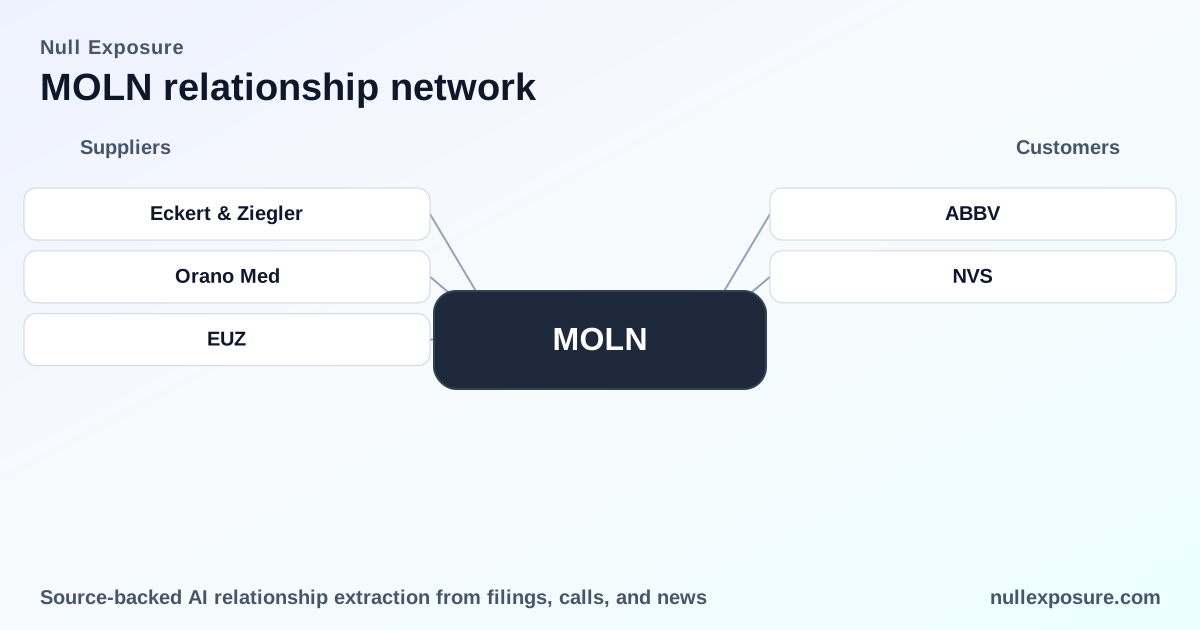
The supplier map: two named partners in public coverage Below I cover every supplier relationship surfaced in the public results, with a concise, plain‑English summary and source reference for each.
Orano Med — strategic radioisotope partner for Radio‑DARPin programs
Molecular Partners is collaborating with Orano Med to develop Radio‑DARPin therapeutics, with Orano Med supplying its 212Pb isotope expertise and an integrated manufacturing supply chain while Molecular Partners provides DARPin targeting and half‑life engineering. According to a GlobeNewswire press release in June 2025, Orano Med positioned itself as providing “virtually unlimited supply of the starting isotope” and integrated manufacturing capabilities for the Mesothelin‑targeting candidate MP0726 and other programs. (GlobeNewswire, June 2025)
Orano Med is also named in recent coverage describing MP0712’s clinical targeting for small‑cell lung cancer and other neuroendocrine tumours, confirming the collaboration’s program focus and strategic framing. (European Biotechnology, March 2026)
Eckert & Ziegler — development services for Actinium‑225 and Lutetium‑177 programs
Molecular Partners signed an agreement with isotope specialist Eckert & Ziegler to support development activities for Radio‑DARPin candidates using Actinium‑225 and Lutetium‑177 payloads under a non‑exclusive framework that covers development and service support. Public reporting in March 2026 referenced a development agreement and noted Eckert & Ziegler’s role in downstream development services for these isotopes. (Intellectia/European Biotechnology reporting, March 2026)
How these relationships change the risk profile
- Contracting posture: MOLN operates with collaborative development contracts and at least one described non‑exclusive agreement, which preserves flexibility to engage alternative suppliers while securing needed capabilities. This contracting posture reduces single‑counterparty lock‑in but requires strong program management to ensure continuity across vendors.
- Concentration and criticality: The supplier ecosystem is narrow and specialized. That concentration increases operational criticality—a delay or quality issue at an isotope supplier directly affects clinical timelines—but it also simplifies oversight and can increase negotiating leverage if multiple qualified suppliers exist.
- Maturity and industrial readiness: Counterparties cited in public reporting are established players in isotope supply and radiochemistry, indicating high technical maturity of the outsourced functions. That lowers technical execution risk compared with relying on nascent suppliers.
- Commercial dependency: Because Molecular Partners is pre‑commercial, supplier reliability is a gating factor for clinical readouts and potential partnering/licensing milestones, directly impacting valuation inflection points.
Operational implications for investors and operators For investors, the primary lens is timeline and milestone risk: do suppliers provide secure isotope supply and regulatory‑grade manufacturing at the scale and quality needed to meet clinical and commercial milestones? For operators, the checklist is executional: ensure firm supply agreements, redundancy where feasible, clear quality and regulatory responsibilities, and milestone‑linked supply commitments.
What to watch next
- Contract disclosures and any milestone or exclusivity terms that increase or reduce supplier concentration risk.
- Regulatory filings and clinical updates from MOLN that reference supply chain readiness for pivotal studies.
- Orano Med and Eckert & Ziegler announcements that shift capability, capacity or exclusivity profiles.
Mid‑article resource If you are tracking supplier counterparty risk across a biotech portfolio, more detailed supplier analytics and signals are available at https://nullexposure.com/.
Investor implications — risk/reward framing Molecular Partners’ model is capital‑efficient: internalize design and development, externalize high‑cost, specialized manufacturing. That structure accelerates pipeline progression with lower capital outlay but concentrates program delivery risk in a few tailor‑made supplier relationships. For investors, upside is tied to successful de‑risking of clinical readouts; downside is magnified if supplier execution slips or if supply agreements prove insufficient for registration‑grade manufacturing.
Final checklist for due diligence
- Confirm the scope and terms of supplier agreements (exclusivity, supply volumes, regulatory responsibilities).
- Validate alternative sourcing options and ramp capacity for isotopes used in candidate payloads.
- Monitor supplier public disclosures for capacity expansions, technical successes or compliance issues.
Closing thought and next step Molecular Partners is building value through partnerships that enable technically complex radio‑conjugate therapeutics; these suppliers are not peripheral vendors but functional enablers of the company’s core assets. Investors and operators must treat supplier contracts and operational readiness as central to valuation and execution risk. Explore deeper counterparty intelligence and supply‑chain due diligence at https://nullexposure.com/.