Mosaic (MOS) — supplier relationships, cost structure and counterparty signals investors should price in
Mosaic operates as one of the world’s largest phosphate and potash producers, monetizing through upstream mining, downstream processing into phosphate fertilizers and global distribution channels; the company converts mined concentrates into higher‑margin finished products and sells them to agricultural customers and distributors worldwide, generating roughly $12.05 billion in revenue and $2.26 billion of EBITDA on a trailing twelve‑month basis. For investors evaluating supplier relationships, the key levers are feedstock procurement (sulfur, ammonia, natural gas), long‑term purchase commitments, and remediation obligations assumed through M&A. Learn more or build a focused supplier risk view at https://nullexposure.com/.
What drives Mosaic’s margins and where supplier risk lives
Mosaic’s operating model is capital‑intensive and input‑sensitive: finished fertilizer margins are directly exposed to the cost and availability of sulfur, ammonia, phosphate rock and natural gas. The company discloses that unconditional purchase obligations are its largest contractual cash commitments, with purchases under long‑term commitments totaling $2.1 billion in 2024 and multiyear purchase commitments remaining sizable. Mosaic’s exposure is managed through a mix of long‑term contracts and spot market purchases, which creates a deliberate tradeoff between price certainty and flexibility.
- Contracting posture: Mosaic uses long‑dated leases and purchase agreements (examples include 20–21 year lease terms and multi‑year supply agreements) to secure supply and access to mineral rights.
- Price exposure: The company purchases a material share of inputs on the spot market (notably a substantial portion of sulfur and a portion of ammonia), leaving earnings exposed to commodity swings.
- Balance sheet impact: Large purchase commitments and asset retirement obligations (AROs) influence capital allocation and free cash flow available for dividends or buybacks.
How Mosaic sources critical services and infrastructure
Mosaic’s facilities rely on specialized service providers and infrastructure partners for logistics, power, gas and water — a structural dependency that creates operational concentration risk. The Belle Plaine potash operation, for instance, depends on rail providers and regional utilities for power and natural gas, while non‑potable water is supplied from a local reservoir. These infrastructure relationships are operationally critical: any sustained disruption to rail, power or water services would pressure production and margins.
The Mosaic — CF Industries relationship: what investors need to know
Mosaic’s filings document two material connections with CF Industries. First, Mosaic assumed certain asset retirement obligations (AROs) related to gypstack closure costs at Plant City and at a closed concentrates facility in Bartow (the Bonnie Facility) as part of the CF Phosphate Assets Acquisition, meaning Mosaic inherited remediation liability from CF. According to Mosaic’s FY2024 Form 10‑K, those AROs were assumed as part of the transaction disclosed in the filing. Second, Mosaic previously entered a multi‑year ammonia supply arrangement with an affiliate of CF Industries that provided substantial volumes, and Mosaic discloses that this CF ammonia supply agreement ended effective January 1, 2025, changing the company’s contracted ammonia exposure and procurement mix (Mosaic FY2024 10‑K).
Why this matters: the combination of assumed remediation liabilities and the termination of a major ammonia supply contract changes Mosaic’s counterparty risk profile and its strategy for sourcing a critical feedstock.
Source: Mosaic FY2024 Form 10‑K (SEC filing, referenced in company disclosures for FY2024).
All reported supplier relationships (no omissions)
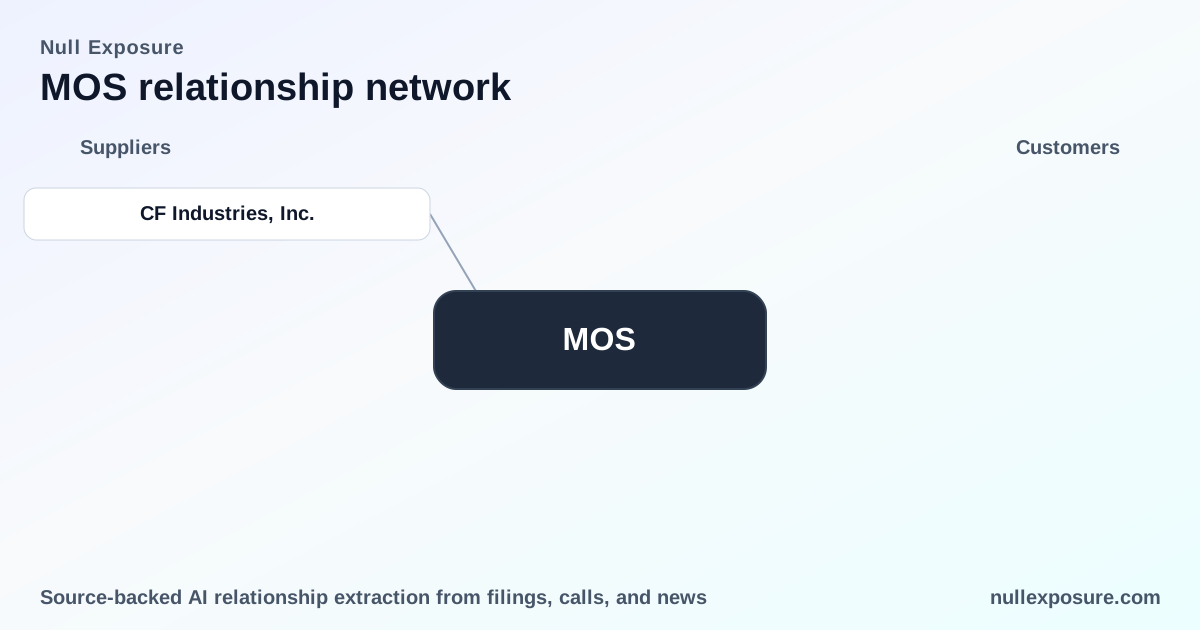
- CF Industries, Inc.: Mosaic recorded AROs assumed from the CF Phosphate Assets Acquisition related to gypstack closure costs at Plant City and the closed Bonnie facility in Bartow; Mosaic’s FY2024 10‑K also documents that the ammonia supply agreement with an affiliate of CF, which historically provided material volumes, ended effective January 1, 2025 (Mosaic FY2024 10‑K).
Concentration, spend and contractual maturity — constraints that shape decisions
Mosaic’s public disclosures collectively signal a highly contracted operating posture with meaningful locked‑in spend:
- Large committed spend: Purchase commitments and long‑term contracts drive annual purchases in the hundreds of millions to billions — purchases under long‑term commitments were $2.1 billion in 2024 and total purchase commitments reported at multi‑year levels.
- Contract mix: The company balances long‑term supply contracts (high confidence in sourcing continuity) with significant spot market purchases (notably for sulfur and a material portion of ammonia), creating both cost volatility and tactical buying opportunities.
- Maturity and duration: Leases and supply agreements include long tenors (examples of 20–21 year lease terms), signaling long planning horizons and capital allocation commitment to specific assets and regions.
- Criticality: Suppliers providing sulfur, ammonia and natural gas are operationally critical; loss or repricing of these inputs would directly compress margins.
These are company‑level signals drawn from Mosaic’s disclosures rather than relationship‑specific claims, except where the filing explicitly names a counterparty.
For an in-depth supplier exposure map and to prioritize counterparties by concentration and criticality, start a tailored assessment at https://nullexposure.com/.
Investor implications and recommended monitoring
Investors and operator counterparties should focus on three surveillance priorities:
- Feedstock procurement strategy: Track contract renewals, the mix of spot versus contracted volumes, and alternative sourcing post‑2025 after the CF ammonia contract termination. Feedstock cost is the single largest operational lever for Mosaic.
- Remediation and contingent liabilities: Monitor ARO evolution tied to acquisitions and facility closures; acquired remediation obligations are cash‑intensive and long‑dated.
- Infrastructure and service provider concentration: Review regional utility and rail dependencies that are operationally critical to production continuity.
On valuation and capital return: Mosaic trades at a trailing P/E of 16.3 and EV/EBITDA of 5.7, with a modest dividend yield (~3%) and institutional ownership above 95%, indicating both professional investor scrutiny and potential for disciplined capital allocation if commodity cycles turn favorable.
Bottom line and next steps for investors
Mosaic’s supplier profile is a mix of large, long‑dated commitments and tactical spot purchasing, with clear operational risk focused on feedstock and infrastructure partners. The CF relationship is material both for assumed remediation obligations and for changes in ammonia supply post‑2025 — both items that affect cash flow timing and procurement strategy. Investors should maintain active monitoring of contract expirations, price exposure and ARO trends.
Take action: if you evaluate supplier risk or need a prioritized counterparty view for MOS, begin here: https://nullexposure.com/. To commission a bespoke supplier concentration report or scenario analysis tied to Mosaic’s procurement exposures, visit https://nullexposure.com/ for engagement options.