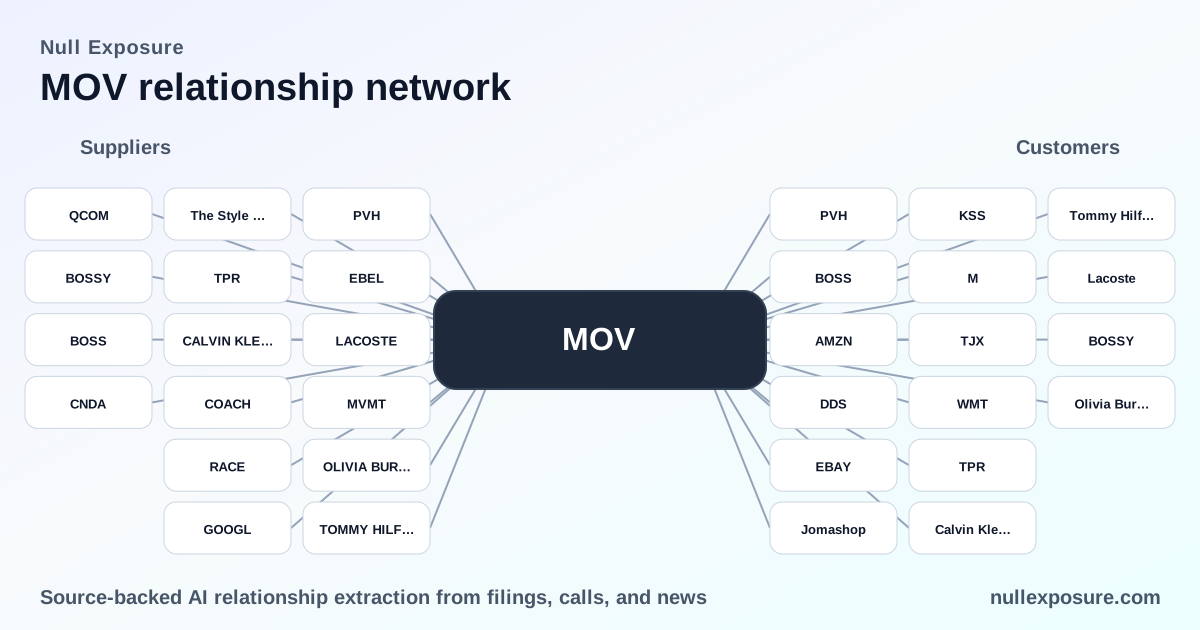
MOV: How Movado monetizes brand licenses, outsourced manufacturing, and retail distribution
Movado Group designs, sources, and sells watches and accessories across owned labels (Movado, Concord, EBEL, MVMT, Olivia Burton) and a portfolio of licensed brands (Coach, Tommy Hilfiger, Calvin Klein, Hugo Boss, Lacoste, Scuderia Ferrari). The company monetizes through wholesale channels, direct retail (Movado Company Stores), brand licensing fees and royalties, and product margin capture on owned labels; its economics depend on licensing arrangements, third‑party manufacturing, and global distribution.
If you evaluate supplier exposure and counterparty risk for MOV, start with the company’s licensing mix and outsourced manufacturing footprint — both drive margin volatility and supply chain concentration. Learn more at https://nullexposure.com/.
The operating model in plain business terms — what matters to investors
Movado runs a light‑asset, brand‑and‑supply‑chain business model. The company does not operate integrated manufacturing; instead it relies on independent assemblers and contractors across regions. Key operating signals from recent filings and press material:
- Outsourced manufacturing posture: Movado uses independent third‑party assemblers for Swiss‑made collections and independent contractors in Asia and the U.S. for many licensed and accessory products. This gives the company flexibility but creates supplier concentration and quality/lead‑time dependency. (Company filing excerpts referenced in FY2025–FY2026 materials.)
- Geographic concentration of production: Manufacturing and component sourcing are concentrated in Asia and Switzerland, with jewelry and some accessories produced in Asia and a smaller share in North America. This establishes exposure to APAC logistics and Swiss movement supply. (Geography signals drawn from company supply‑chain excerpts.)
- Segment and role profile: The firm’s manufacturing segment is outsourced, and production is handled by contract manufacturers — the company treats manufacturing as a flexible, outsourced cost center rather than an owned capability.
- Business maturity and leverage: Movado has controlled overhead through outsourcing and productivity improvements, so operating leverage is driven primarily by brand strength and wholesale/retail mix, not capital investment in manufacturing.
These constraints translate to investor considerations: license concentration and third‑party manufacturer dependency are the primary operational risks, while brand portfolio and retail execution are the levers for revenue growth.
Relationship roll call — what every partner contributes
Below is a concise, investor‑oriented summary of every relationship identified in public reports and news items.
-
Calvin Klein — Movado produces Calvin Klein‑branded watches under license alongside its owned labels; the brand is explicitly listed in company release language and filings. Source: BusinessWire/FinancialContent (Movado press release, Jan 2026) and TradingView’s summary of the SEC 10‑K (FY2025).
-
Tommy Hilfiger — Tommy Hilfiger is a licensed watch brand for Movado’s Watch and Accessory Brands segment; it features in the company’s SEC 10‑K narrative as a recurring licensed partner. Source: TradingView summary of Movado SEC 10‑K (FY2025) and company press mentions (FY2026).
-
EBEL — EBEL is an owned brand within Movado’s portfolio that is distributed globally; filings and press emphasize EBEL alongside Movado and Concord. Source: BusinessWire/FinancialContent (Movado press release, Jan 2026).
-
Lacoste — Lacoste is included among Movado’s licensed watch brands and appears in press and filing references to its brand ledger. Source: BusinessWire/FinancialContent (Jan 2026) and Ad‑hoc news commentary (FY2026).
-
MVMT — MVMT is an owned label in Movado’s brand stack; company materials list MVMT in the Watch and Accessory Brands segment as a revenue channel. Source: BusinessWire/FinancialContent (Jan 2026).
-
Olivia Burton — Olivia Burton is an owned fashion label Movado designs and distributes globally, used to target style‑led price points. Source: BusinessWire/FinancialContent (Jan 2026).
-
The Style Council — The Style Council is credited as a creative partner on marketing campaigns (creative director/agency involvement) used in high‑profile brand activations. Source: WWD coverage of Movado campaigns (FY2024).
-
Coach — Coach is a licensed brand Movado manufactures and distributes watches for under contract; it’s repeatedly identified in filings and press. Source: TradingView SEC 10‑K summary (FY2025) and Ad‑hoc investor commentary (FY2026).
-
Scuderia Ferrari — Scuderia Ferrari is cited among brands Movado has produced watches for, appearing in management announcements and brand lists. Source: CityBiz article on executive appointments referencing product portfolio (FY2022).
-
Google LLC — Google’s Wear OS was referenced in Movado’s smart watch product announcements (Movado Connect 2.0), indicating technology partnerships for smartwatch offerings (historical product integration). Source: PR Newswire (Movado Connect 2.0 launch, FY2019).
-
Qualcomm — Qualcomm’s Snapdragon processor was cited as the chipset for Movado’s earlier smartwatch generation, signaling previous hardware supplier relationships in wearable tech. Source: PR Newswire (Movado Connect 2.0 launch, FY2019).
-
Hugo Boss / HUGO BOSS — Hugo Boss is a licensed brand in Movado’s portfolio and appears in the company’s brand list across filings and press. Source: TradingView SEC 10‑K summary (FY2025) and BusinessWire (FY2026).
-
CONCORD — Concord is an owned luxury brand in Movado’s portfolio and is listed among Swiss‑manufactured lines in the company’s supply‑chain descriptions. Source: BusinessWire/FinancialContent (Jan 2026).
Each of these relationships is referenced in Movado’s public filings or press materials; the company groups owned brands and licensed partners together in its Watch and Accessory Brands segment across FY2022–FY2026 disclosures.
What investors should watch next
- Concentration risk on licensed brands: A significant portion of revenue is linked to licensed labels rather than wholly owned intellectual property, so royalty terms and retailer demand for those brands drive revenue stability. Monitor license renewals and royalty schedules.
- Supplier and regional risk: Production concentrated in APAC and Switzerland makes Movado vulnerable to logistical disruption, tariffs, and Swiss movement availability; keep an eye on lead times and component shortages reported in quarterly commentaries.
- Product mix and technology partners: Smartwatch efforts historically used partners like Google and Qualcomm — up‑cycle opportunities in wearables can widen margins if Movado controls branding while outsourcing tech. Watch product announcements and partner contracts for margin implications.
- Operational flexibility is a strength: Outsourced manufacturing reduces capex but amplifies supplier counterparty risk; the firm’s productivity efforts suggest disciplined cost control, but growth depends on retail execution and brand marketing.
For a deeper supplier and counterparty exposure readout, see our full analysis at https://nullexposure.com/.
Final thought and action
Movado’s business is brand licensing plus outsourced manufacturing — a scalable commercial model that trades capital intensity for supplier concentration risk. Investors should value its nest of licensed relationships for reach and revenue, while underwriting stress tests for APAC/Swiss supply chains and license term exposures.
To examine MOV’s supplier map and download a customized relationship brief, visit https://nullexposure.com/. For bespoke research on counterparty concentration and manufacturing exposure, start at https://nullexposure.com/.