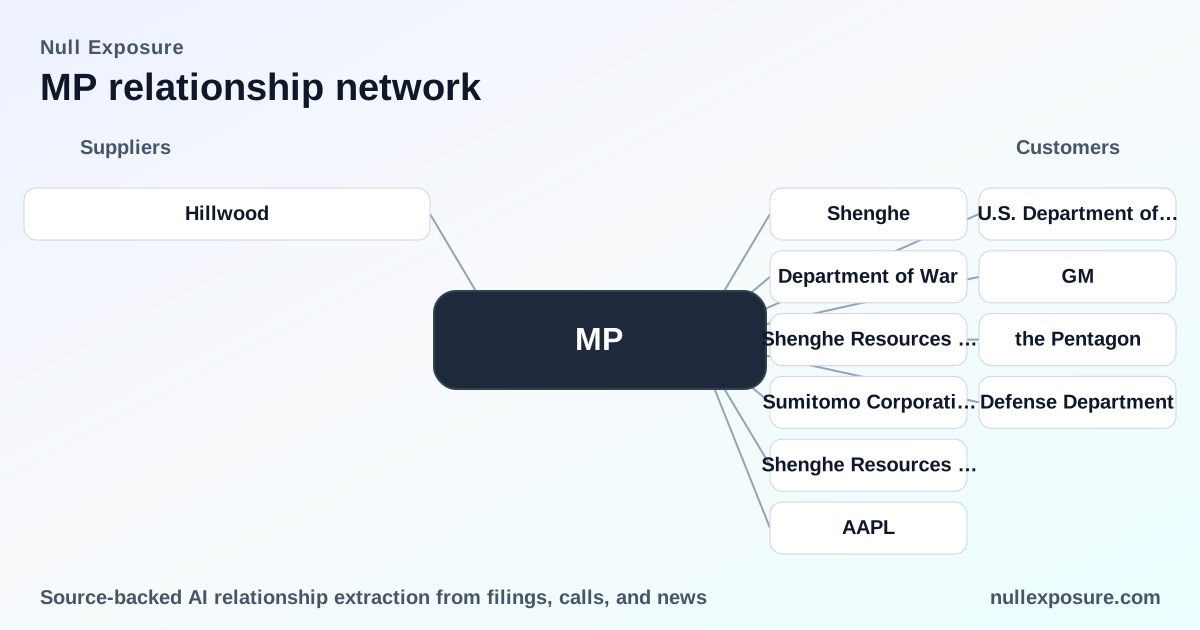
MP Materials — supplier relationships and operating constraints investors should price in
MP Materials monetizes raw-material control and downstream capture in the rare-earth value chain: it extracts and processes rare-earth ores, sells separated rare-earth products, and is actively expanding into magnet manufacturing to realize higher-margin outcomes. Revenue is concentrated in metallurgical product sales today (US$275m TTM) while the company is investing capital to move downstream, a strategy that shifts supplier exposure from raw inputs to land, construction and specialized chemical reagents. For a concise preview of relationship risk and supplier posture, visit https://nullexposure.com/.
The business model investors need to hold in mind
MP is not a commodity-only operator; the company’s path to value relies on both feedstock control and vertical integration into magnet manufacturing. That combination drives how suppliers matter:
- Contracting posture: MP acts primarily as a buyer of reagents and upstream inputs while simultaneously contracting for large-capital services and land to enable downstream manufacturing. A company disclosure confirms MP purchases reagent products produced by unrelated third-party manufacturers used in its flotation process, signaling a traditional buyer posture for chemical inputs.
- Concentration: Financials show a small revenue base relative to market value (US$275m revenue vs. US$10.5bn market cap); this amplifies the economic impact of supplier disruption or unfavorable pricing for critical inputs. The public record does not provide a complete supplier roster, so concentration is a company-level monitoring priority.
- Criticality: Flotation reagents and site-control for downstream capacity are operationally critical — reagents affect ore recovery and margins, land and construction affect the pace at which MP captures downstream value.
- Maturity of relationships: Evidence on file points to standard commercial purchasing of third-party reagents rather than full vertical integration; concurrently, the firm is pursuing long-lead real estate and manufacturing investments, which imply evolving, multi-year supplier engagements.
These characteristics translate into a mixed risk profile: chemical-supply reliance is operational and recurring, while land-and-capex suppliers influence strategic timing and cost exposure for the company’s planned magnet footprint.
Where supplier relationships show up in the record today
The public relationship data is compact but actionable. Below I cover every documented supplier/partner relationship in the available results.
Hillwood — land acquisition for a magnet campus in Northlake
MP is acquiring a 120‑acre site in Northlake from Hillwood as the intended location for a rare-earth magnet manufacturing campus, a key step in the company’s downstream integration plans. According to Dallas Innovates (reporting March 10, 2026), the transaction is part of MP’s plan to scale domestic magnet manufacturing capacity and reduce reliance on overseas supply chains. Source: Dallas Innovates, March 10, 2026 — https://dallasinnovates.com/mp-materials-to-build-10x-a-1-25b-rare-earth-magnet-manufacturing-campus-in-north-texas/.
(That is the only supplier/partner entry in the provided results; the Hillwood land deal is strategic because it moves MP’s supplier exposure away from pure chemical purchases toward long-term construction, utilities and local services relationships.)
What the reagent disclosure means for procurement risk
A company disclosure states MP purchases certain reagent products (generally produced by an unrelated third‑party manufacturer) used in the flotation process. Treat that as a clear company-level signal: reagents are procured on market terms rather than self-produced, and they are functionally important to recovery and throughput. In plain investor terms:
- Operational sensitivity: Reagents directly influence recovery rates and processing costs; disruptions or price increases impact gross margins and throughput.
- Negotiating leverage: As a buyer, MP can negotiate volumes and contracts, but the lack of internal manufacture means price and availability are exposed to external supplier markets and raw-material input cycles.
- Mitigants investors should look for: long-term supply contracts, multiple qualified suppliers, on-site storage, or backward integration into reagent supply are all relevant strategic responses.
Financial context that gives supplier relationships outsized importance
Put supplier relationships against the balance of public metrics: market capitalization is about US$10.5bn, with revenue of US$275m TTM and negative reported profitability (EPS -$0.50; operating margin -20.3%). These facts change how suppliers affect valuation:
- Small absolute revenue makes operational disruptions (e.g., reagent shortages or delays in the Northlake campus build) disproportionately material to near-term cash flow and to the credibility of downstream growth claims.
- The company’s push into domestic magnet manufacturing (Hillwood land acquisition) shifts the supplier mix toward construction contractors, utilities, and manufacturing equipment vendors — exposures that carry project-capex, schedule and contractor risk rather than purely commodity price risk.
If you want a concise, mapped view of who supplies what and how it affects your thesis, see https://nullexposure.com/ for structured supplier intelligence.
How investors and operators should adjust diligence and monitoring
Active investors and operators need to translate the signals into monitoring criteria:
- Require disclosure or diligence on long-term reagent supply contracts, supplier concentration, and qualification processes for alternate reagents.
- For the Northlake project, prioritize contractor selection, permitting timelines, and utility interconnection guarantees as leading indicators of schedule risk and capex phasing.
- Monitor cash flow sensitivity to reagent price moves and construction cost inflation, given the company’s high market valuation relative to current sales and negative margins.
Bottom line and recommended actions
Hillwood’s land sale to MP is the clear, documented supplier/partner event today, and the company-level disclosure about reagent procurement is the operational supplier signal investors must price. Combine that with MP’s valuation and margin profile and the conclusion is straightforward: supply relationships are a primary execution risk vector for MP’s plan to capture downstream magnet value, and investors should demand contract-level transparency and project risk milestones as part of continued support.
For detailed supplier mapping and ongoing relationship tracking, review the portal at https://nullexposure.com/. If you need a tailored briefing that maps supplier contracts and criticality to cash‑flow scenarios, contact us through https://nullexposure.com/ and we will prepare an executive supplier-risk memo.