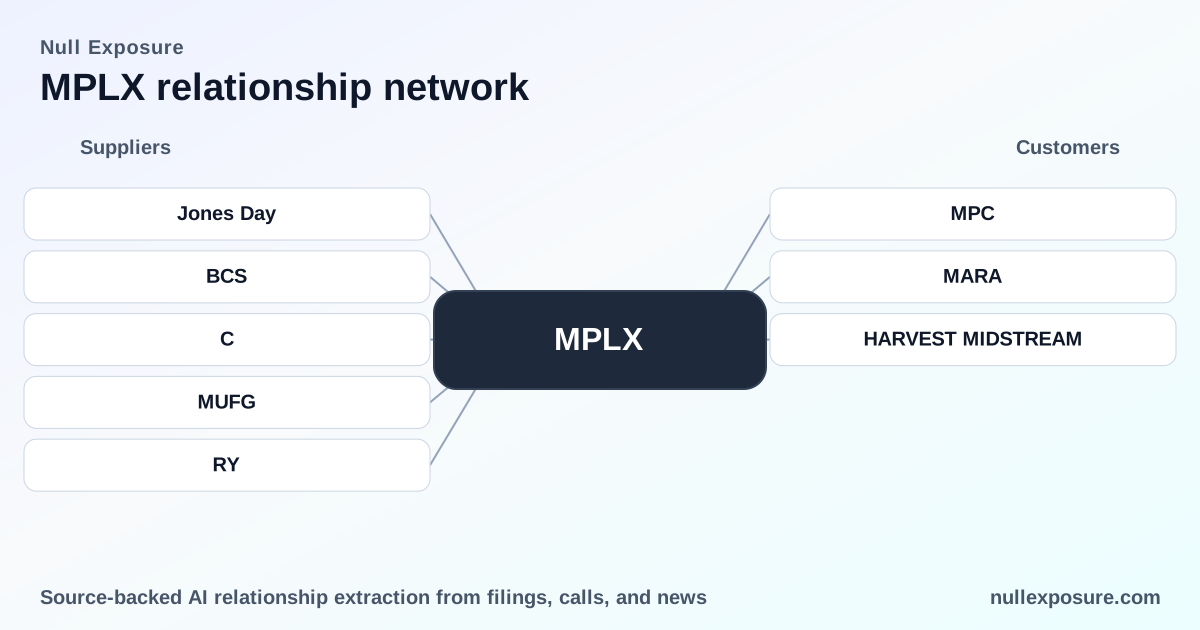
MPLX LP: Supplier relationships that shape cash flow and capital access
MPLX LP operates and monetizes a portfolio of U.S. midstream energy infrastructure—pipelines, storage, and logistics—collecting fee-based revenues from transportation and storage contracts while funding growth and distributions through capital markets activity. The business is core fee-driven and capital-intensive: operating cash flow and distribution capacity depend as much on counterparty contracts and outsourced service arrangements as on commodity cycles. For supplier due diligence and counterparty intelligence, visit https://nullexposure.com/ for structured supplier profiles and signal extraction.
Why supplier relationships matter for MPLX investors
MPLX is not a vertically integrated operator that employs its own field and executive teams directly; the company outsources critical services and pays material fees to affiliated and third‑party providers, which affects distributable cash and operational control. Its recent capital markets activity—priced debt with major investment banks as book-runners—also signals active use of external capital partners to manage leverage and liquidity.
- Contracting posture: MPLX relies on omnibus and employee services agreements to procure executive and operational personnel from related parties. This translates to a supplier model where core management services are purchased, not employed in-house.
- Concentration and criticality: Payments to the general partner and affiliated providers are large enough to reduce cash available for unitholders, making those supplier relationships strategically consequential.
- Maturity and capital access: The presence of global banks as joint book-runners on recent senior notes shows mature capital markets access; that relationship is an operational lever for refinancing and liquidity management.
For in-depth supplier breakdowns and monitoring, go to https://nullexposure.com/ and search MPLX.
Who MPLX is working with now — the public relationships you should track
Below are the public supplier/partner mentions observed in FY2026 coverage and filings. Each entry is a concise, plain‑English summary with source context.
- Jones Day — MPLX included a legal opinion from Jones Day in exhibits to a registration statement filed in FY2026; this is the law firm supporting transactional and disclosure work. According to a TradingView posting on March 10, 2026, Jones Day provided a legal opinion filed as part of MPLX’s registration exhibits.
- Barclays — Barclays served as a joint book-running manager on a FY2026 senior notes offering for MPLX, indicating Barclays’ role in underwriting and distribution for the company’s debt issuance. Intellectia.ai reported on March 10, 2026 that Barclays was one of the joint book-runners on the offering.
- Citigroup — Citigroup acted as a joint book-running manager on MPLX’s senior notes offering in FY2026, providing underwriting and placement services for the transaction. Intellectia.ai noted Citigroup’s participation on March 10, 2026.
- MUFG — MUFG participated as a joint book-running manager on the FY2026 senior notes sale, supporting MPLX’s access to diversified global debt capital channels. This role is documented in reporting from Intellectia.ai on March 10, 2026.
- RBC Capital Markets — RBC Capital Markets was named a joint book-running manager for MPLX’s FY2026 senior notes offering, reflecting RBC’s role in syndication and investor distribution for the deal. Intellectia.ai’s March 10, 2026 coverage lists RBC as a manager.
Each of these relationships is transactional and public-facing; the bank syndicate is directly tied to MPLX’s capital structure decisions and market access.
What the constraints and filings reveal about suppliers and spend
Company-level signals drawn from recent filings and disclosures illuminate how supplier arrangements influence MPLX’s economics and operational risk profile.
- Material payments to the general partner: The company discloses that payments to the general partner and its affiliates are substantial and reduce cash available for distribution to unitholders, a corporate finance constraint that should be treated as a structural cash-flow consideration for income investors.
- Outsourced executive and operational services (MPC): The filings describe omnibus and employee services agreements under which MPLX reimburses Marathon Petroleum Corporation (MPC) for management and operational personnel, including executive officers; reimbursements for NEOs totaled approximately $13.2 million for 2024. This confirms a strongly outsourced contracting posture where a single affiliate supplies critical human capital.
- Professional services spend and audit relationships (PricewaterhouseCoopers LLP): MPLX reports aggregate professional fees to PricewaterhouseCoopers LLP of $6.707 million in 2024, placing that vendor in a mid‑range spend band and confirming a standard external audit / tax services engagement rather than an outsized vendor dependency.
These constraints indicate high operational dependence on a small set of service providers (particularly MPC) and routine professional services engagements, with measurable line-item impacts on distributable cash.
Operational implications: control, concentration, and negotiating leverage
Because MPLX pays significant fees to affiliated parties and sources key personnel through service agreements, investors must treat supplier relationships as part of the corporate governance and cash-allocation story.
- Control and oversight risk: Outsourcing executives and operations reduces direct internal control and concentrates operational knowledge within the supplier (MPC), raising governance questions investors should monitor.
- Cash-flow sensitivity: Material fees to the GP and affiliates create a persistent drag on distributable cash; even with robust EBITDA and profit margins, distribution economics depend on these contractual outflows.
- Capital markets dependency: Active debt issuance with major banks as joint book-runners underscores MPLX’s reliance on external capital partners to refinance and fund growth—an advantage when markets are open, and a constraint when credit conditions tighten.
For supplier risk scoring and ongoing monitoring tools tailored to energy midstream, visit https://nullexposure.com/ and see the supplier intelligence section.
Bottom line for investors
MPLX is a fee-driven midstream owner whose financial and operational profile is tightly coupled with a small set of external providers: affiliated service providers that supply executable management and sizeable fee income to the GP, and global banks that underwrite its debt access. Investors should prioritize three factors when evaluating MPLX exposure:
- Supplier concentration and related-party fees — these materially affect distributable cash and should be modeled explicitly.
- Contracting posture and operational control — outsourced personnel mean operational execution and risk management live largely outside the corporate payroll.
- Capital markets relationships — the bank syndicate provides liquidity and refinancing capacity, which supports leverage strategy but also ties MPLX to market cycles.
If you want structured supplier risk profiles and live monitoring of MPLX’s counterparty signals, start a subscription or request a demo at https://nullexposure.com/.