MPTI supplier relationships: what investors need to know
MPTI (M‑Tron Industries) operates as a small‑cap engineering and manufacturing concern that monetizes through the sale of components and related services while using banking facilities and capital‑markets mechanics to fund growth and shareholder liquidity. The supplier and counterparty map for MPTI shows active banking and investor‑services counterparties, and company‑level operating constraints that signal long‑term commitments and single‑source procurement vulnerability—factors that should influence credit, sourcing, and M&A diligence. For an integrated view of MPTI counterparties and risk signals, see https://nullexposure.com/.
What the relationship map immediately implies for investors
MPTI’s external relationships reflect three functional buckets: capital markets and shareholder services, lending and liquidity, and investor relations/market access. Each of these relationships has distinct implications for funding flexibility, shareholder dilution mechanics, and investor visibility. Taken together with the company‑level constraints (lease commitments and single‑source purchasing), they shape an operational profile that leans on established service providers and bank financing while retaining supplier concentration risk.
If you want a consolidated counterparty-readiness briefing for MPTI, this page is a quick starting point: https://nullexposure.com/.
Counterparties in plain English (what the record shows)
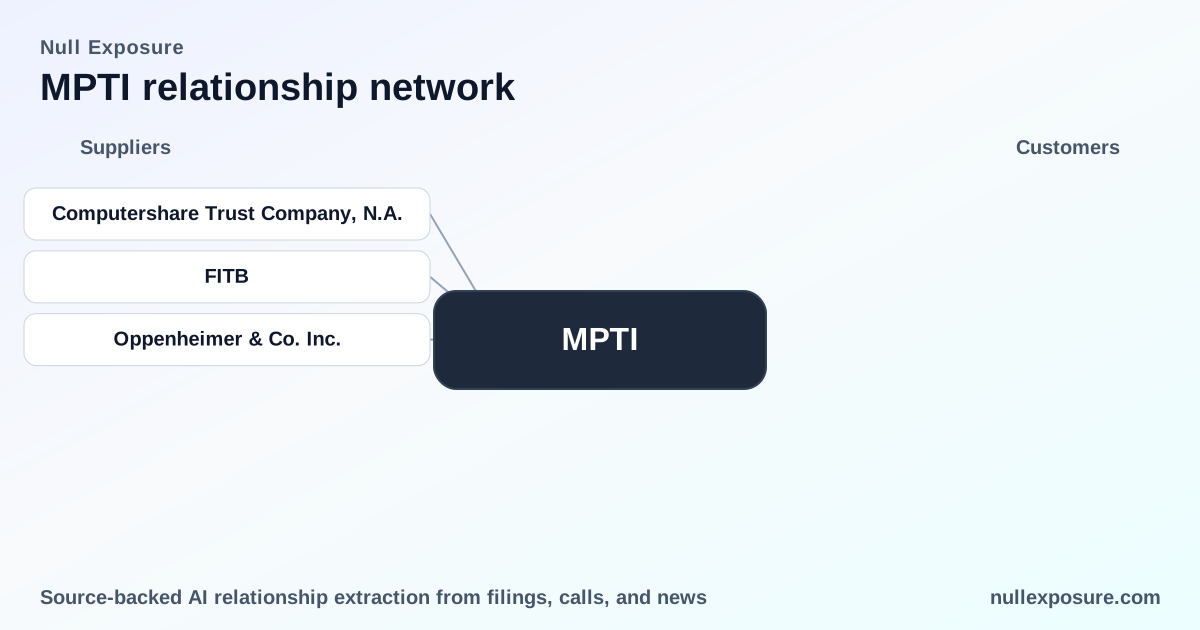
- Computershare Trust Company, N.A. — A shareholder services provider handling warrant exercise logistics. A notice tied to FY2025 establishes a firm deadline for warrant exercise payments to be received by Computershare by December 11, 2025, which confirms active warrant mechanics and an operational role for Computershare as transfer/escrow agent (Yahoo Finance press release, March 2026).
- Fifth Third Bank — The company is using bank financing under a formal credit facility: a reported amended and restated credit agreement lists Fifth Third Bank as counterparty, reflecting an active lender relationship used for working capital or refinancing (TradingView news item, March 2026).
- Oppenheimer & Co. Inc. — The firm engages investment‑banking/IR support from Oppenheimer, which hosted one‑on‑one investor meetings on MPTI’s behalf at an emerging‑growth conference on February 3, 2026; this confirms institutional outreach and underwriter/analyst engagement (PR Newswire via Morningstar, January 28, 2026).
How each relationship matters to value and risk
Computershare’s role is operational but material: active warrant mechanics create potential cash infusions or dilution depending on exercise behavior, and Computershare enforces the timing of those flows. (Source: shareholder notice on Yahoo Finance, March 2026.)
Fifth Third’s amended credit agreement is a liquidity and covenant signal—changes to that facility affect MPTI’s interest cost, collateral posture, and near‑term funding runway; investors should review the agreement for maturity, covenants, and default triggers. (Source: TradingView, March 2026.)
Oppenheimer’s engagement is a visibility and capital‑markets signal: sustained IR engagement raises the company’s profile with institutional buyers and supports capital‑raising or secondary activity. (Source: PR Newswire / Morningstar, January 2026.)
Company‑level constraints and what they reveal about the operating model
The disclosed constraints read together produce actionable signals about MPTI’s contracting posture, concentration risk, and relationship maturity.
- Long‑term lease posture. MPTI recognizes right‑of‑use assets and distinguishes short‑term leases from longer commitments, which indicates material multi‑year occupancy or equipment commitments that will affect fixed cost leverage and cash flow predictability. The presence of right‑of‑use lease assets implies management accepts longer contractual commitments rather than flexible short‑term arrangements.
- Single‑source procurement vulnerability. Management discloses purchasing key components from single or limited suppliers, a direct supplier concentration risk that raises the criticality of supplier continuity and creates potential production and revenue volatility if a key vendor fails to deliver.
- Active relationship stage with quantifiable lease obligations. The company reports lease obligations and changes year‑over‑year (for example, total lease obligation amounts of $9 and $97 at year‑end references in disclosure), which is evidence of operational continuity and active vendor relationships rather than dormant contracts.
These constraints are company‑level signals and should be read into the counterparties above as part of the holistic risk picture rather than attributed solely to any single named supplier.
Investment implications — risk, leverage, and sourcing
- Liquidity and covenant monitoring: The amended credit agreement with Fifth Third is the single most direct lever on MPTI’s near‑term financing profile; investors should prioritize covenant language, maturity profile, and collateral requirements when building valuation scenarios. (TradingView, March 2026.)
- Dilution and capitalization mechanics: Active warrant exercises administered by Computershare can produce either cash inflows or dilution; the December 2025 deadline indicates timetable sensitivity for potential capital raises or balance‑sheet adjustments. (Yahoo Finance, March 2026.)
- Operational continuity: Single‑source procurement elevates the probability of supply interruptions and creates an underwriting consideration for downside scenarios; combined with long‑term leases, this concentration increases fixed cost exposure if revenue shortfalls occur.
- IR and market access: Oppenheimer’s continued engagement improves the odds of orderly capital markets activity and elevates the firm’s exposure to institutional investors, which is positive for liquidity and potential secondary raises. (PR Newswire / Morningstar, Jan 2026.)
For a concise counterparty risk checklist and next‑step due diligence templates, visit https://nullexposure.com/.
Practical next steps for investors and operators
- Request the full credit agreement amendment with Fifth Third to stress‑test covenants and amortization.
- Obtain the warrant schedule and exercise mechanics from transfer agent filings to model potential dilution and cash inflows.
- Conduct supplier audits focused on the identified single‑source components and establish contingency sourcing timelines relative to lease commitments.
- Track ongoing IR activity from Oppenheimer for signs of imminent capital‑markets transactions.
Bottom line
MPTI’s external relationships point to a company that relies on standard capital‑markets infrastructure (Computershare), bank financing (Fifth Third), and institutional IR support (Oppenheimer) while carrying company‑level operating constraints—long‑term lease commitments and single‑source supplier risk—that increase fixed‑cost and supply‑chain sensitivity. Investors evaluating MPTI must combine a review of credit facility terms, warrant mechanics, and supplier continuity plans to form a full risk‑adjusted view. For a consolidated counterparty dossier and prioritized diligence checklist, see https://nullexposure.com/.