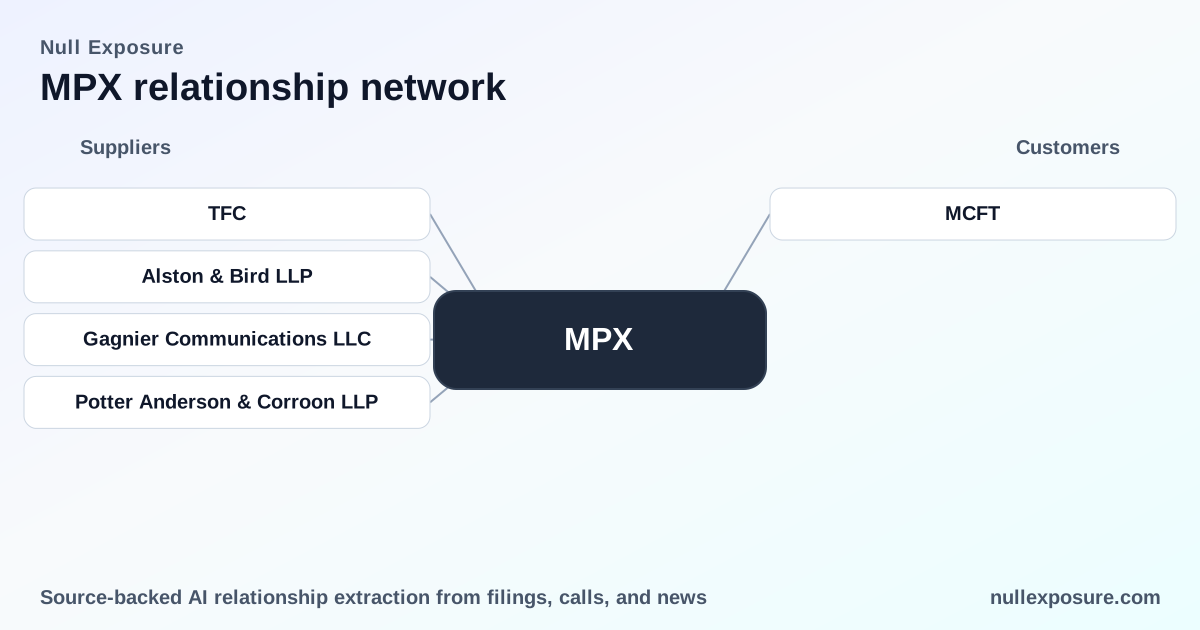
MPX supplier footprint: advisors, engine partners, and what drives the margin
Marine Products (MPX) operates as a specialty recreational-boat manufacturer that monetizes through new-boat sales, dealer-financed distribution, and after-market support; its economics are heavily influenced by engine sourcing, dealer floor-plan arrangements, and periodic capital-markets or strategic processes where advisors and counsel shape outcomes. Investors should treat MPX as a manufacturer with a mixed contracting posture—long-term co-marketing for some components and annually negotiated supply for others—and an outsized reliance on dealer finance structures that concentrate working-capital risk. For an in-depth supplier and advisor view, visit https://nullexposure.com/.
Why the supplier map matters to returns and risk
MPX’s supplier and advisor relationships are not peripheral: engine manufacturers determine product competitiveness, dealer finance programs determine near-term working capital, and financial/legal advisors shape transaction outcomes. The company’s disclosed relationships and constraints create a clear operating profile:
- Contracting posture is mixed. Outboard engines are governed by multi-year joint marketing arrangements, while sterndrive engines are bought under annually negotiated agreements; that combination gives the business short-cycle price exposure on a portion of its critical components and longer-term stability on others.
- Concentration is operationally significant. About 69% of domestic shipments run through floor-plan financing programs, which concentrates receivables and repurchase obligations with a handful of financing partners and creates systemic liquidity linkage between dealers, institutional financiers, and MPX.
- Criticality of suppliers is high. Engines are a mission-critical input where manufacturer relationships affect product differentiation and after-sales service economics.
- Maturity and stage. The relationship network is active and transactional—MPX participates in established dealer finance programs and engages external advisors, consistent with a company executing both core operations and occasional strategic processes.
These structural signals explain why monitoring supply agreements (multi-year vs annual), dealer financing terms, and advisor appointments is essential for close-to-the-firm scenario analysis. Learn more about how we track supplier-concentration signals at https://nullexposure.com/.
A concise rundown of every named relationship in the public results
Below are the four relationships surfaced in recent reporting, with plain-English summaries and source notes.
- Truist Securities — Truist is serving as exclusive financial advisor to Marine Products; that appointment signals an active strategic process where investment-banking counsel is steering transaction options. (Reported by Yahoo Finance on March 10, 2026.)
- Alston & Bird LLP — Alston & Bird is acting as legal advisor to Marine Products in the same engagement, providing transaction and regulatory counsel alongside the financial advisor. (Reported by Yahoo Finance on March 10, 2026.)
- Gagnier Communications LLC — Gagnier Communications is retained as strategic communications advisor, managing public messaging and investor relations support during the advisory process. (Reported by Yahoo Finance on March 10, 2026.)
- Potter Anderson & Corroon LLP — Potter Anderson is serving as legal counsel to the Special Committee of MPX’s board, indicating independent board-level oversight of the corporate process. (Reported by Yahoo Finance on March 10, 2026.)
Each of these relationships is documented in the same March 10, 2026 news release captured by Yahoo Finance, and together they outline a classic advisor stack used when a company is evaluating strategic alternatives or a transaction.
What the constraints and disclosures imply for procurement and finance
Company disclosures and excerpts provide additional, actionable signals about supplier economics and financial exposure:
- Supplier contract types: MPX uses multi-year joint marketing agreements for outboard engines (Yamaha) while sterndrive engines are covered by annually negotiated purchase agreements (Mercury Marine and Volvo Penta). That structure creates asymmetric exposure: a portion of the cost base is locked for longer, while another portion resets yearly and can compress margins if input prices rise.
- Manufacturer role: The company’s relationships with engine suppliers reflect a manufacturer-to-manufacturer procurement posture, where MPX sources engines as critical components rather than commoditized parts.
- Financial linkage and spend band: The company reported an aggregate repurchase obligation of approximately $25.0 million as of December 31, 2024, putting overall supplier/finance spend in the $10m–$100m band—material enough to influence short-term liquidity but not so large as to dominate balance-sheet capacity.
- Guarantee liability: MPX judges its guarantee liability as immaterial as of Dec 31, 2024, which reduces the likelihood of immediate off-balance-sheet funding surprises tied to guarantees.
- Relationship stage: The supplier and financing relationships are active, evidenced by ongoing floor-plan participation and contemporaneous advisor appointments.
Taken together, these constraints describe a business with operational exposure to annual renegotiations, meaningful dealer-finance concentration, and a manageable—but non-trivial—repurchase obligation. Investors should price both cyclical engine-cost volatility and counterparty risk in the dealer finance network into valuation models.
Mid-cycle monitoring checklist for investors
- Track renewal timing and terms with engine suppliers; annual renegotiations for sterndrive engines are the highest short-term margin risk.
- Watch dealer floor-plan partners and the $25 million repurchase obligation for signs of tightening or re-pricing by financing institutions.
- Monitor filings and press coverage for advisory updates; the presence of an exclusive financial advisor and Special Committee counsel signals a process that could produce a liquidity event or restructuring. For ongoing supplier and advisor signals, visit https://nullexposure.com/ for regular updates.
Practical investment implications and risks to model
- Upside catalysts: Successful strategic process led by Truist could unlock value through a sale or capital reallocation; multi-year engine co-marketing deals protect certain product lines.
- Downside risks: Annual supply renegotiations can compress margins quickly; concentrated floor-plan financing creates working-capital correlation with financing partners; reputational or execution issues during the advisor-led process could depress near-term results.
- What to stress-test in a model: engine-cost pass-through assumptions, dealer inventory turnover under tighter finance conditions, and sensitivity of free cash flow to a $25 million swing in repurchase obligations.
Final read and next steps
Bottom line: MPX is a manufacturer with a dual contracting posture—long-term for some engine lines, annual for others—and meaningful exposure to dealer financing dynamics that drive working-capital risk. The current advisor and counsel stack indicates an active strategic process that investors should watch closely. For a continuous feed of supplier-level signals and advisor tracking, visit https://nullexposure.com/.
If you want a tailored briefing on MPX’s supplier exposures or a supplier-concentration heat map for comparable manufacturers, we provide bespoke research and alerts at https://nullexposure.com/.