Murano Global Investments (MRNO): Supplier relationships that drive treasury strategy and financing optionality
Murano Global Investments PLC operates as an investment and asset-holding vehicle that monetizes through asset value realization and active treasury management—most recently codified by a public Bitcoin Treasury initiative and by securing contingent equity financing. The company blends direct asset exposure (including branded hotel interests) with strategic advisory relationships and standby financing to fund growth and liquidity needs. For immediate reference and further coverage visit https://nullexposure.com/.
Why the recent disclosures matter to investors
Murano’s public disclosures pivot the company from a passive investment wrapper toward a deliberate treasury strategy that uses both alternative assets and structured financing. The announcement that Murano is joining the “Bitcoin for Corporations” initiative is not a marketing line: it signals a corporate-level decision to allocate treasury capital to bitcoin, which materially changes balance-sheet composition and market-risk exposure. At the same time, Murano has arranged a capital backstop that provides optionality to meet liquidity or deployment needs without immediate dilution—this is central to valuation and stress-testing scenarios.
- Contracting posture: The combination of an advisory engagement and an up-to-$500 million standby equity purchase agreement suggests Murano prefers flexible, off‑balance liquidity that can be accessed as needed rather than committing to long-term fixed debt.
- Concentration and criticality: The named counterparties are few and strategic; this creates counterparty concentration but also indicates targeted, high-impact relationships rather than broad supplier lists.
- Maturity and sophistication: Joining a corporate bitcoin initiative and appointing a specialist capital markets advisor indicate a more sophisticated treasury posture than a traditional holding company.
If you want a clean view of Murano’s supplier relationships and what they imply for risk, see our home page for more structured intelligence: https://nullexposure.com/.
Key operational levers investors should model
Murano’s near-term P&L and liquidity profile will be driven by three levers: (1) performance and monetization of branded hospitality assets; (2) valuation swings from any bitcoin treasury allocation; and (3) the availability and terms of the standby equity facility. Each lever has asymmetric effects on downside protection and upside participation—model accordingly.
Counterparties and partnerships you must read into the record
Below are every relationship disclosed in the recent results and what each relationship means in plain English.
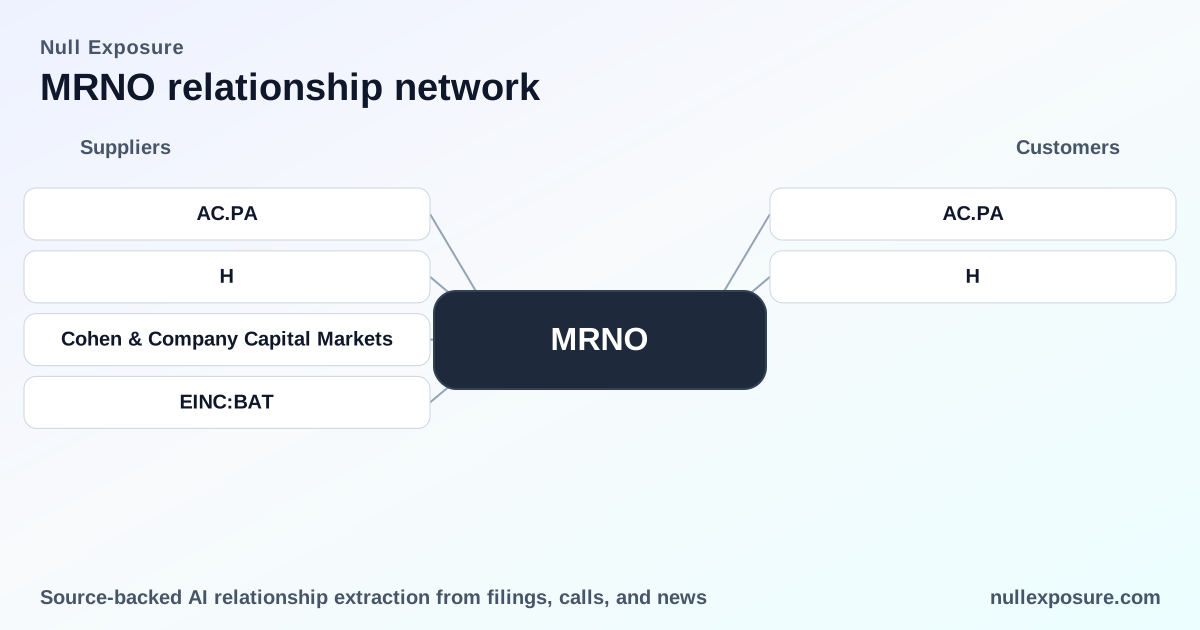
- Accor — Murano’s disclosure references Hotel Mondrian (operated by Accor), indicating Murano holds or is associated with branded hospitality assets operated by Accor that contribute operating cash flow and brand-dependent value. According to a Quiver Quant news release on March 10, 2026, the company referenced the Mondrian hotel as part of its holdings and context for the broader treasury initiative (Quiver Quant, 10 March 2026).
- Hyatt — The filing names Hotel Andaz (operated by Hyatt), which points to exposure to a Hyatt‑operated luxury asset and therefore to hospitality operating risks and seasonality tied to that brand. The same Quiver Quant release from March 10, 2026 lists the Andaz in the company’s asset mentions (Quiver Quant, 10 March 2026).
- Cohen & Company Capital Markets — Cohen & Company Capital Markets is acting as Murano’s exclusive financial and strategic advisor on the Bitcoin Treasury initiative, providing capital-markets advisory services and deal execution support for the shift in treasury policy. The company disclosed this advisory role in the March 10, 2026 announcement (Quiver Quant, 10 March 2026).
- Yorkville — Murano entered into an up to $500 million Standby Equity Purchase Agreement (SEPA) with Yorkville, giving Murano access to contingent equity capital on terms defined in the SEPA and creating a de facto liquidity backstop. This financing arrangement was disclosed in the same March 10, 2026 release (Quiver Quant, 10 March 2026).
What these relationships imply for risk, governance and optionality
The named counterparties reveal a two-track strategy: asset-level exposure to branded hospitality operators and corporate-level liquidity and advisory arrangements. That mix creates distinct investor considerations.
- Operational risk: Hotels operated by Accor and Hyatt introduce operational volatility tied to travel cycles and brand operator performance; investors should treat hotel cash flows as business‑cycle sensitive rather than stable yield.
- Market and treasury risk: Allocating treasury to bitcoin replaces cash volatility with cryptocurrency volatility; this raises market-risk exposure and affects VaR and capital adequacy metrics.
- Liquidity and dilution risk: The Yorkville SEPA provides significant optionality—it protects liquidity but is a potential source of dilution if drawn. Model scenarios with both zero draw and full draw to see valuation sensitivity.
- Governance signal: Engaging Cohen & Company as exclusive advisor signals Murano is prioritizing structured execution and market access for its treasury pivot.
If you want deeper supplier relationship analytics and exposure breakdowns, return to our portal for the full suite of intelligence: https://nullexposure.com/.
Practical takeaways for investors and operators
- Active treasury management is now a core driver of Murano’s risk/return profile; value will be more sensitive to market movements (bitcoin) and to timing and terms of any SEPA draws.
- Hospitality assets create operational upside but also cyclical downside, so treat their cash flows differently from financial assets in any valuation model.
- The SEPA with Yorkville is a double-edged sword: it materially lengthens runway without immediate dilution, but full utilization would change share count and capital structure.
For investors evaluating MRNO supplier relationships, focus your due diligence on the contractual terms behind the SEPA and the operational agreements with branded operators—those documents determine both downside protection and upside capture.
Bottom line
Murano’s recent public disclosures transform its profile from a passive investor vehicle to an entity executing a deliberate treasury and financing strategy that leverages branded asset holdings and strategic capital partners. Key risks are concentrated: market exposure from a bitcoin treasury, operational cyclicality from hotel assets, and dilution risk if the standby facility is drawn. Investors and operators should prioritize visibility into SEPA terms, the scale of any bitcoin allocation, and the operational performance of the named hotels.
Explore more supplier-focused intelligence and scenario tools at https://nullexposure.com/ to stress-test MRNO under alternative market and draw scenarios.