MRSH supplier intelligence: what investors need to know now
MRSH operates by integrating advisory and consulting capabilities with managed services and long-term facility commitments, monetizing through professional services, retained consulting fees, and recurring contractual obligations. The company expands capability and customer reach both organically and through tuck-in acquisitions that augment domain expertise (notably in healthcare analytics), while sustaining a balance sheet exposed to multi-year lease commitments. For investors evaluating supplier and acquisition activity, the key themes are deliberate capability builds, high lease-related fixed obligations, and a formalized third-party risk posture. Visit the NullExposure homepage for the full MRSH supplier profile: https://nullexposure.com/
A single disclosed supplier/target and why it matters
MRSH’s public filing for FY2025 discloses one material supplier/transaction: an acquisition by its consulting arm.
Validate Health Inc. — an analytics tuck-in for healthcare consulting
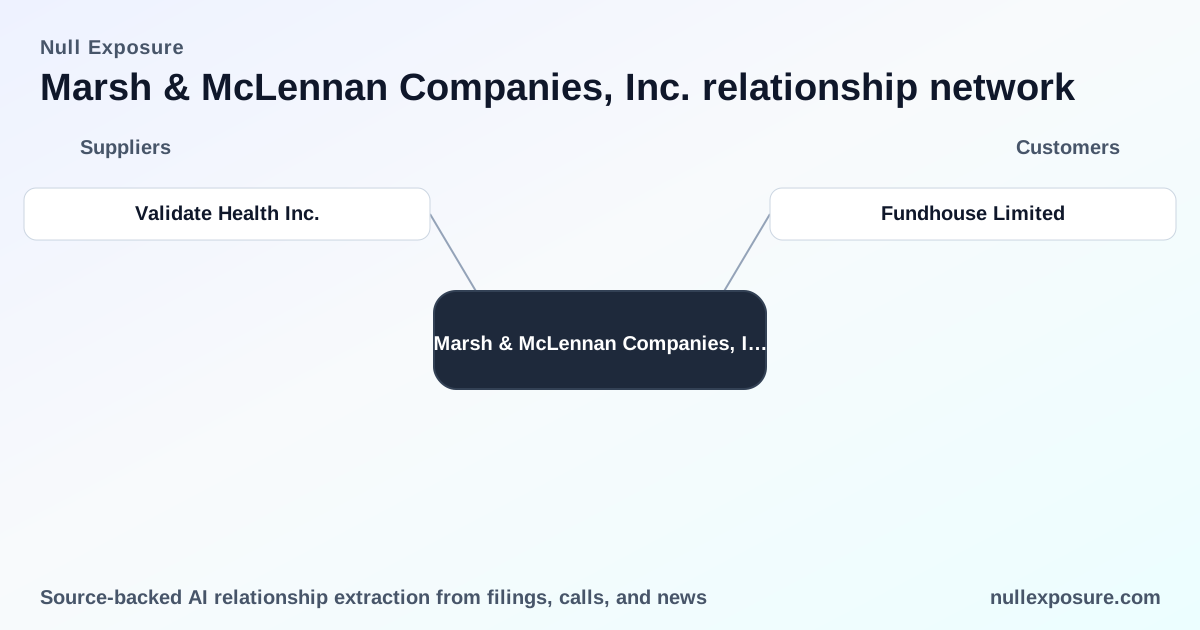
Marsh Management Consulting acquired Validate Health Inc., an Illinois-based healthcare analytics consultancy that provides analytics solutions to healthcare providers and accountable care organizations to help clients better manage costs, risk and performance. According to MRSH’s FY2025 Form 10‑K, the transaction is presented as a strategic capability acquisition to strengthen analytics offerings to provider and risk-bearing clients (FY2025 10‑K, filed 2026).
This relationship is presented as an acquisition rather than a traditional vendor contract; it expands MRSH’s service footprint in healthcare analytics and brings specialized talent and client relationships into the consulting organization.
What the filing’s corporate constraints signal about the operating model
The filing includes three corporate-level signals that shape how supplier and service relationships function across the company:
-
Long-term contracting posture: The company leases office facilities under non-cancelable operating leases with terms generally ranging between 10 and 25 years, indicating a deliberate commitment to fixed-cost, long-duration real estate. The long-term lease profile imposes operational inflexibility but supports a stable physical footprint for consulting and client-facing operations (evidence excerpt in FY2025 filing).
-
Formalized third-party service relationships: MRSH describes a cybersecurity risk management program aligned to the NIST Cybersecurity Framework that explicitly covers risk and incident management associated with services, applications and products provided by third‑party vendors and service providers. This establishes service providers as integrated and managed parts of the operational ecosystem, not ad hoc contractors.
-
Material lease-related spend: The filing shows total future lease payments listed as 2,118, a figure that signals material, multi-year cash commitments on the balance sheet and underscores the company’s exposure to real-estate cost risk over time.
Together these constraints describe an organization with mature, committed infrastructure, an institutional approach to vendor governance, and material fixed obligations that influence capital allocation and margin sensitivity.
What investors should read between the lines
These signals produce clear investor-relevant implications:
-
Strategic M&A over vendor substitution. The Validate Health acquisition reflects a preference to internalize capability (buying analytics expertise) rather than outsource it entirely to external vendors; this supports higher-margin advisory revenue but increases integration risk.
-
Fixed-cost leverage and margin sensitivity. Multi‑decade leases create significant operating leverage. In a down-cycle, occupancy costs will be less flexible and could pressure margins; conversely, a stable footprint supports client-facing scale and talent concentration.
-
Vendor governance is centralized. The explicit inclusion of third-party service risk in the cybersecurity program shows MRSH treats suppliers as operationally critical and subject to enterprise controls, reducing operational surprise but increasing compliance and vendor-management overhead.
-
Capital allocation tension. Material future lease obligations compress free cash flow flexibility and influence how aggressively MRSH can pursue further acquisitions or invest in technology.
Quick checklist for portfolio monitoring
- Track incremental acquisitions in consulting verticals (healthcare analytics is now on the map) and watch how the company integrates purchased teams and contracts.
- Monitor quarterly commentary for lease restructuring or subleasing activity as an early signal of cost optimization or footprint rationalization.
- Review updates to third-party risk and cybersecurity disclosures for evidence of vendor consolidation or significant vendor concentration.
For a deeper MRSH supplier view see: https://nullexposure.com/
Relationship-by-relationship coverage (complete list)
Validate Health Inc. — Marsh Management Consulting acquired Validate Health Inc., an Illinois-based healthcare analytics consultancy focused on helping providers and accountable care organizations manage cost, risk, and performance; MRSH included the transaction in its FY2025 10‑K disclosure (FY2025 Form 10‑K, filed 2026). This is an acquisition intended to strengthen MRSH’s analytics capabilities in healthcare rather than a simple vendor engagement.
(There were no other supplier or target relationships disclosed in the provided FY2025 supplier/relationship results.)
Risk profile and downside scenario
- Operational inflexibility from leases: The long‑term lease posture elevates downside exposure if demand for on-site consulting declines or remote work reduces office utilization; fixed lease cash flows are a first-order risk to EBITDA margin under stress.
- Integration risk from acquisitions: Integrating specialty consultancies can fail to deliver expected cross-sell or margin uplift if client overlap, systems, or culture do not align.
- Vendor and cyber exposure: Centralized vendor governance mitigates but does not eliminate the risk that third-party incidents disrupt operations or client relationships; continuity plans are an active governance requirement.
Bottom line and recommended next steps
MRSH is executing capability-led growth in consulting while operating with material, long-term facility commitments and a formal third-party risk framework. For investors, the balance between higher-margin advisory revenue from acquisitions (like Validate Health) and inflexible lease commitments will determine earnings resilience.
- If you track MRSH, prioritize monitoring incremental acquisitions and quarterly comments on lease exposures.
- Revisit vendor-concentration disclosures and cybersecurity program updates in each filing cycle.
Explore the full supplier profile and stay updated on new disclosures at NullExposure: https://nullexposure.com/
For institutional access and tailored supplier intelligence on MRSH, visit the NullExposure homepage: https://nullexposure.com/