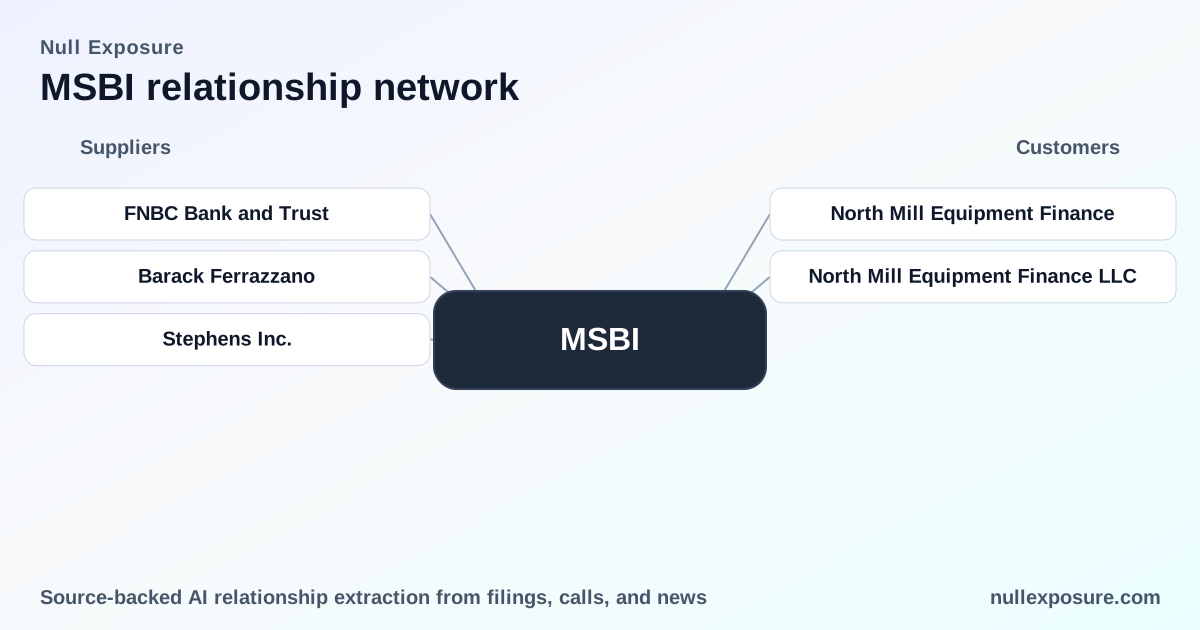
MSBI supplier landscape: what investors should know about Midland States’ third‑party ties
Midland States Bancorp (MSBI) operates a regional banking franchise that monetizes through traditional interest‑earning assets and fee income from deposit and lending activities, while selectively reshaping its portfolio through portfolio sales and branch acquisitions. The company relies on third parties for critical operational functions — from loan origination and servicing to legal and investment advisory — creating operational leverage and concentrated counterparty risk that investors must price into the equity. For a concise supplier-risk view and supporting evidence, visit https://nullexposure.com/.
Why supplier relationships matter for a regional bank
Banks are operational businesses first and financial assets second. Midland’s outsourcing posture means service providers directly influence credit data integrity, regulatory reporting, and the quality of loan collateral. Weaknesses in controls around third‑party arrangements have already been flagged by auditors, which elevates the governance and execution premium investors should demand. The company’s recent strategic moves — including branch acquisitions and the sale of an equipment finance portfolio — also show management is actively changing the bank’s exposure to third‑party ecosystems and counterparty risk.
For a more detailed supplier risk profile and to see the primary documents behind these relationships, go to https://nullexposure.com/.
Relationship: FNBC Bank and Trust — branch acquisition and asset assumption
Midland completed a branch purchase and assumed deposits and certain loans and other assets from FNBC Bank and Trust’s Mokena and Yorkville, Illinois branches, expanding Midland’s retail footprint and deposit base in northern Illinois. Source: GlobeNewswire press release, June 21, 2022 — https://www.globenewswire.com/news-release/2022/06/21/2466085/0/en/Midland-States-Bancorp-Completes-Acquisition-of-Deposits-and-Loans-of-Two-FNBC-Bank-Trust-Locations-in-Northern-Illinois.html.
Takeaway: Branch-level deals like this increase deposit concentration and require integration of loan servicing and customer systems — areas Midland outsources and has had control weaknesses identified.
Relationship: Barack Ferrazzano — legal counsel on equipment finance sale
Barack Ferrazzano served as legal counsel to Midland in connection with the sale of substantially all of its equipment finance portfolio to North Mill Equipment Finance, a transaction disclosed in December 2025. Source: GlobeNewswire press release, December 1, 2025 — https://www.globenewswire.com/news-release/2025/12/01/3197090/0/en/Midland-States-Bancorp-Announces-Sale-of-Substantially-All-of-Its-Equipment-Finance-Portfolio-to-North-Mill-Equipment-Finance.html.
Takeaway: The use of established outside counsel for material portfolio divestitures is standard, but the underlying sale reduces Midland’s direct equipment‑finance operational footprint and shifts credit and servicing responsibility to a third party.
Relationship: Stephens Inc. — exclusive financial adviser on equipment finance sale
Stephens Inc. acted as Midland’s exclusive financial adviser for the sale of substantially all of the company’s equipment finance portfolio to North Mill Equipment Finance, a strategic move disclosed at year‑end 2025. Source: GlobeNewswire press release, December 1, 2025 — https://www.globenewswire.com/news-release/2025/12/01/3197090/0/en/Midland-States-Bancorp-Announces-Sale-of-Substantially-All-of-Its-Equipment-Finance-Portfolio-to-North-Mill-Equipment-Finance.html.
Takeaway: Engaging a full-service adviser signals a deliberate balance‑sheet reallocation and underscores reliance on external parties for execution of large capital and portfolio transactions.
What the constraints tell investors about MSBI’s operating model
The company-level constraints in Midland’s filings produce a clear operating signature:
- Critical audit focus on third‑party credit enhancements. Auditors identified the accounting for credit enhancement embedded in third‑party agreements as a critical audit matter and disclosed material weaknesses tied to that accounting and its effect on consolidated financial statements. This is a governance and reporting red flag that increases audit and remediation costs and puts added pressure on internal controls over outsourced functions.
- Outsourcing of major systems. Midland outsources core systems such as data processing and digital banking and uses third parties in its quantitative impairment assessments. That contracting posture creates operational dependency on vendors for data integrity, model inputs, and timely reporting.
- Active third‑party relationships supporting core lending operations. The company explicitly reports agreements with third parties that originate and service consumer and commercial loans included on Midland’s balance sheet; as of 12/31/2024, Midland carried a $16.8 million credit enhancement asset linked to those arrangements. This shows third‑party arrangements are active and material to the balance sheet.
- Segment signal: services. The company flagged third‑party service organizations performing core lending functions as part of its services segment, indicating outsourced activities are integral to Midland’s business model rather than peripheral.
Collectively, these signals translate into three investment constraints that affect valuation and risk assessment: higher counterparty concentration risk, elevated audit/remediation expense, and potential volatility in reported credit metrics when control issues or vendor performance change.
How these relationships change the investment calculus
- Execution risk is elevated. The FNBC branch acquisition increases complexity, and the sale of the equipment finance portfolio reduces direct exposure but increases reliance on counterparties for credit performance and valuation transparency.
- Governance and control carry a premium. Audited material weaknesses around credit enhancement accounting require additional management scrutiny and capital for remediation; investors should value in a higher risk premium until controls are demonstrably fixed.
- Operational leverage is double‑edged. Outsourcing accelerates scale and reduces fixed costs, but when core lending functions are external, vendor performance and contract terms become critical determinants of credit outcomes.
If you want a granular supplier risk scorecard tied to these documents and vendor roles, explore our analysis at https://nullexposure.com/.
Bottom line for investors and operators
Midland’s supplier relationships show a bank actively reshaping its product footprint while relying on third parties for core operations and transaction execution. The combination of material audit findings, outsourced core systems, and strategic portfolio transactions elevates both operational risk and the potential upside from successful integration and control remediation. Investors should require transparency on remediation timelines and vendor SLAs before reducing the governance discount.
For investors focused on counterparty and supplier risk in regional banks, review Midland’s primary supplier disclosures and the associated transaction filings at https://nullexposure.com/ to inform portfolio decisions.