Middlesex Water (MSEX) — supplier relationships, contracting posture, and commercial constraints investors should price in
Middlesex Water operates as a regulated water utility and monetizes through a mix of regulated rate-base returns, contracted purchased-water arrangements, and targeted acquisitions of small local systems that expand service footprint and revenue stability. The company extracts margin by combining long-term supply contracts with incremental infrastructure investment and occasional tuck-in acquisitions that transfer operating control to its regulated subsidiaries. For immediate sourcing intelligence and relationship mapping, visit https://nullexposure.com/.
Quick take: what the supplier map says about cash flow drivers
Middlesex runs a capital-intensive, contract-stable model. The business depends on long-duration supply agreements with government counterparties and periodic acquisitions of small system assets that are integrated into regulated operations. These characteristics produce predictable cash flows, elevated capex needs, and regulatory risk as the primary sensitivity for valuation.
Relationships identified in the public record
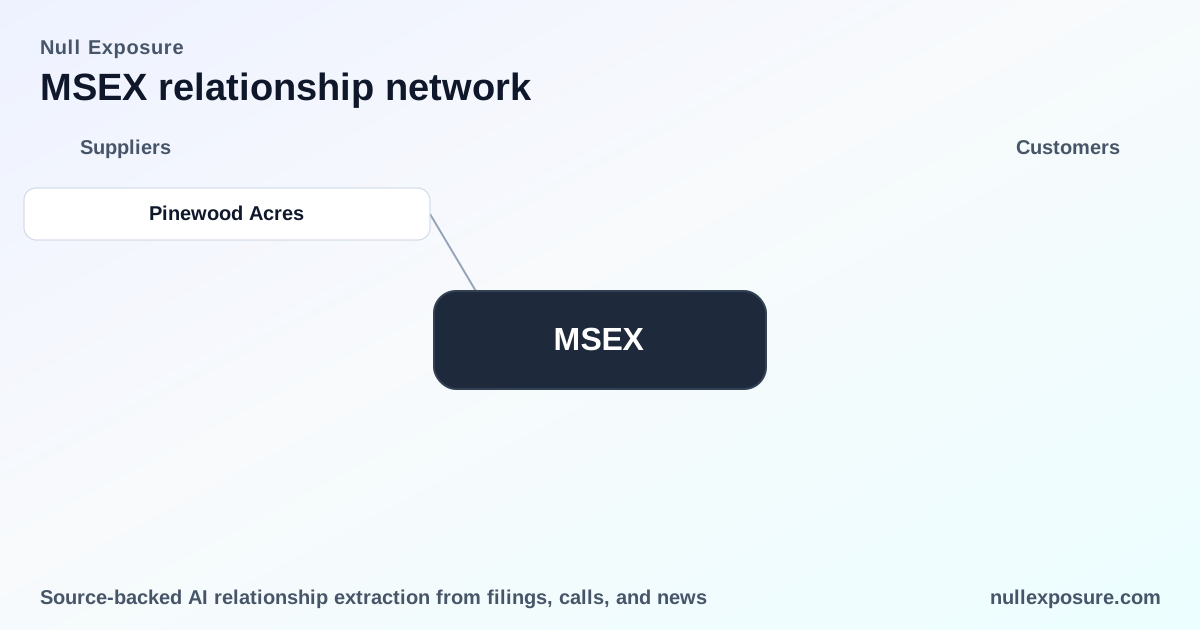
Pinewood Acres — small asset acquisition finalized by a Middlesex subsidiary
In January 2026, Tidewater Utilities, Inc., a wholly owned Middlesex subsidiary, completed the purchase of Pinewood Acres’ water utility assets for $0.2 million, an acquisition approved by the Delaware Public Service Commission. This transaction underscores Middlesex’s ongoing use of small-system acquisitions to expand regulated footprint and revenue base. (Source: QuiverQuant news report on Middlesex Q4 and FY2025 results, reported March 2026: https://www.quiverquant.com/news/Middlesex+Water+Company+Reports+Q4+and+Full+Year+2025+Results%3A+Diluted+EPS+of+%242.36+and+%2496+Million+Investment+in+Infrastructure)
New Jersey Water Supply Authority (NJWSA) — long-term purchased-water arrangement
Middlesex maintains a long-term agreement with the New Jersey Water Supply Authority for the purchase of untreated water that expires November 30, 2048; the contract is structured with a government counterparty and reflects a buyer role for Middlesex. Associated disclosures list Purchased Water Contracts at $90 and Total Costs at $7.5 in the company’s cost schedule, indicating meaningful recurring procurement spend. (Source: Middlesex contract disclosures/filings referencing the NJWSA purchase agreement, disclosure period covering the contract expiration through FY2048)
What these relationships reveal about Middlesex’s operating constraints and negotiating posture
- Long-term contracting posture. Middlesex’s supply agreements, particularly the NJWSA contract that runs to 2048, lock the company into multi-decade supply commitments that stabilize input availability and pricing assumptions. Long-dated contracts reduce short-term procurement volatility and support creditable revenue forecasts for investors.
- Government counterparties increase stability but add regulatory overlay. Supplier relationships with public authorities, as with NJWSA, deliver counterparty credit stability while layering in regulatory and political considerations that govern price renegotiation, termination provisions, and service obligations.
- Buyer role and spend scale matter. Contract evidence lists Purchased Water Contracts at $90 and Total Costs at $7.5, signaling non-trivial procurement scale for raw water and treatment inputs; this positions Middlesex as a repeat buyer where supplier performance and contractual remedies materially affect operating margins.
- Acquisition-driven footprint expansion. The Pinewood Acres purchase for $0.2 million demonstrates an ongoing strategy of integrating small, local systems—asset-light acquisitions that enlarge rate base and customer count without transformative capital outlays.
- Maturity and concentration profile. The combination of mature, long-term supply contracts and selective acquisitions produces a concentrated but predictable risk profile: concentrated because key government contracts matter to operations; predictable because contract tenors and regulated revenues temper volatility.
Investment implications — what to price in now
- Valuation sensitivity to regulatory outcomes. Regulatory rate cases and public authority contract terms materially influence allowed returns and net margin; investors should weight regulatory timing heavily in forward cash-flow models.
- Operational risk is procurement and integration. Performance and cost of purchased water are direct inputs to operating margins; successful integration of small acquisitions (like Pinewood Acres) supports scale economics but does not materially change capital intensity.
- Stable cash flow with capex tailwinds. Long-term supply contracts underpin stable topline and justify a higher multiple relative to unregulated peers, while ongoing infrastructure investment and acquisitions imply sustained capex needs. For deeper sourcing and counterparty intelligence, see https://nullexposure.com/.
How to use this supplier insight in diligence and operations
- Prioritize review of long-dated supply contracts and any change-of-control clauses tied to acquisitions.
- Scrutinize procurement cost trends line-by-line against Purchased Water Contracts and Total Costs disclosures to test margin assumptions.
- Monitor regulatory calendars and PSC approvals for future small-system acquisitions, as these approvals drive the pace of footprint expansion and near-term capex. Access comprehensive supplier maps and contract flags at https://nullexposure.com/ for vendor-level diligence.
Final verdict for investors and operators
Middlesex is a classic regulated utility play: low organic growth offset by acquisition-driven customer additions and supported by long-term, government-backed supply contracts. The firm’s contracting posture delivers predictability and a measurable procurement cost base, but investors must price regulatory risk and sustained capital deployment into long-term models. For actionable counterparty intelligence and to map how future acquisitions will affect procurement and capex, start your supplier-level review at https://nullexposure.com/.
Key takeaway: long-duration government supply contracts plus recurring small-system acquisitions equal a stable revenue base with persistent capex and regulatory sensitivity.