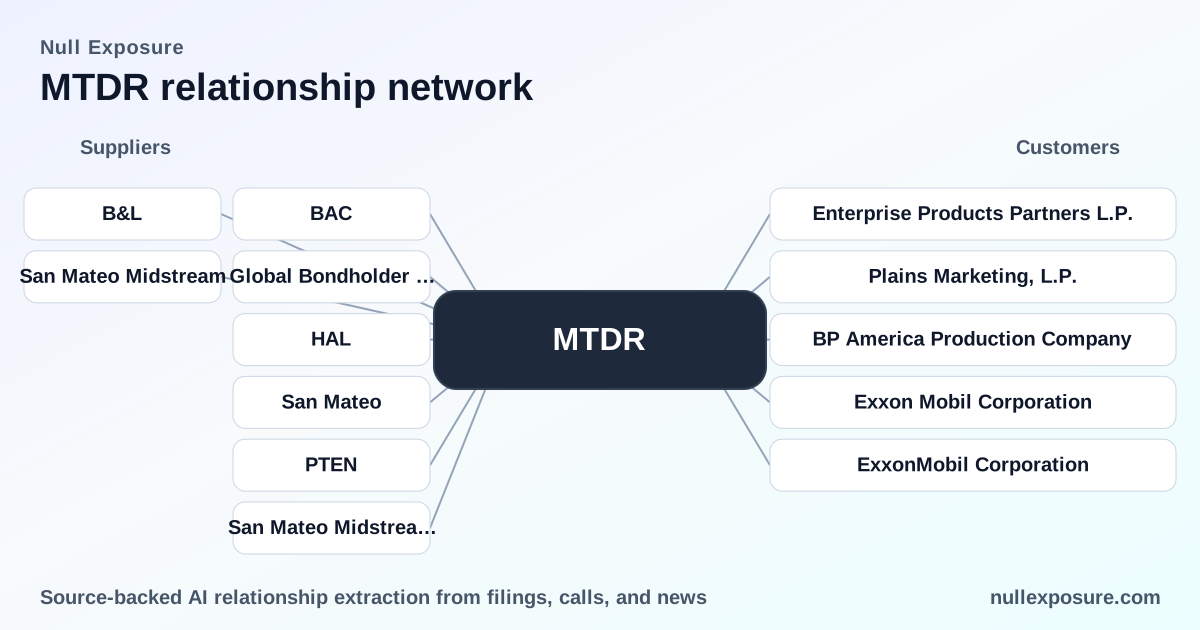
Matador Resources (MTDR): supplier map, contracts and what investors should price in
Matador Resources operates as an upstream oil and gas E&P company that captures value through acreage development, drilling and production in the Delaware Basin and related midstream marketing and processing via affiliated midstream vehicles. The company monetizes through commodity sales from produced oil and gas, fee and throughput income from midstream assets, and disciplined liability management that includes tender offers to retire debt — all of which depend on a mix of long-term midstream contracts and a portfolio of external service providers. For investors and operators evaluating supplier relationships, the key operational reality is a hybrid model: long-term midstream commitments that stabilize cashflows, plus variable third‑party services that preserve operational flexibility. Learn more at https://nullexposure.com/.
What the operating profile reveals about supplier risk and value capture
Matador’s operating posture combines strategic, long-dated midstream contracts and an active program of contracting outside service providers. Company disclosures tied to the Pronto transaction specify 15‑year, fixed‑fee gathering, compression, treating and processing agreements, which is consistent with a capital‑intensive, long‑duration midstream strategy that locks in predictable fees and reduces commodity exposure for the processed gas. The same filings and disclosures make clear Matador routinely uses external professional services — from cybersecurity consultants to drilling and completion contractors — which creates a modular, service‑provider relationship model that favors operational agility.
- Contracting posture: long‑term fixed‑fee midstream arrangements provide cashflow stability and raise the criticality of midstream counterparties.
- Service concentration and criticality: independent contractors supply drilling, completions, maintenance and midstream field services, creating operational dependence on a set of specialized vendors.
- Maturity and scale signals: Matador’s midstream partnerships and capacity expansion plans indicate midstream assets are a strategic, revenue‑generating layer rather than a short‑term cost center.
For deeper supplier analytics and mapped counterparty exposure, visit https://nullexposure.com/.
Supplier relationships investors must know (FY2026 mentions)
Below are every supplier relationship identified in public FY2026 sources, with a concise plain‑English summary and the original reporting reference.
BofA Securities, Inc.
Matador retained BofA Securities as Dealer Manager for a cash tender offer to purchase its 6.875% senior notes due 2028, signaling active liability management and the use of global investment banks to execute debt restructurings. A Business Wire/FinancialContent release dated March 5, 2026 reports BofA’s role on the tender offer.
Global Bondholder Services Corporation
Global Bondholder Services acted as the information agent for Matador’s tender offer, providing notice, guaranteed delivery instructions and document access for noteholders, which underpins the mechanics of Matador’s liability management program. This detail is included in the March 5, 2026 Business Wire filing made available via FinancialContent.
Halliburton
Management credited Halliburton for frac design and execution, indicating Halliburton’s role as a key completion and stimulation service provider on Matador’s wells. This mention is drawn from Matador’s Q4 2025 earnings call transcript (published on InsiderMonkey in FY2026), where management highlighted Halliburton’s contribution to well performance.
San Mateo
Matador’s executive comments on the Q4 2025 call reference San Mateo as essential to achieving operating results, linking Matador’s field performance with marketing and midstream coordination. The reference is in the Q4 2025 earnings call transcript posted on InsiderMonkey (FY2026).
Patterson
Matador acknowledged Patterson for rig timing and rig quality, reflecting Patterson’s role as a drilling contractor that influences Matador’s execution schedule and capital efficiency. This was noted on Matador’s Q4 2025 earnings call (InsiderMonkey, FY2026).
San Mateo Midstream, LLC
Corporate commentary and third‑party writeups document leadership and operational coordination with San Mateo Midstream, LLC, with Matador transferring day‑to‑day midstream marketing and contract coordination responsibilities to successor leadership while keeping executive oversight. A January 27, 2026 note from Sahm Capital describes the leadership shift and coordination role.
San Mateo Midstream (as reported elsewhere)
Independent coverage reiterates that Matador partnered with San Mateo to expand processing capacity in the Delaware Basin, with public commentary noting the partnership began in 2017 and that processing capacity was projected to reach 720 MMcf/d by 2025 — a clear signal of midstream scale and strategic alignment. This capacity figure is reported on Intellectia.ai in the FY2026 reporting cycle and summarized by SimplyWall.st’s coverage.
B&L (Pitco referenced)
Management referenced B&L (noted in the call as Pitco) among pipe and tubular suppliers, emphasizing vendor support for quality pipe at competitive prices — an operational detail that matters for long‑lateral drilling programs. This supplier mention comes from Matador’s Q4 2025 earnings call transcript (InsiderMonkey, FY2026).
What investors should price and monitor
Matador’s mix of long‑dated midstream contracts and a broad set of third‑party service relationships creates predictable midstream fee streams while preserving the ability to scale drilling activity up or down via contractor relationships. Investors should price:
- Contractual stickiness: long-term processing and gathering contracts reduce commodity exposure on processed volumes but increase counterparty concentration risk if the midstream partner underperforms.
- Operational dependency on suppliers: vendors such as Halliburton, Patterson and pipe suppliers materially affect well productivity and cost-per-well; changes in service availability or pricing will flow directly to operating margins.
- Balance sheet flexibility: the use of BofA and GBSC in debt tender mechanics shows management prioritizes active liability management; investors should monitor future tender offers or refinancings as part of capital allocation.
Key risk checklist:
- Concentration in midstream counterparties and long-dated contracts.
- Execution risk tied to large service providers for completions and drilling.
- Commodity price sensitivity of upstream cashflows despite fee-based midstream revenue.
For a structured counterparty exposure report and supplier scoring, visit https://nullexposure.com/.
Bottom line for allocators and operators
Matador’s supplier structure is intentional: use long‑term midstream contracts to stabilize cashflow while outsourcing variable execution to specialist service providers. That model supports predictable midstream earnings but creates dependencies that investors must monitor — especially midstream counterparties and completion contractors whose performance drives realized production and unit costs. Track tender offer activity, midstream capacity rollout with San Mateo, and vendor performance metrics from quarterly calls as the most direct signals of operational risk and optionality.
If you want a mapped view of Matador’s counterparty exposures and contract maturities, see the full platform at https://nullexposure.com/.