MACOM (MTSI) supplier profile: what investors should know about procurement, partnerships and manufacturing leverage
MACOM Technology Solutions monetizes by designing and selling analog RF, microwave and photonic semiconductor components to communications and defense OEMs, capturing value through product differentiation, process ownership and recurring inventory sales. The company operates internal wafer fabs and assembly/test operations while contracting external foundries and suppliers for capacity and services; revenue is driven by product design wins and the ability to internalize high‑value process technology. For investors, the supplier picture matters because MACOM’s procurement commitments and technology transfers directly affect gross margin, capital intensity and time to market. Learn more about supplier risk signals and relationship specifics at https://nullexposure.com/.
Why the supplier footprint matters for the investment case
MACOM runs a hybrid manufacturing model: internal fabs supplemented by external foundry and assembly partners. That operating posture makes the company simultaneously a large buyer of capital equipment and process services and a manufacturer that benefits from technology transfers that reduce reliance on third parties. The key corporate signals are:
- Contracting posture: MACOM reports significant purchase commitments—$157.1 million outstanding as of October 3, 2025—with approximately $145.1 million due within one year, indicating substantial near‑term procurement obligations and working‑capital implications (FY2025 filings).
- Manufacturing posture: The company explicitly describes internal wafer fabrication and assembly/test facilities supplemented by external partners, demonstrating a mixed control model that balances capital intensity and capacity flexibility.
- Spend magnitude: The $100M+ spend band signal in filings places MACOM in a category of firms with meaningful supplier leverage and exposure; these commitments drive both operational continuity and capital planning.
These are company‑level constraints and strategic signals rather than attributes of any single named supplier.
Material supplier relationships you should track
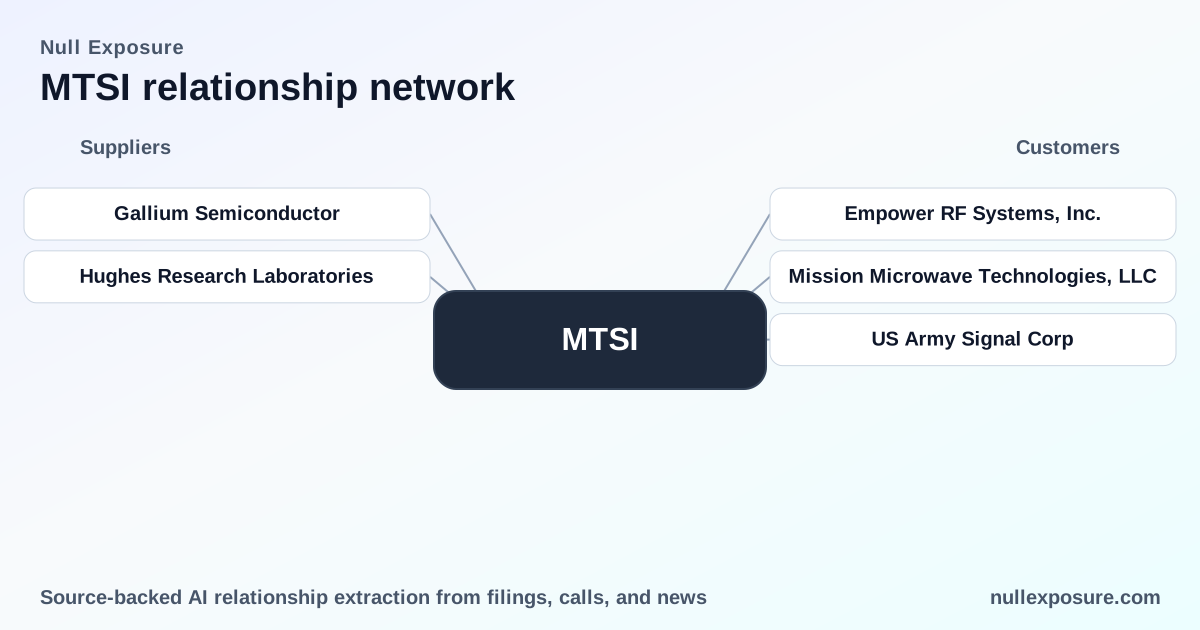
Gallium Semiconductor — a small equipment purchase from an affiliate
According to MACOM’s FY2025 10‑K, the company purchased $0.3 million of machinery and equipment from Gallium Semiconductor, which the filing identifies as an affiliate of former director Susan Ocampo. The transaction size is immaterial to MACOM’s overall capital program, but the affiliate connection is a governance flag investors should note. (FY2025 10‑K disclosure)
Takeaway: Small dollar value but related‑party optics require disclosure vigilance.
Hughes Research Laboratories — strategic process transfer for GaN on SiC
On the Q4 2025 earnings call, MACOM announced an agreement with Hughes Research Laboratories to transfer their 40‑nanometer GaN on Silicon Carbide process known as T3L to MACOM. This is a strategic technology transfer that increases MACOM’s in‑house process capabilities and could shorten product qualification cycles and improve gross margins over time. (Q4 2025 earnings call)
Takeaway: Technology transfer reduces external dependence and supports vertical integration of higher‑value RF processes.
What these relationships imply about concentration, criticality and maturity
The two named supplier interactions in public disclosures are small and targeted, but when viewed alongside company‑level constraints they create a coherent picture:
- Concentration vs. breadth: The direct, named purchases are limited in number and monetary scale; however, the firmwide purchase commitments of $157.1 million indicate substantive aggregate reliance on a broader set of suppliers and service providers. This suggests MACOM sources across many partners but carries meaningful aggregate exposure.
- Criticality of partners: The T3L transfer from Hughes is operationally critical because GaN on SiC is a strategic technology for RF power and defense applications; securing the process in‑house materially increases MACOM’s control over supply and performance.
- Maturity of relationships: The Gallium Semiconductor transaction reads like routine equipment procurement from an affiliated vendor; the Hughes arrangement is more advanced—an intellectual property and process transfer that implies multi‑phase integration and testing rather than a single purchase order.
- Contracting posture: With roughly $145.1 million due within one year, procurement commitments create near‑term cash flow and supplier performance dependencies that investors should monitor alongside backlog and working capital metrics.
Bold signal: MACOM is a buyer with manufacturing ambitions—its supplier relationships range from immaterial affiliate purchases to strategic process transfers that materially change its production footprint.
Operational and financial risk implications
Investors should weigh several measurable implications from the supplier disclosures and company constraints:
- Cash and working capital pressure: Large near‑term supplier obligations create cash outflow risk, especially if revenue realization lags or inventory turns slow.
- Integration risk: The T3L transfer increases capability but imposes integration cost, qualification cycles and potential yield ramp risks that can temporarily depress margins.
- Governance scrutiny: Related‑party purchases, even small ones, invite attention from governance‑focused investors and regulators; transparency and arm’s‑length terms are important.
- Supply continuity: Reliance on external foundries and assembly partners for portions of production keeps MACOM exposed to broader semiconductor supply chain disruptions even as it internalizes select processes.
Investor checklist: what to monitor next
- Track quarterly disclosures for updates to purchase commitments and the schedule for the $145.1 million due within one year.
- Watch earnings‑call commentary and technical filings for milestones on the Hughes T3L transfer: qualification dates, yield targets and expected cost benefits.
- Review governance disclosures around related‑party transactions and board committee descriptions to ensure procurement from affiliates follows arm’s‑length practices.
For additional supplier intelligence and ongoing alerts on these items, visit https://nullexposure.com/ for deeper supplier signal coverage.
Bottom line: supply signals are strategic levers, not idle footnotes
MACOM’s supplier footprint contains both routine procurement (including a disclosed small affiliate purchase) and a material strategic technology transfer that reshapes production capability. The company’s role as a buyer with substantial near‑term purchase commitments and a mixed internal/external manufacturing model makes supplier management a direct driver of margins and delivery timelines. Investors should focus on the cadence of capital and process integration milestones, governance around related‑party sourcing, and whether the Hughes T3L transfer delivers the expected operational leverage. For continuous monitoring of supplier disclosures and to integrate these signals into your investment workflow, go to https://nullexposure.com/.