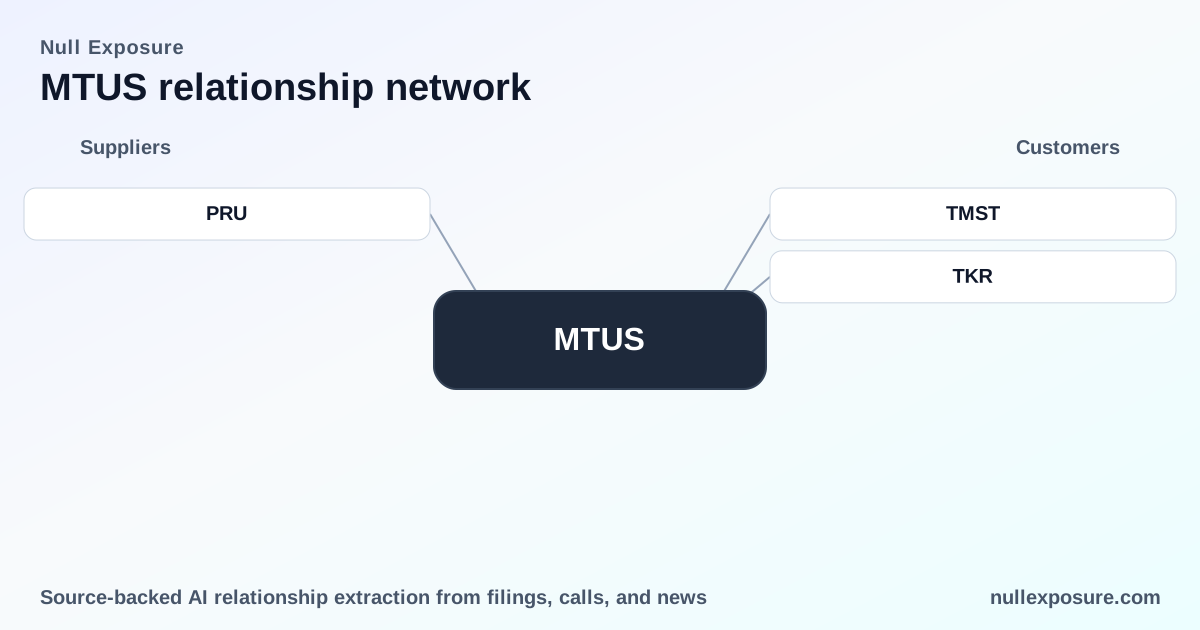
Metallus (MTUS) — supplier posture, the Prudential pension transfer, and what investors should price in
Metallus is a U.S.-headquartered specialty steel manufacturer that monetizes by producing and selling alloy, carbon and micro-alloy steel products to industrial customers in domestic and export markets. With trailing revenue of roughly $1.16 billion and a market capitalization near $608 million, the company operates a commodity-exposed manufacturing model where margins are driven by raw-material spreads, operational throughput and contract pricing. For investors focused on counterparties and supplier risk, the relevant signal set is a combination of framework purchasing posture for raw materials, a material defined‑benefit pension footprint, and selective liability transfers to insurers. Learn how the supplier map and contractual posture shape cash flow risk at https://nullexposure.com/.
A single, material relationship: Prudential completed a pension buyout
Prudential — According to Pensions & Investments (article published March 10, 2026), Metallus completed the termination of its salaried pension plan through a buyout with Prudential. This transaction transfers the pension liability and related cash‑flow volatility off Metallus’s balance sheet and onto Prudential as the insurer. (Pensions & Investments, March 10, 2026: https://www.pionline.com/pension-risk-transfer/metallus-inc-completes-termination-salaried-pension-plan-through-buyout/)
What the Prudential deal concretely means for suppliers and investors
The Prudential buyout is a near-term de‑risking event for Metallus’s balance sheet because it eliminates a stream of pension-related cash obligations tied to plan participants and converts that exposure into either a one‑time cash outflow or financed liability depending on transaction structure. For suppliers of raw materials and energy, the immediate implication is lower long-term counterparty unpredictability: a manufacturer without an on‑balance pension liability has fewer forced cash calls in a downturn and reduced need to redirect operating cash to meet retirement obligations.
Contracting posture: framework agreements and commodity exposure
In public disclosures, Metallus states it manages commodity risk primarily through supplier pricing agreements that establish purchase prices for key inputs. That language signals a deliberate contracting posture: Metallus pursues framework purchasing arrangements rather than spot-only sourcing, which supports cost visibility and hedging of scrap steel and alloy purchases. This reduces procurement volatility for both the company and its suppliers, and increases predictability of order flows for counterparties who participate in multi‑period pricing frameworks.
Size and maturity of obligations: a tangible pension spend band
Metallus’s disclosures indicate material pension and post‑retirement cash requirements — expected contributions and payments of $68.5 million in the next 12 months and $103.3 million between 2026 and 2034. That scale places pension obligations in the $10m–$100m spend band, which is large enough to influence capital allocation decisions and supplier payment priorities but small relative to annual revenue. For investors, the buyout with Prudential reduces this legacy cash‑pressure line item and shifts the residual counterparty exposure to an insurer with a different risk profile.
Operational role signals: seller and service governance
Metallus’s public statements categorize its exposure both as a seller in commodity markets (purchasing scrap steel, other ferrous/non‑ferrous metals, natural gas and electricity) and as a steward of pension assets, which requires oversight of service providers and investment managers. These dual role signals indicate a company that simultaneously manages industrial procurement risk through contracting and outsources pension risk management where appropriate. The Prudential transaction is an example of that latter strategy in practice.
Concentration, criticality and maturity of supplier relationships
- Concentration: Metallus’s core inputs are commodity metals and energy; this creates supplier concentration risk at a category level rather than dependence on a single vendor. Framework agreements broaden supplier relationships but keep concentration at the commodity class.
- Criticality: Inputs like scrap steel and electricity are mission‑critical; any disruption directly affects production throughput and margin realization. Framework pricing reduces short-term scramble risk but does not eliminate market‑wide price shocks.
- Maturity: Purchasing arrangements are described as active, multi‑period frameworks rather than ad hoc spot buys, which supports medium-term predictability for both Metallus and its suppliers.
What investors should watch next
- Supplier pricing pass‑through and margin resilience: Because Metallus uses supplier pricing agreements, the company’s ability to pass through cost changes to customers determines margin volatility. Watch contract renewal cycles and any changes to pricing formulae.
- Pension-related cash flow normalization: With the Prudential buyout complete, monitor whether freed cash flow is redeployed into capex, deleveraging, or working capital — each path has different implications for suppliers’ credit risk.
- Counterparty concentration on the buyout side: The decision to use Prudential is significant because it moves obligations to a large insurer; investors should track any additional pension buyouts or liability transfers that further alter Metallus’s counterparty map.
For a deeper supplier-risk mapping and scenario analysis tailored to MTUS counterparties visit https://nullexposure.com/ and explore supplier relationship profiles.
How this shapes contractual leverage and counterparty risk
The combination of framework purchasing, a material but shrinking pension liability, and the company’s role as both buyer and plan sponsor results in a mixed but improving counterparty picture. Suppliers benefit from greater predictability of orders under framework agreements, while investors reduce macro risk from pension volatility when liabilities are transferred to insurers like Prudential. The remaining source of acute risk is commodity price shocks that can compress spreads despite contractual mechanisms; that risk remains structural to the business model.
Bottom line: what to price in today
- Positive: The Prudential buyout is a clear balance‑sheet de‑risking event and improves short-to-medium cash flow visibility. Framework supplier agreements increase predictability for counterparties.
- Watchlist: Commodity input price swings and contract renewal terms drive earnings volatility; monitor whether freed cash is used to strengthen the business or to service other obligations.
- Action: For investor due diligence on MTUS supplier relationships, prioritize analysis of framework agreement tenors, pass‑through mechanics, and any upcoming contract expirations.
If you evaluate supplier counterparty risk or run procurement scenarios for industrials, begin with a focused supplier map for MTUS at https://nullexposure.com/. For tailored intelligence and alerts on changes to Metallus’s supplier and pension relationships, visit https://nullexposure.com/ and subscribe for updates.